admin

The Institute of Urbanism and Landscape

/

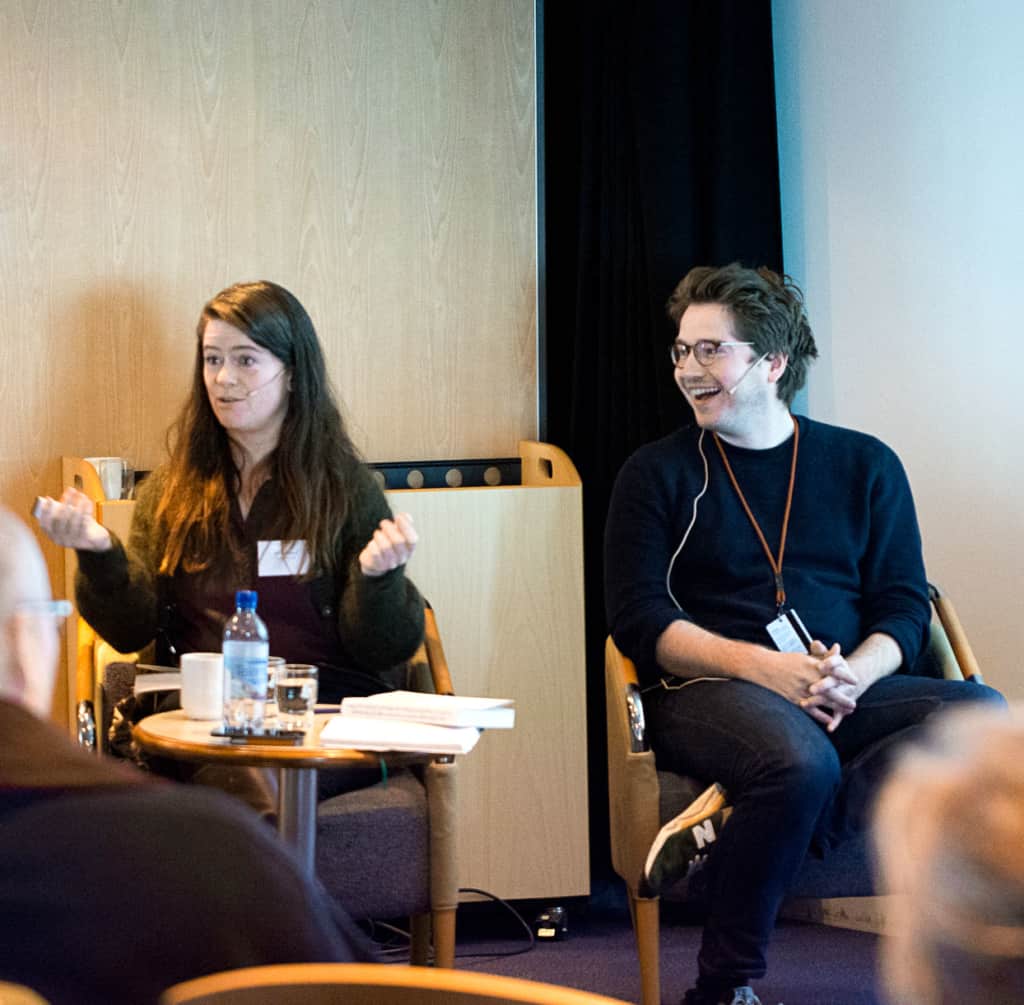
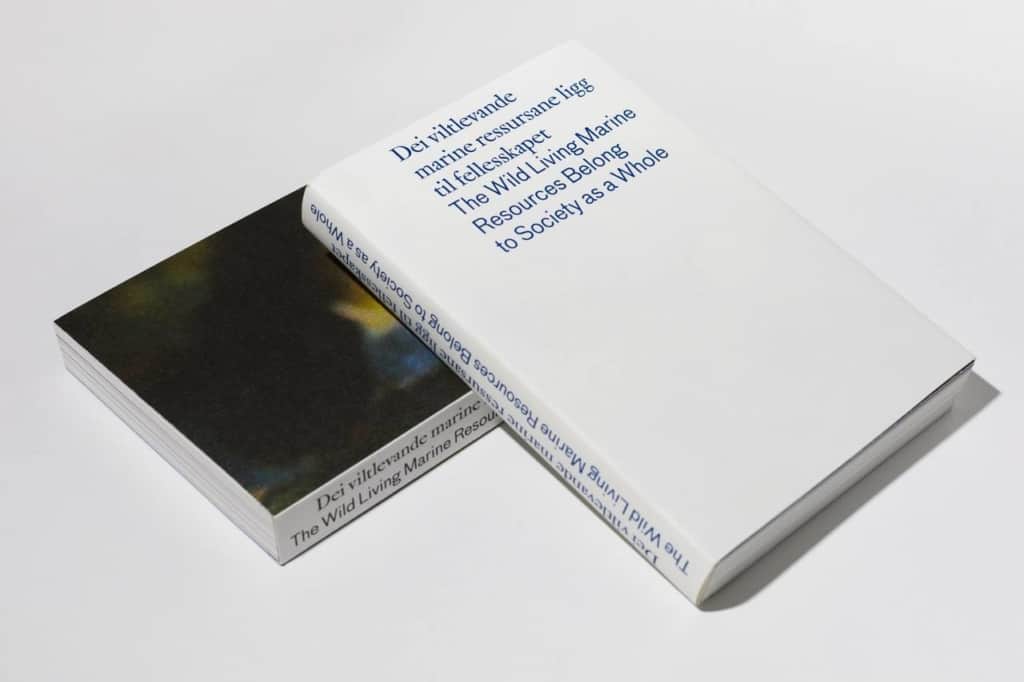
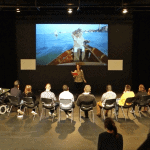
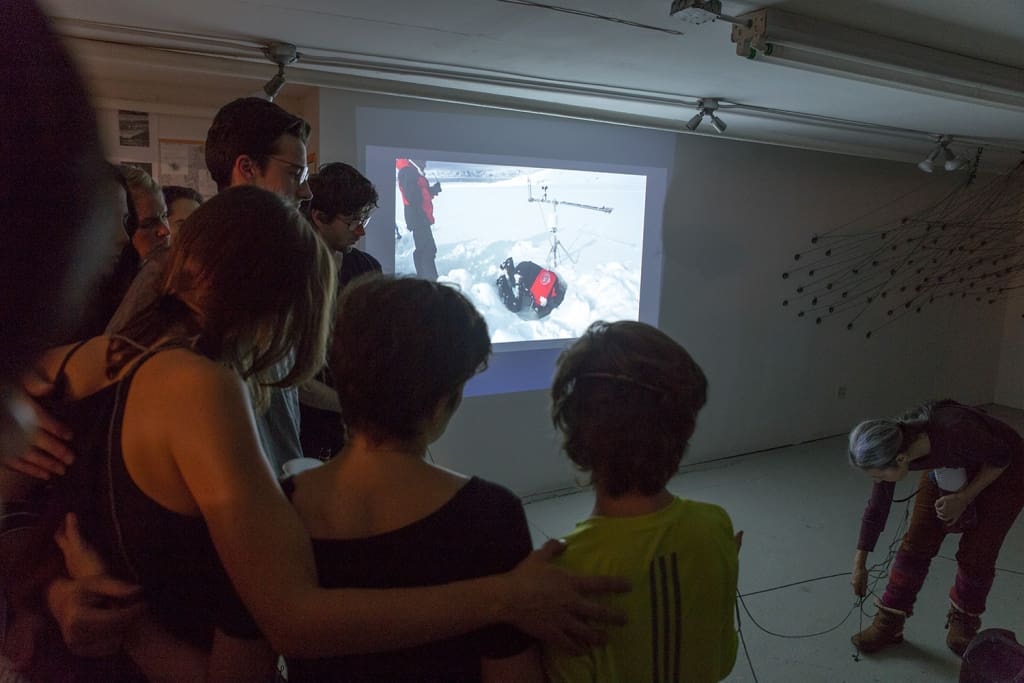
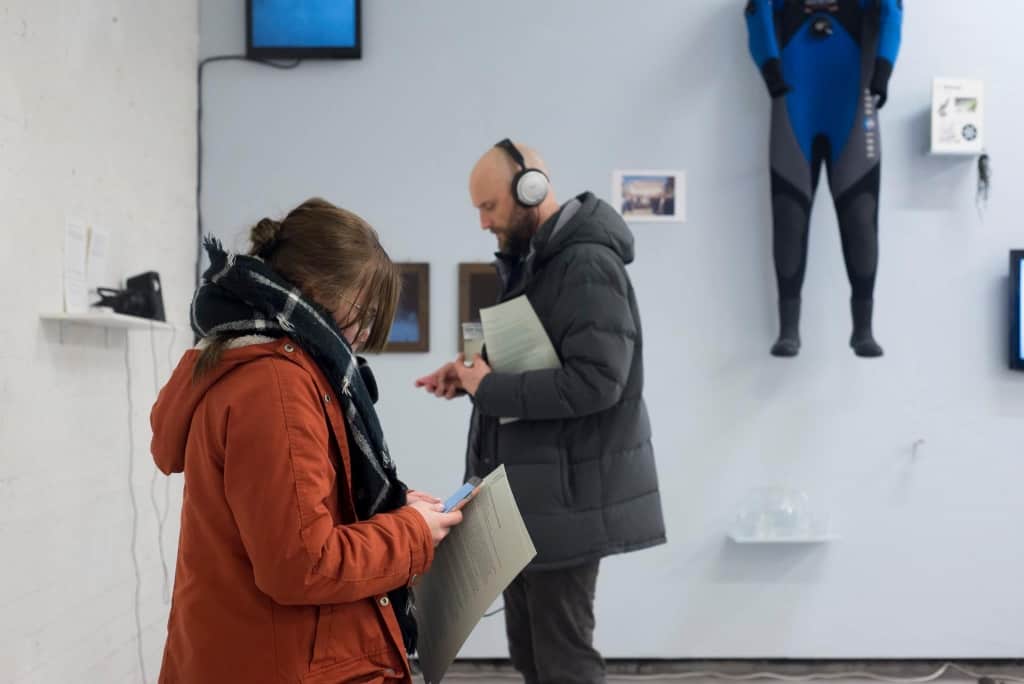
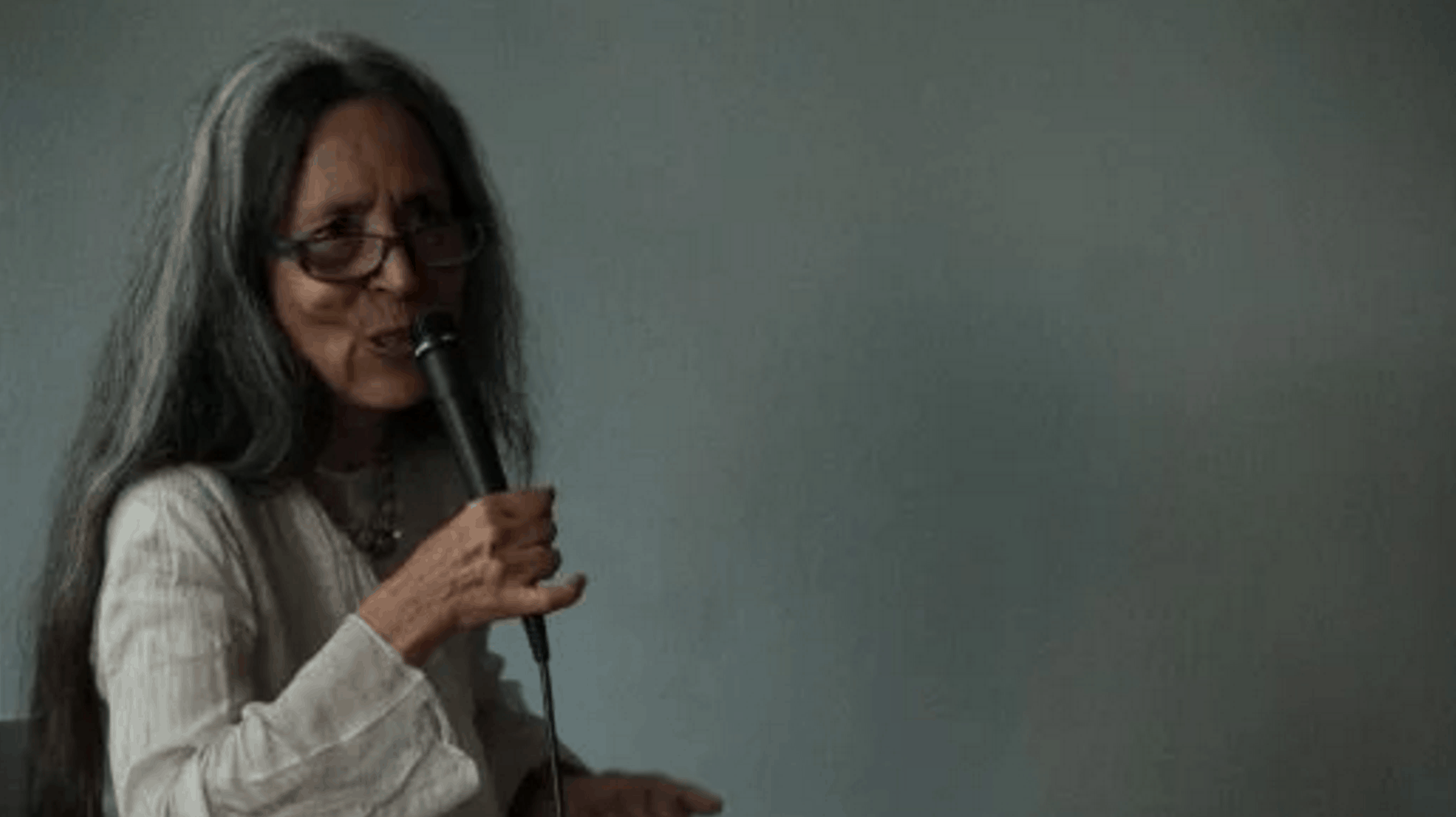
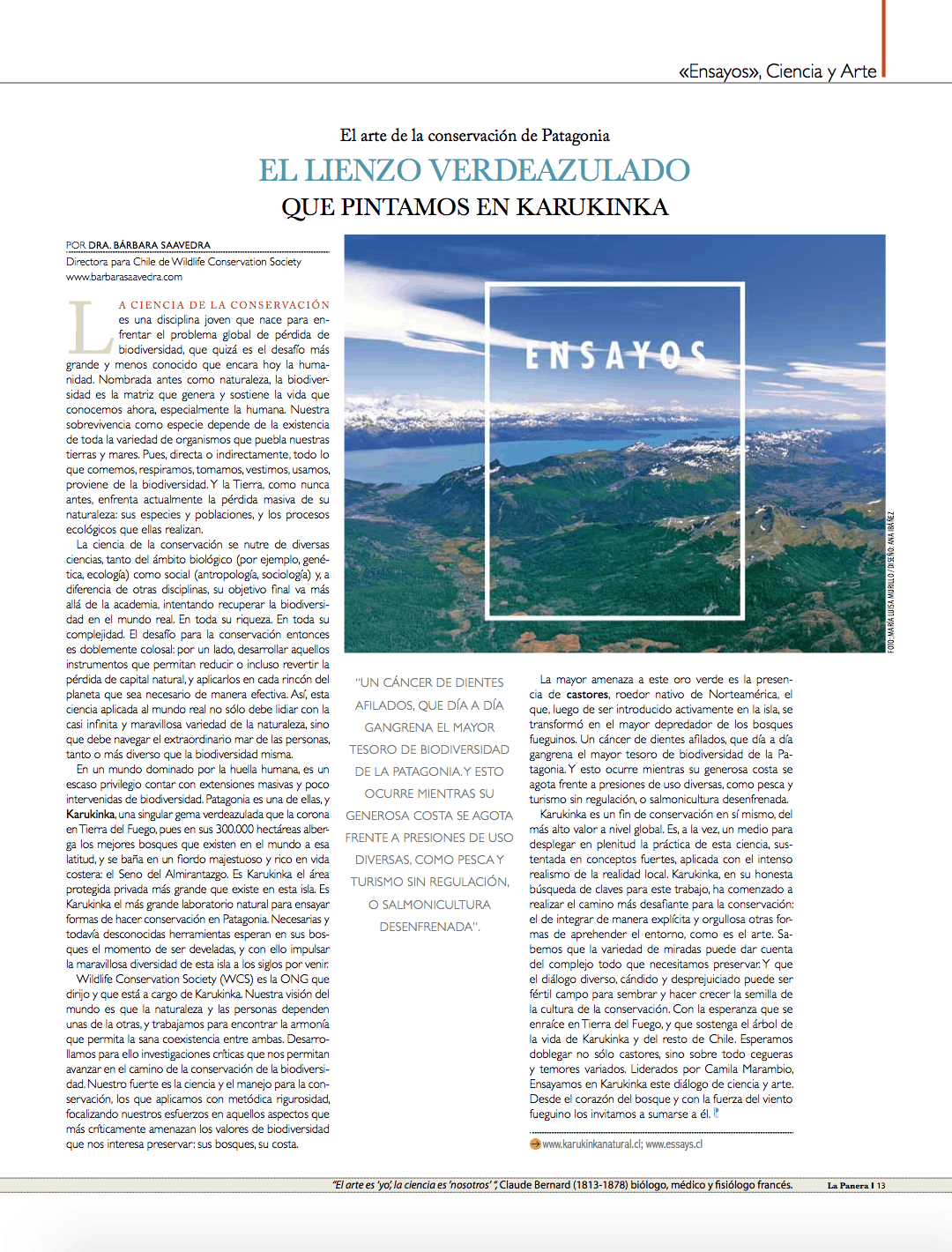
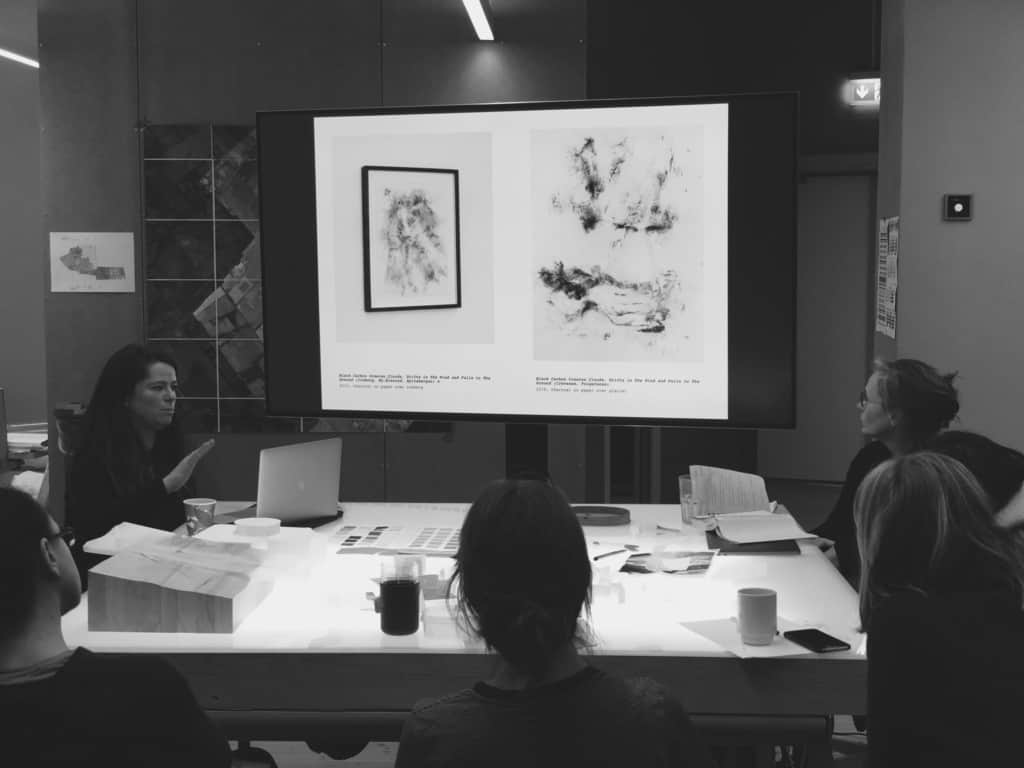
In November 2018, Ensayo #4 artist Randi Nygård visited the studio of The Institute of Urbanism and Landscape at AHO, The Oslo School of Architecture and Design to present the book Dei viltlevande marine ressursane ligg til fellesskapet / The Wild Living Marine Resources Belong to Society as a Whole.

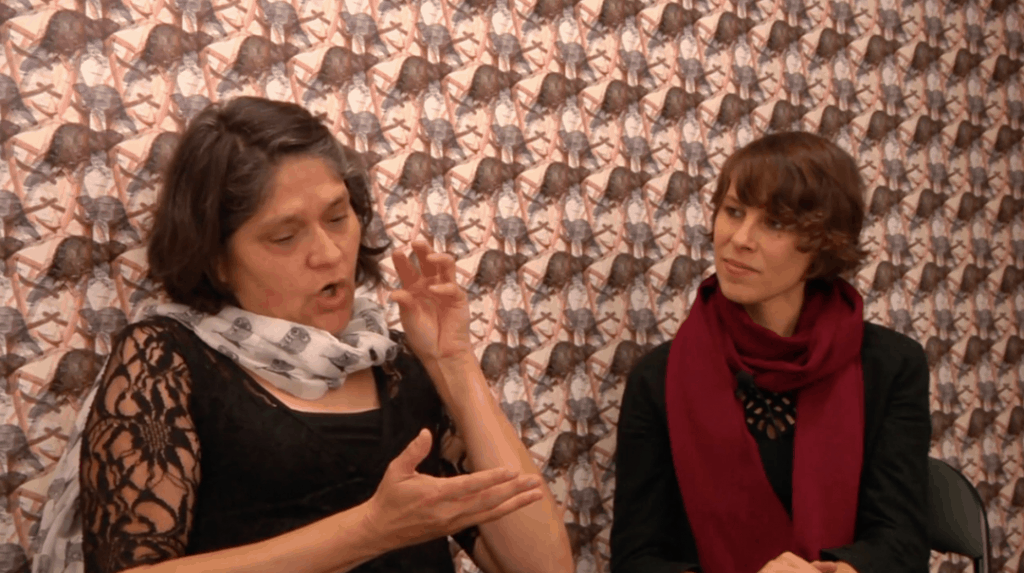
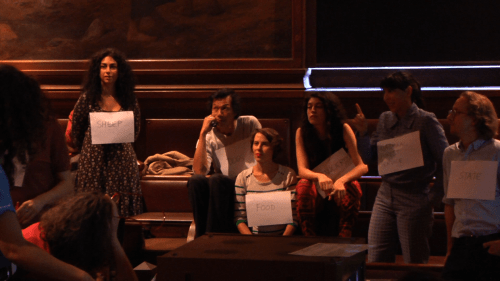
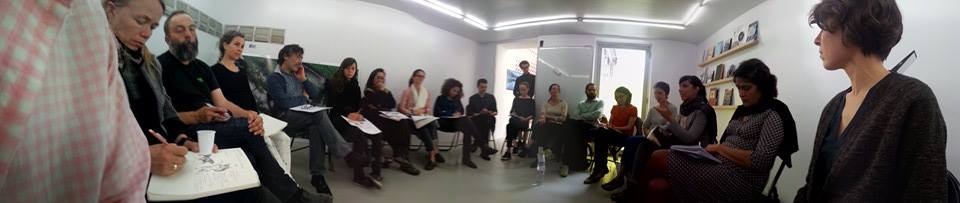
She conversed with professor Janike Kampevold Larsen and AHO landscape students about how to represent nature`s inherent values, what cybernetic networks are and what it means that the resources belong to society as a whole. Photo by The Institute of Urbanism and Landscape
The Last Act: Art & Culture in the Time of Environmental Crisis

/

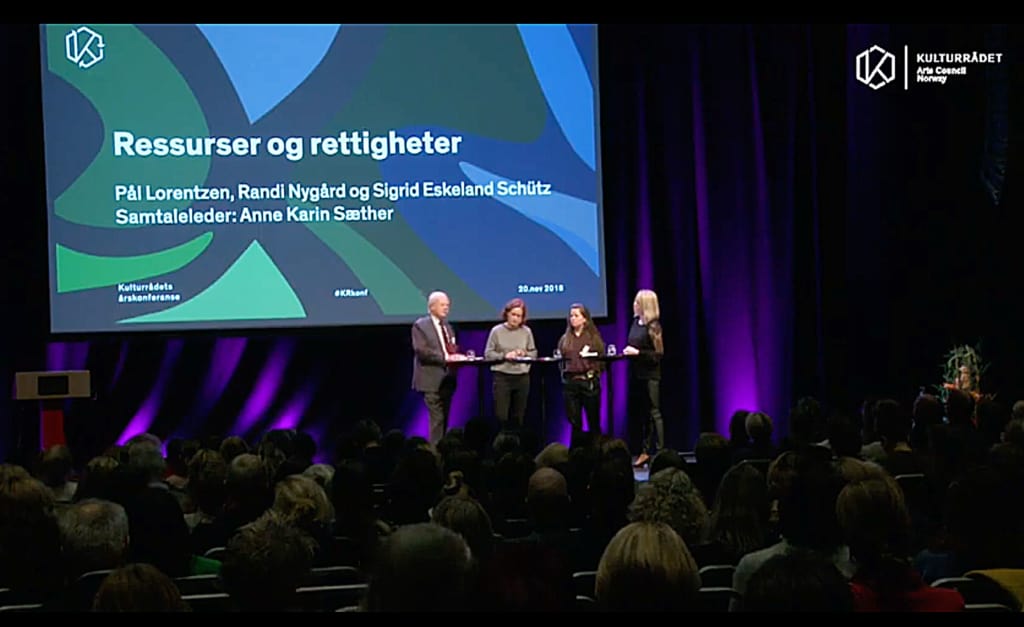
At The Last Act, Art and Culture in The Time of The Environmental Crises, Art Council Norway’s yearly conference in Bergen (November 20-22, 2018), the Norwegian cultural scene discussed what significance art and culture have when the climate and the environments are changing dramatically.

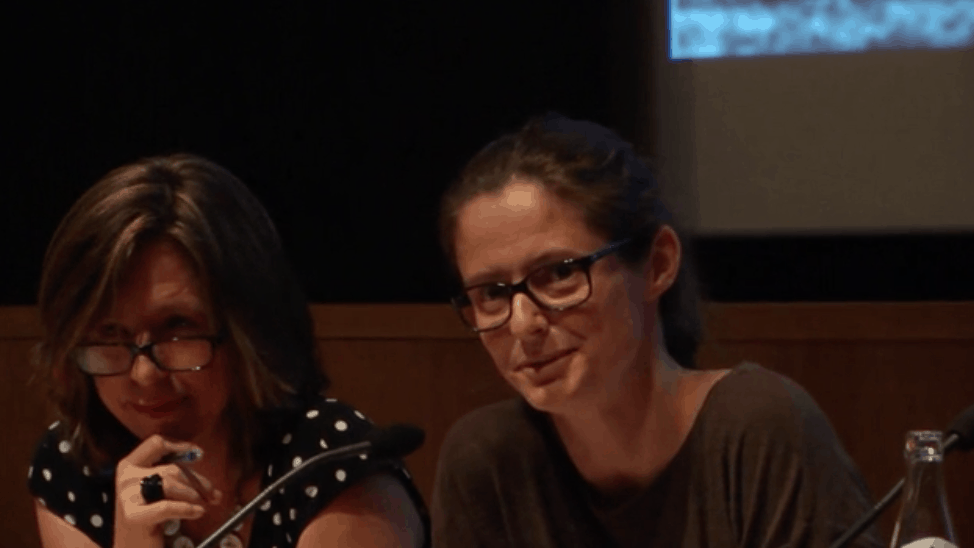
Randi Nygård took part in a panel called Rights and Resources, with Sigrid Eskeland Schütz, Professor of Law at the University of Bergen, Pål Lorentzen, Supreme Court Lawyer, and Anne Karin Sæther as the moderator. They discussed environmental regulations and laws and what role art can play in relation to these issues.

The panel began by talking about why economic interests so often win over environmental concerns. Do we need better legislation and more regulations? Lorentzen said that it is obvious that the environment does not yet have enough legal protection, as we see temperatures rising, mass pollution in the oceans, and fjord landfills being approved for mining companies. Sigrid mentioned that, for instance, there is a lot of micro plastic coming from pollution from road paint in speed stripes and there is no jurisdiction concerning the issue yet.

Nygård mentioned that the Norwegian Animal Welfare Act actually states that the animals have an intrinsic value which is irrespective of the resource value they may have for man. To her knowledge, this section has very seldom been used and had it been followed we would probably live in a very different society.

Nygård also spoke about how Ensayo#4 worked with an exhibition and a publication deriving from Section 2 of The Norwegian Marine Resources Act, Dei viltlevande marine ressursane ligg til fellesskapet / The Wild Living Marine Resources Belong to Society as a Whole. They found the section to be both poetic and paradoxical. How can what is wild and living be a resource and belong to society?

Nygård sees including poetic approaches as highly relevant when we seek to represent animals and plants better in laws and to integrate them into our societies. Among others she mentioned Derrida’s idea that if thinking about the animal is possible it must derive from poetry.

Nygård also stated that art and poetry at its best does precisely this, it approches the ungraspable, it says something about that which cannot be said, and in this way it is another knowledge about the world.

Artists need not make the world poetic, the relations in the world are fundamental poetic. And so is also our relation to nature, mystic in its deepest sense.

T

Rugged, Weathered Above the Sea

/

Randi Nygård of Ensayo #4 held a conversation with Timotheus Vermeulen about the anthology Dei viltlevande marine ressursane ligg til fellesskapet/The Wild Living Marine Resources Belong to Society as a Whole at Coast Contemporary: Rugged, Weathered Above The Sea, a maritime art journey along the Norwegian coast, from Svolvær to Bergen, October 21.- 26. 2018.

For its second edition, Coast Contemporary explored the social, economic, and political values of the Norwegian landscape. Curated by Charles Aubin and Tanja Sæter, this six-day program gathers artists, architects, curators, writers, and environmental scholars to explore Norway’s centuries-long construction of a national affinity for nature, and how a changing climate will transform cultural imaginations.

The publication The Wild Living Marine Resources Belong to Society as a Whole got its from after Section 2 of The Norwegian Marine Resources Act and is part of Ensayo#4.

Nygård and Vermeulen spoke about what happens when artists are the initiators of interdisciplinary projects, and why the law should meet poetry and art (and oceanography, philosophy, sociology, and biology.) Nygård mentioned Derrida who, in his book The Animal That Therefore I Am, writes that, if a thinking about animals exists it, must derive from poetry. So if we are to integrate the more-than-human into our democratic and political systems and give them more legal rights, the question of how to represent nature concerns both art, philosophy, science, and law, and might not only derive from logical thinking.

Nygård also said that artists may be good at asking naive but basic questions concerning the very foundations of the paradigms which the sciences and our worldviews are built on, creating a common ground where foundational discussions may form. In her belief, artists use feelings and intuitions in ways which might be foreign to most other sciences.

Vermeulen discussed the importance of moods, which Nygård related the necessary shift in perspectives–from nature as resources in a distant and dull world to an enlivened environment where we are integrated and where everything may have a level of inner consciousness and therefore also moods.

The conversation took place in a particularly unruly part of the trip, making the concept of The Oceanic Feeling fit very well.

“In 1927, after having read Spinoza and eastern mystics, Romain Rolland wrote a letter to Freud where he for the first time used the psychological term «oceanic feeling», describing a religious experience, an existential feeling of the self dissolving into the world, in a moment without boundaries.”*

*From Randi Nygård`s text The Oceanic Feeling in the anthology.

Coastal Curriculum @ Creative Time Summit Miami

/

WORKSHOP: COASTAL CURRICULUM

Saturday, November 3rd from 12 to 1 pm at the Museum Park Baywalk, Pérez Art Museum Miami (PAMM), 1103 Biscayne Blvd | Transportation Options

CLICK HERE TO REGISTER FOR THIS SESSION

Ensayo #4 (Coastal Curriculum) research pods exist in Tierra del Fuego, Northern Norway, New York, and Australia. The artists, scientists, and scholars involved in each pod meet at irregular intervals to cross-pollinate and share their experiences with varied archipelagic intersections of identity, history, geography, language, and law. This workshop will use embodied actions—both deep listening and movement based—to infuse and transform our own and participants’ creative and research practices engaging with coastal dynamics. Considering Miami’s position as part of the fragmentary ecosystem of the Everglades, the workshop will support artists and thinkers interested in advocating for sustainable coastal and wetland management by creating an alternative space and method for sharing knowledge and strategies.

Please meet in the museum lobby for this session before heading down to the Museum Park Baywalk with your session leaders.

Christy Gast is an artist whose work across media reflects her interest in issues of economics and the environment, and the role of content in giving meaning to the experience and form of the work. Her work has been exhibited at MoMA/P.S.1 Contemporary Art Center, Performa, Artist’s Space, Harris Lieberman Gallery and Regina Rex in New York; the Perez Art Museum of Miami, Bass Museum of Art, de la Cruz Collection, Locust Projects, Casa Lin and Gallery Diet in Miami; as well as Mass MoCA, the American University Museum, L.A.C.E., High Desert Test Sites, Centro Cultural Matucana 100 and the Kadist Foundation Paris, and she has received grants and awards from the Art Matters Foundation, Funding Arts Network, South Florida Cultural Consortium, Tigertail, the American Austrian Foundation Hayward Prize, and the Joan Sovern Sculpture Award from Columbia University.

Denise Milstein is a writer and researcher whose work examines the intersections of art with politics, ecology, and economic systems. Based on her interest in the emergence of innovation from structural constraints, she examines the potential for art to transform historical processes and subvert dominant modes of exchange. With Ensayos, she derived conceptual networks from observation of collective reflection, experimentation, and relations with non-human actors in Tierra del Fuego. She has published on artists and political repression in Latin America, on music revivals, and on social movement theory. Her prose has appeared in Tupelo Quarterly and Hobart, among others. She runs the MA program in sociology at Columbia University, where she trains students in qualitative and multi-method research.

Julián Donas Milstein is a student interested in documentary filmmaking, photography, history, and the natural environment. He joined Ensayos in 2015, when he participated in the BHQFU residency, and then traveled to Tierra del Fuego, where he collaborated with field experiments.


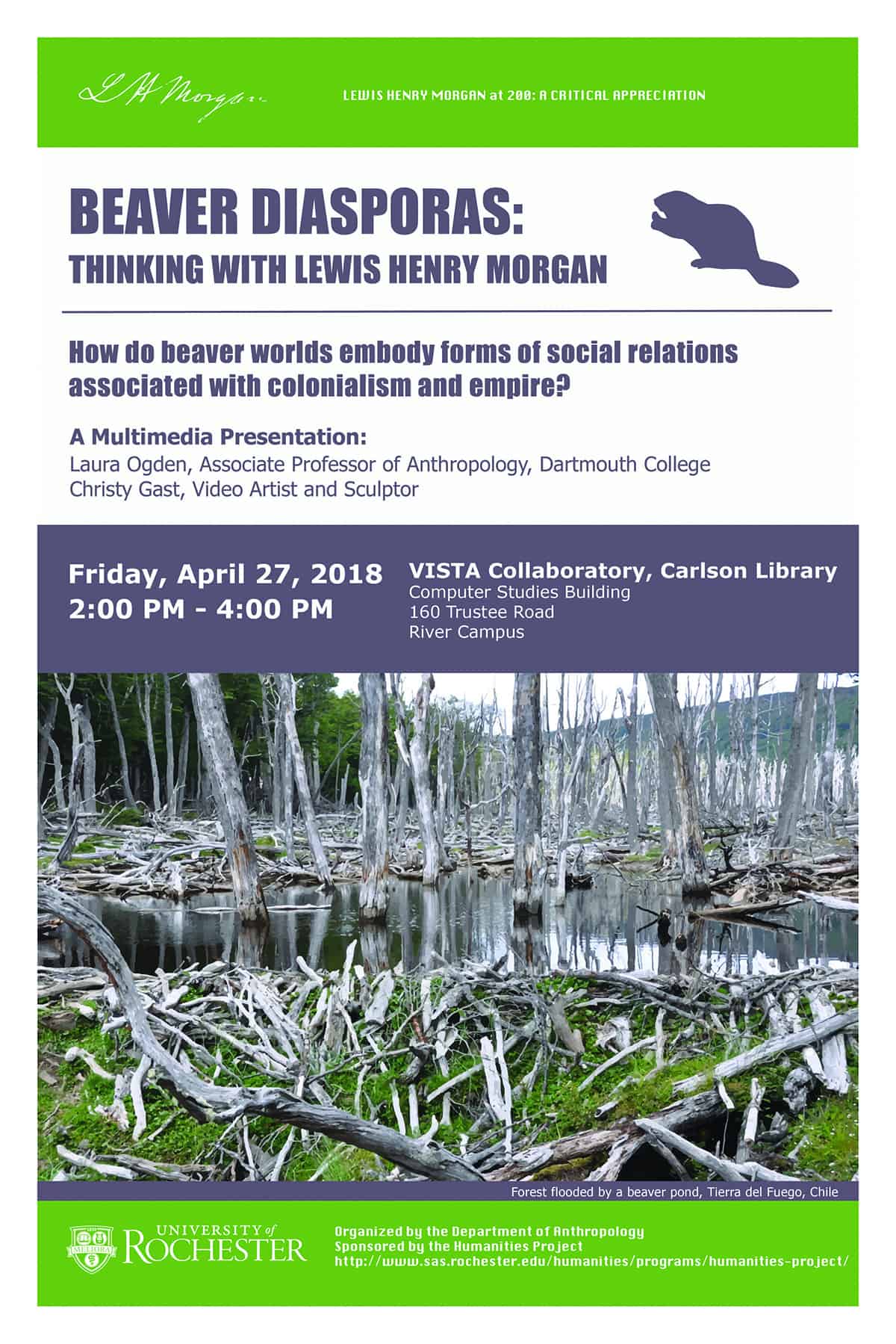
Beaver Diasporas: Thinking with Lewis Henry Morgan

/

Date: April 27, 2018

Time: 2:-00-4:00 PM (Friday)

Location: VISTA Collaboratory, Carlson Library, University of Rochester

Beaver Diasporas: Thinking with Lewis Henry Morgan

Friday, April 27, 2018
2:00-4:00 PM

VISTA Collaboratory, Carlson Library
Computer Studies Building
160 Trustee Road
River Campus

A Multimedia Presentation:

Laura Ogden, Associate Professor of Anthropology, Dartmouth College
Christy Gast, Visual artist

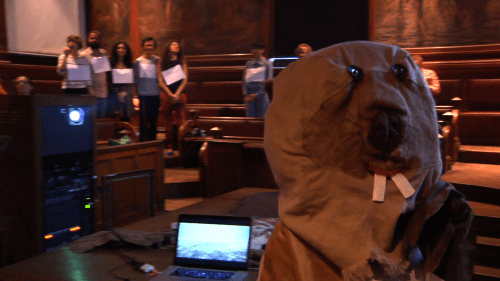
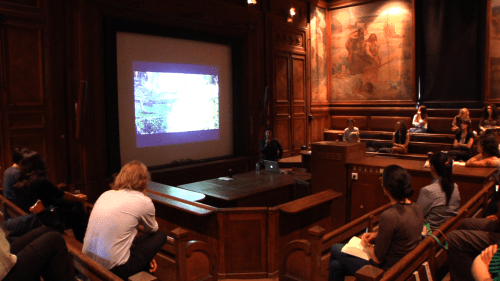
Lewis Henry Morgan was interested in how the architecture of beaver worlds, such as their dams, lodges, and burrows, embody the social relations of beaver kinship systems. In this presentation, anthropologist Laura Ogden and artist Christy Gast build from Morgan’s work to explore how beaver worlds in Tierra del Fuego, Chile, embody other forms of social relations, particularly those associated with colonialism and empire. This multimedia presentation stems from collaborative ethnographic research in Tierra del Fuego, as well as experiments with ethnographic film production.


Boklansering/Book Launch at Kunsternes Hus in Oslo

/

Sunday January 21 2018 from 3-5 pm at Kunstnernes Hus, Wergelandsveien 17, 0167 Oslo, Norway,

The anthology “The Wild Living Marine Resources Belong to Society as a Whole” contains a wide range of expressions: poems, essays, photos, articles, manifests and artworks, all of which relate to our management of natural resources or discuss our fundamental views on nature. The book got its name from Section 2 of the Norwegian Marine Resources Act: The Wild Living Marine Resources Belong to Society as a Whole.

What can laws and management tell us about the relationships we have to nature and to our surroundings? And what role can art play in relation to climate change and environmental issues?

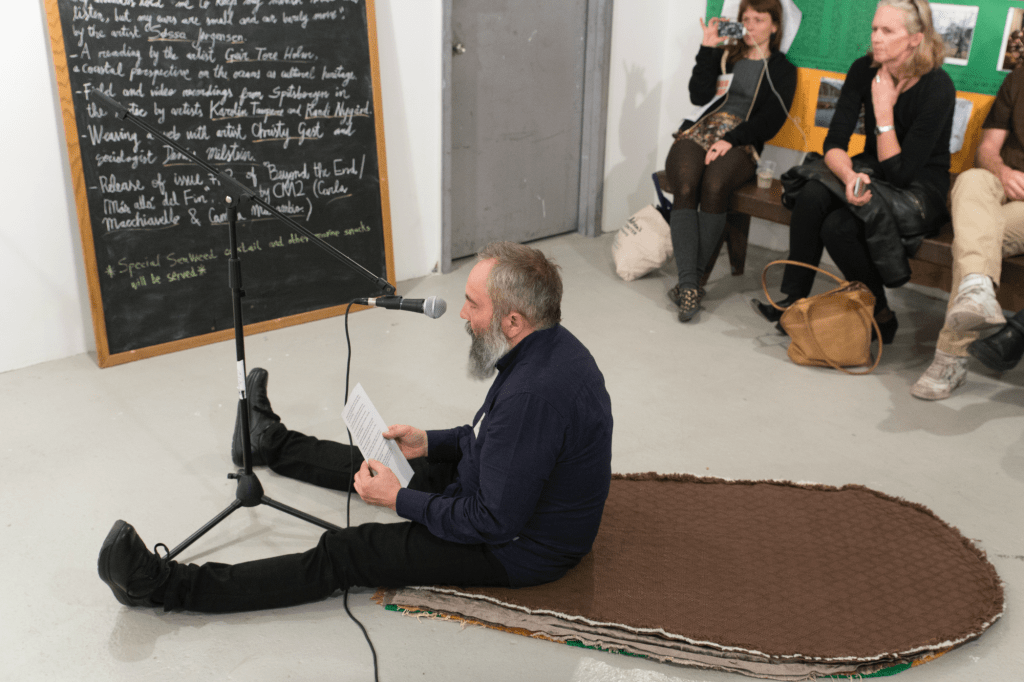
The editors, Karolin Tampere and Randi Nygård will shortly introduce the book and Søssa Jørgensen will present the “Log book” by Sørfinnset skole/the nord land, before we listen to cod rumbling under kurtise and to Michelle-Marie Letelier, a visual artist from Chile, who will talk about her text in the book “On Exceptionalism”. Then the poet Inger Elisabeth Hansen will read a selection of her poems, before we hear a recording of the song “Kings of the Rivers” by artist Christy Gast.

“The Wild Living Marine Resources Belong to Society as a Whole” is a part of Ensayo#4, which is an interdisciplinary project that began in 2015 and deals with management, language, values and identity related to the ocean and the coast in certain parts of Norway and Chile. The goal is to understand, express and manage the big environmental issues we are facing in new and better ways.

The main project Ensayos was founded in Tierra del Fuego in 2011 by curator Camila Marambio.

The publication is supported by Arts Council Norway and Billedkunstnernes vederlagsfond.

Design: David Benski & Laurens Bauer
Edition: 500
ISBN: 978-82-303-3659-5
Published by Randi Nygård and Karolin Tampere as part of Ensayo#4, 2017

The following artists, poets, academics and fishermen have contributed to the book:

Christy Gast, Geir Tore Holm, Søssa Jørgensen, Amy Franceschini and Futurefarmers, Jahn Petter Johnsen (Norges fiskerihøgskule, UiT), Solveig Bøe (NTNU, Trondheim), Jason Hall-Spencer (Plymouth University), Inger Elisabeth Hansen, Alejandra Mancilla (UiO), Lise Doksæter Sivle (Havforskningsintituttet i Bergen), Paul Wassmann (UiT), Camilla Brattland (UiT), Michelle-Marie Letelier, Georgiana Dobre, Camila Marambio, Camilla Renate Nicolaisen, Maja Nilsen, Munan Øvrelid, Cecilia Vicuña, Erik Solheim (UN Environment Executive Director, UNEP), Kjersti Vetterstad, Georgiana Dobre, Camila Marambio, Sarita Gálvez, Barbara Savedra (Director, Wildlife Conservation Society, Chile), Arne Johan Vetlesen (UiO) og Amy Balkin.

Contributors of the Logbook:
Petter Snekkestad, Kjersti Vetterstad, Georgiana Dobre, Snorre Magnar Solberg, Stefan Mitterer, Karolin Tampere, Martin Lundberg, Christy Gast, Geir Tore Holm, Søssa Jørgensen and Amy Franceschini.

The Logbook is funded by Nordland County and the Municipality of Gildeskål

ISBN: 978-82-303-3759-2
Design: Jaan Evart
Edition: 700

______________________

Velkomen til lansering av boka “Dei viltlevande marine ressursane ligg til fellesskapet” i Atelier Felix på Kunstnernes Hus.

Lett servering – og spesialpris på boka!

Antologien inneheld eit vidt spekter av uttrykk: dikt, essay, artiklar, foto, manifest og kunstverk. Dei handlar alle om tema relatert til våre natursyn og vår forvaltning av naturressursane. Boka har fått namnet sitt frå paragraf 2 i den norske havressurslova: Dei viltlevande marine ressursane ligg til fellesskapet i Norge.
Kva kan lover og forvaltning fortelja oss om forholda vi har til naturen og til omgjevnadane våre? Og kva kan kunst gjera i relasjon til klimakrise og miljøproblem?

Redaktørane, Randi Nygård og Karolin Tampere, vil introdusera boka, før vi lyttar til torsk som brummar under gyting, og til Søssa Jørgensen som presenterer den tilhøyrande Loggboka frå Sørfinnset skole /the nord land. Michelle-Marie Letelier, biletkunstnar frå Chile, vil snakka om tema relatert til hennar tekst i boka, “On Exceptionalism”, og Inger Elisabeth Hansen vil lesa eit utval av sine dikt. Til slutt høyrer vi ei innspeling av sangen “Kings of the Rivers” av biletkunstnar Christy Gast.

Publikasjonen er del av det tverrfaglege prosjektet Ensayos, der kunstnarar, lokalbefolkning og forskarar, både natur- samfunnsvitarar, over fleire år studerer og engasjerer seg i tema knytta til politisk økologi. Ensayos blei starta på Ildlandet i Chile i 2011 av kurator Camila Marambio.

Boka er støtta av Norsk kulturråd og Billedkunstnernes vederlagsfond.

Design: David Benski & Laurens Bauer
Opplag: 500
ISBN: 978-82-303-3659-5
Publikasjonen er gitt ut av Randi Nygård og Karolin Tampere som del av Ensayo#4, 2017

I boka bidreg følgjande kunstnarar, forskarar, fiskarar og poetar:

Christy Gast, Geir Tore Holm, Søssa Jørgensen, Amy Franceschini and Futurefarmers, Jahn Petter Johnsen (Norges fiskerihøgskule, UiT), Solveig Bøe (NTNU, Trondheim), Jason Hall-Spencer (Plymouth University), Inger Elisabeth Hansen, Alejandra Mancilla (UiO), Lise Doksæter Sivle (Havforskningsintituttet i Bergen), Paul Wassmann (UiT), Camilla Brattland (UiT), Michelle-Marie Letelier, Georgiana Dobre, Camila Marambio, Camilla Renate Nicolaisen, Maja Nilsen, Munan Øvrelid, Cecilia Vicuña, Erik Solheim (Direktør for FN sitt miljøprogram, UNEP), Kjersti Vetterstad, Georgiana Dobre, Camila Marambio, Sarita Gálvez, Barbara Savedra (Direktør for Wildlife Conservation Society, Chile), Arne Johan Vetlesen (UiO) og Amy Balkin.

Takk til Lise Doksæter og Petter Kvadsheim i prosjektet “3S” (Sonar Safety Sea mammals) ved FFI og Havforskningsinstituttet og til Lise Langgård for at vi fekk bruka deira lyd av kval og torsk.

I Loggboka bidreg følgjande:
Petter Snekkestad, Kjersti Vetterstad, Georgiana Dobre, Snorre Magnar Solberg, Stefan Mitterer, Karolin Tampere, Martin Lundberg, Christy Gast, Geir Tore Holm, Søssa Jørgensen og Amy Franceschini.

Loggboka er støtta av Nordland Fylke og Gildeskål kommune

ISBN: 978-82-303-3759-2
Design: Jaan Evart
Opplag: 700

Cuasi manifiesto del visitante*

/

Silenciarse para escuchar lo silenciado.

Aprender a sentir lo oculto.

Preguntarse por nuestro estar. Practicar estar sin acecho. 

Reconocer lo Selk’nam, Kawéskar, Yámana, Haush.

Atender a la erosión, a las cicatrices que dejó y que va dejando la colonización.

Sabiendo que dejamos huellas, ¿qué forma tienen? ¿qué color? ¿qué tono? ¿qué olor?

Experimentar doblamientos, desdoblamientos, torceduras, vertir horizontales en verticales y verticales acostadas.

Entonar Odas al viento.

Habitar el espacio entre lo consciente y lo inconsciente, para arrancar de la raíz la razón.

Enredarse los unos en los otros, con ternura y curiosidad, con coraje, dispuestos a perdernos. 

Soñar.

Mirar las estrellas.

Ensoñar otro devenir. Ensayar otro devenir. 

Ensoñar para sanar. Ensayar el sanar.

Ensoñar para activar la geografía externa e interna. Ensayar zurcir  la geografía externa e interna.

*Escrito por Camila Marambio, con aportes de Ariel Bustamante, Matías Illanes, y Carolina Saquel, ad portas de su visita a Karukinka a grabar la web serie Distancia.

La Poeta y el Etnógrafo: Cecilia Vicuña y Michael Taussig en Conversación

/

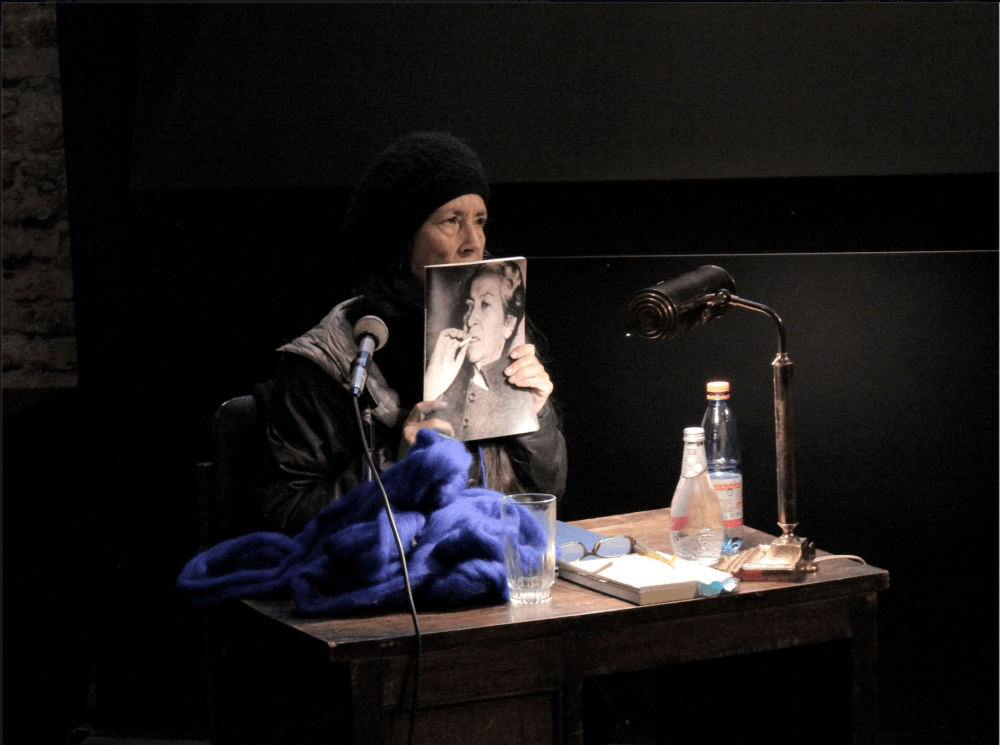
El antropólogo Michael Taussig y la poeta Cecilia Vicuña compartirán sus maneras de trabajar la “música” y el “sonido” de los hechos históricos ahondando en la “tarea del narrador” en una conversación que se realizará el jueves 28 de diciembre de 2017 en el Aula Tecnológica de la Biblioteca Central de la Universidad de Magallanes (Avenida Bulnes 01855, Punta Arenas), a partir de las 19 horas. Modera: Camila Marambio. Organizan: Ensayos, Magíster en Ciencias Sociales Mención Patrimonio o Mención Intervención Social Umag, Instituto de la Patagonia, Universidad de Magallanes, Caleta María, WildLife Conservation Society Chile (WCS).

Michael Taussig es un destacado antropólogo australiano conocido por sus provocativos estudios
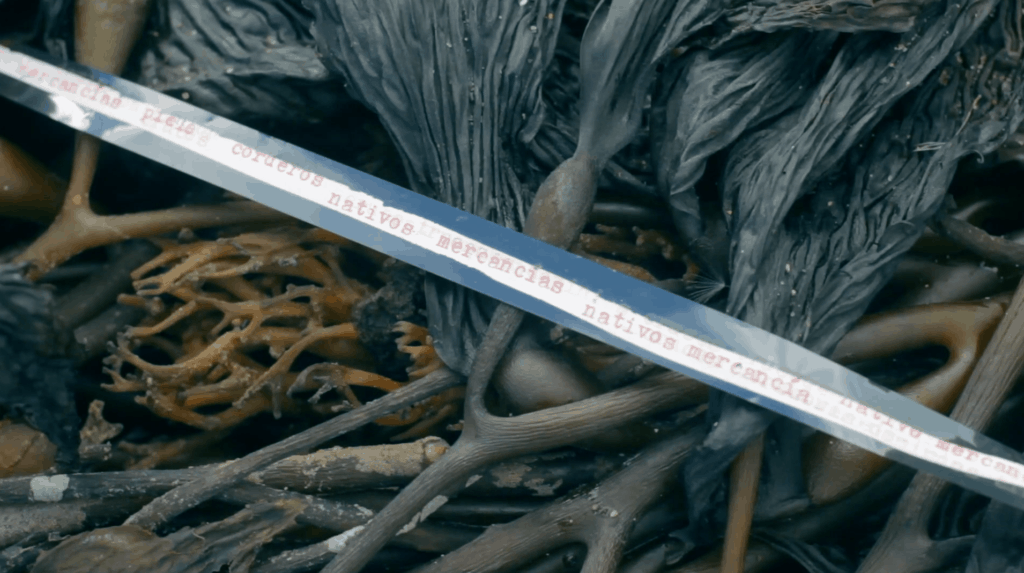
etnográficos y su estilo poco convencional dentro del campo académico. Es profesor de antropología en la Universidad de Columbia en Nueva York. Además de sus numerosas publicaciones antropológicas, los escritos de Michael Taussig sobre Walter Benjamin y Karl Marx han sido elogiados más allá de su campo, especialmente en relación con la idea del fetichismo de las mercancías.

Taussig leerá de su libro nuevo, “Becoming Palm”, co-escrito con la artista Symrin Gill como respuesta a las plantaciones de palma y a las enormes transformaciones humanas y ecológicas que estas plantaciones engendran tanto en Sud America como en Asia del Sur. Además repensará sus escritos sobre los Selk’nam y Yámana publicados en 1999 en su libro “Defacement: Public Secrecy and the Labor of the Negative”.

Cecilia Vicuña es poeta, artista y cineasta chilena de larga trayectoria internacional, creadora de “lo precario” una poética espacial de actos y performances realizados en la naturaleza, calles y museos como una forma de “oir un antiguo silencio esperando ser oído.” Desde los sesentas su obra ha re-elaborado el pensamiento poético y espacial amerindio en busca de una transformación de la conciencia para enfrentar el desastre ecológico de nuestro tiempo. Fundó la Tribu No en Chile en 1967, y co-fundó Artists for Democracy, en Londres en 1974.

Vicuña, cuya labor artística está siempre en conversación con las transformaciones medioambientales, entonará sus propias reflexiones en torno a su experiencia reciente en documenta 14, la gran muestra de arte contemporáneo en Atenas y Kassel que hoy está siendo atacada por el neo-fascismo Europeo. Esta coyuntura le servirá para recordar sus poemas a Lola Kiepja, escritos a fines de los ochenta y comienzos de los noventa, aún inéditos.

La actividad esta abierta a la comunidad y es organizada por Ensayos, el Programa de Magíster en Ciencias Sociales Mención Patrimonio o Mención Intervención Social de la Universidad de Magallanes, el Instituto de la Patagonia (Umag), Caleta María (Tierra del Fuego) y WildLife Conservation Society (WCS).

https://ensayostierradelfuego.net/wp-content/uploads/2017/12/AFICHE-Charla-Taussig-VicunÞa.pdf

¿’Onde va la lancha? at Detroit Institute of Arts

/

Save the date: Christy Gast will perform ¿’Onde va la lancha?, a performance lecture set in Tierra del Fuego’s Admiralty Sound, on Friday, October 6 at 7 pm in the Detroit Institute of Arts’ Rivera Court.

_____________

The Detroit Institute of Arts and James Pearson Duffy Department of Art and Art History, Wayne State University, Detroit, are pleased to present INSTRUMENTAL, a multi-media performance series featuring local and national artists who work in a variety of genres. The following artists will be featured in the performance series: Lisa Rybovich Crallé / Sophia Wang, Jimbo Easter, Angelo Conti, Naysayin, Katie Grace McGowan, Bushwick Bill, Joseph Ravens, Jessica Care Moore with special guests, Christy Gast, Jason Furlow, Beverly Fre$h, DJ Woounz, Kuperus and Miller (aka Adult.), ESHAM, Beili Liu, Cooper Holoweski, Richard Haley, Felicia Carisle, Biba Bell, Anna Rose, Jessica Wildman, and Russ Orlando. The series will also include brief lectures by Mary Anderson, Lauren Kalman, and Chera Kee.

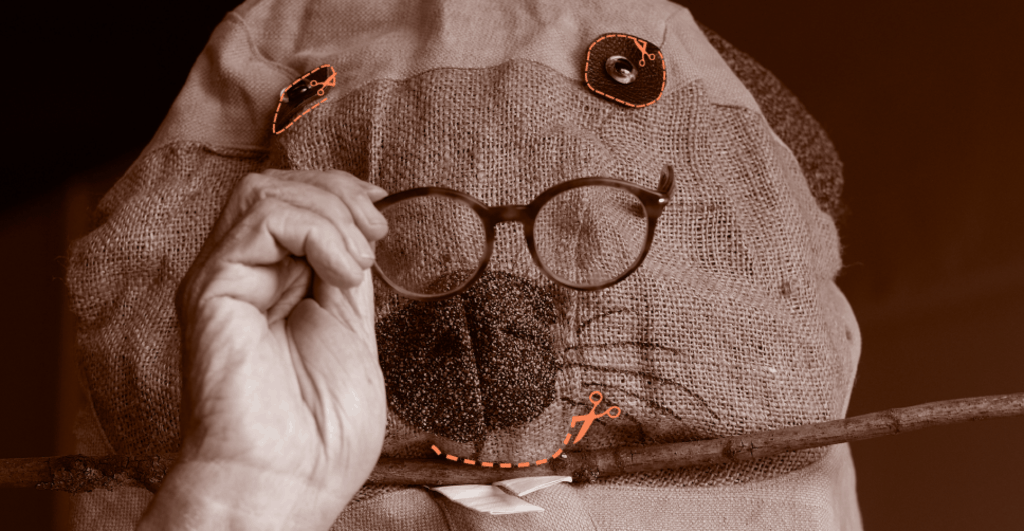
Dreamworlds of Beavers

/

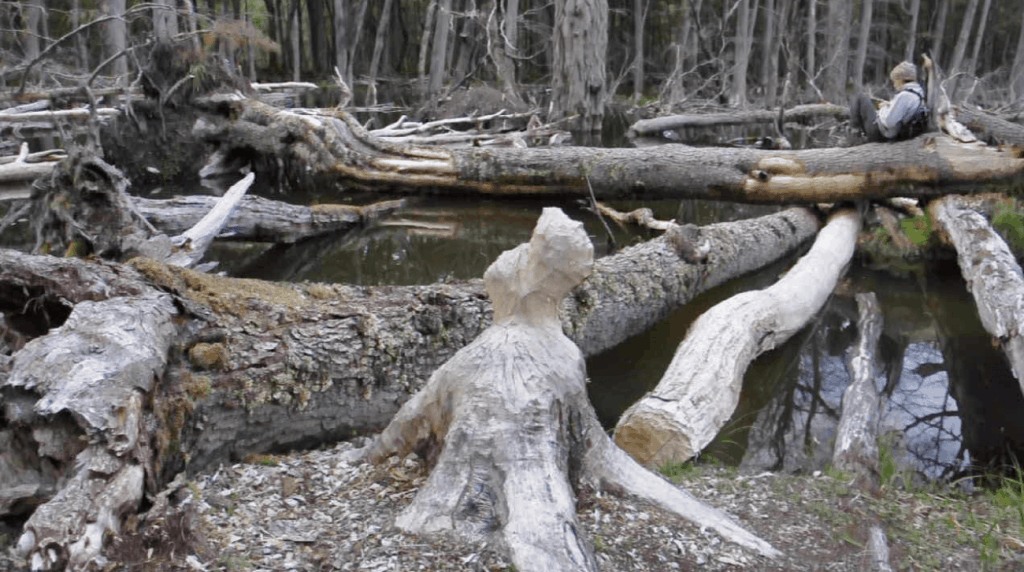
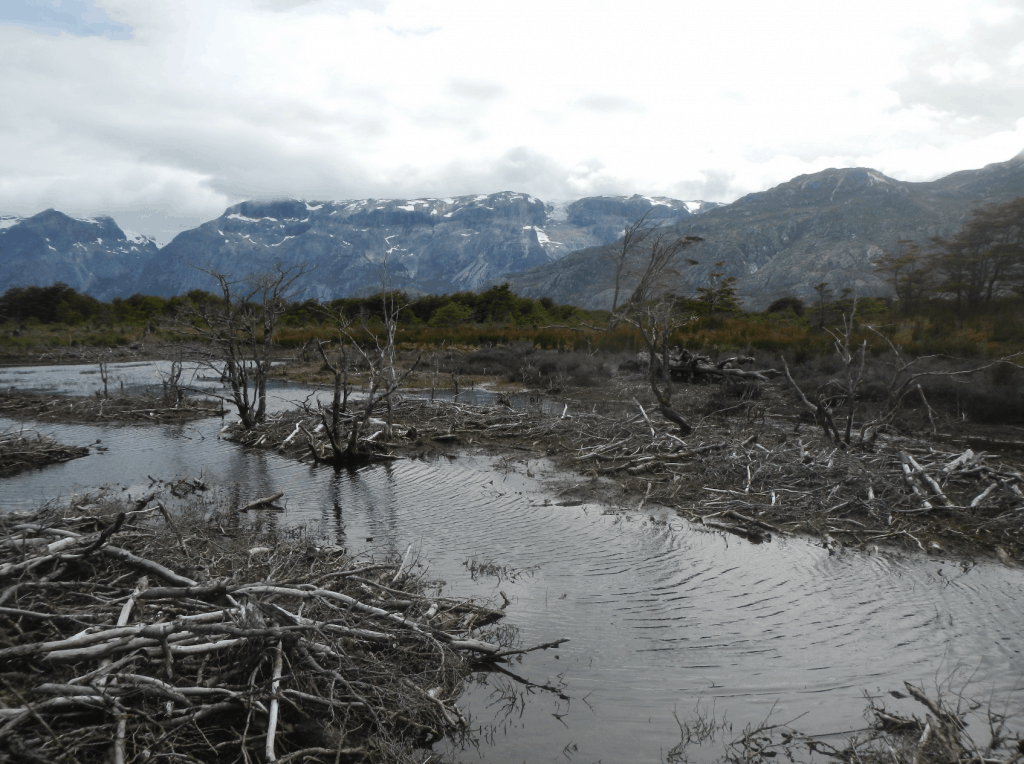
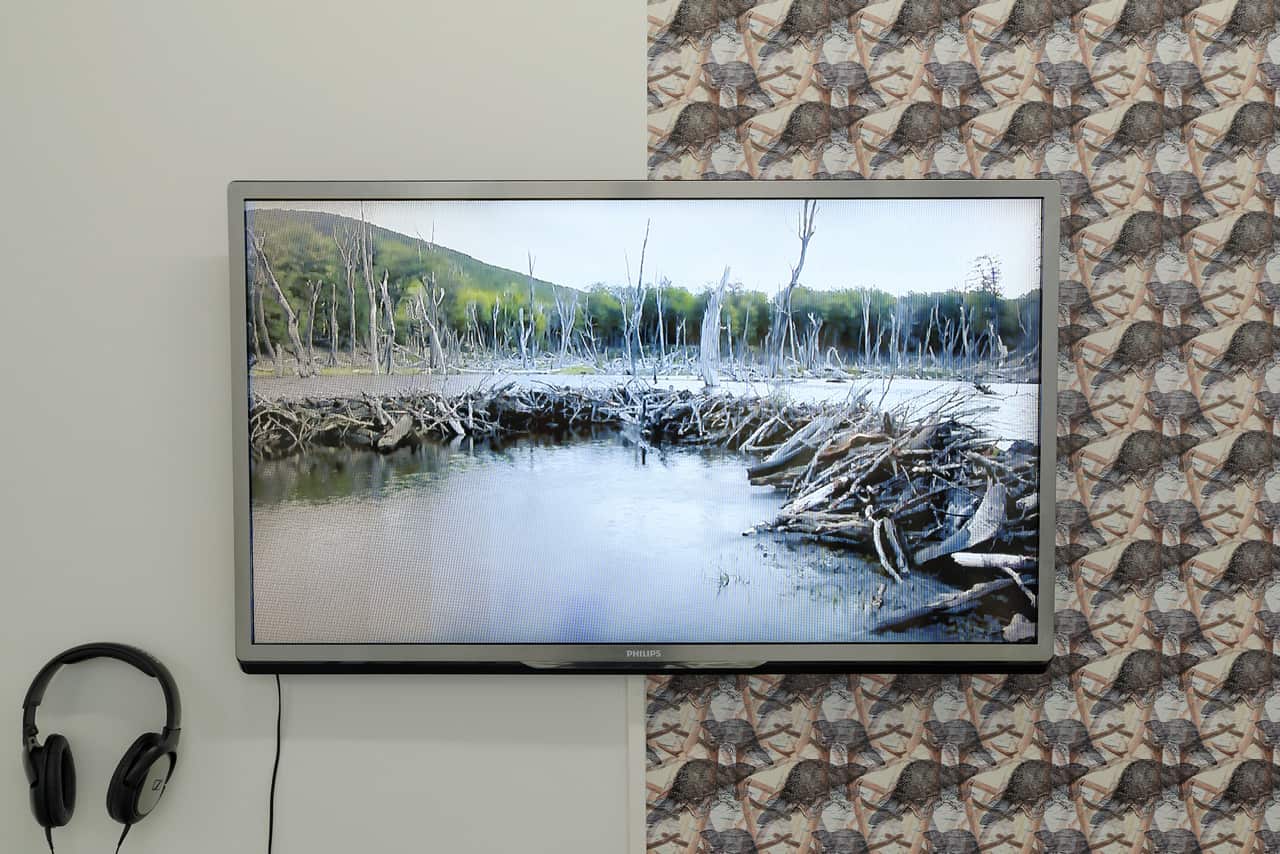
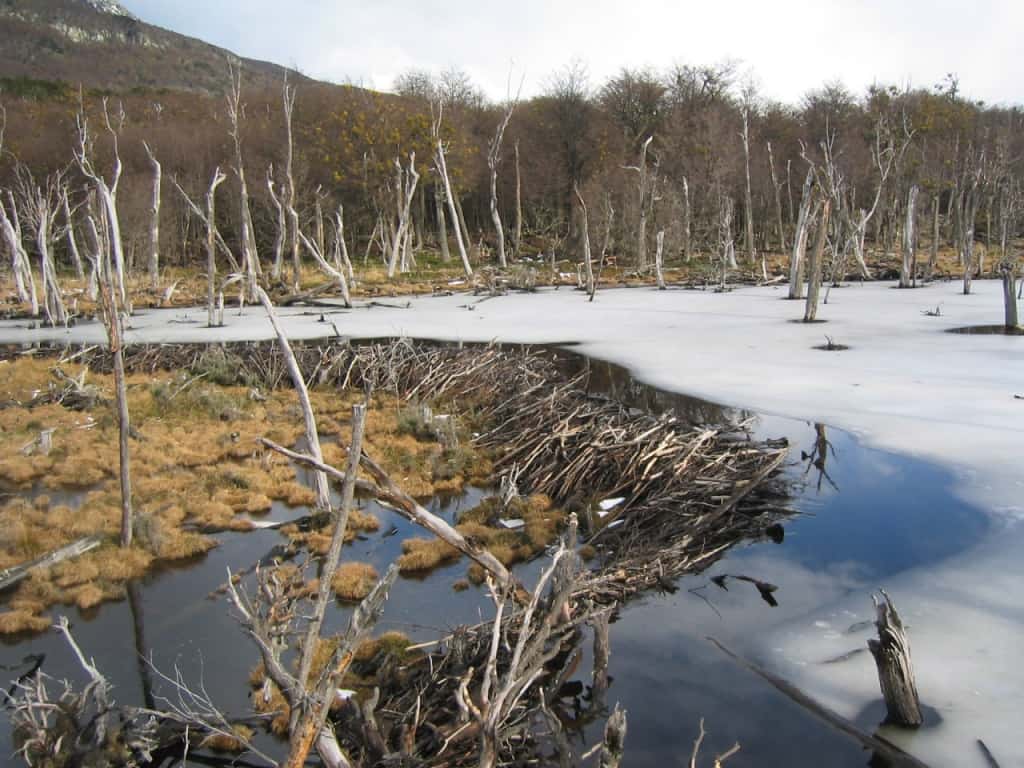
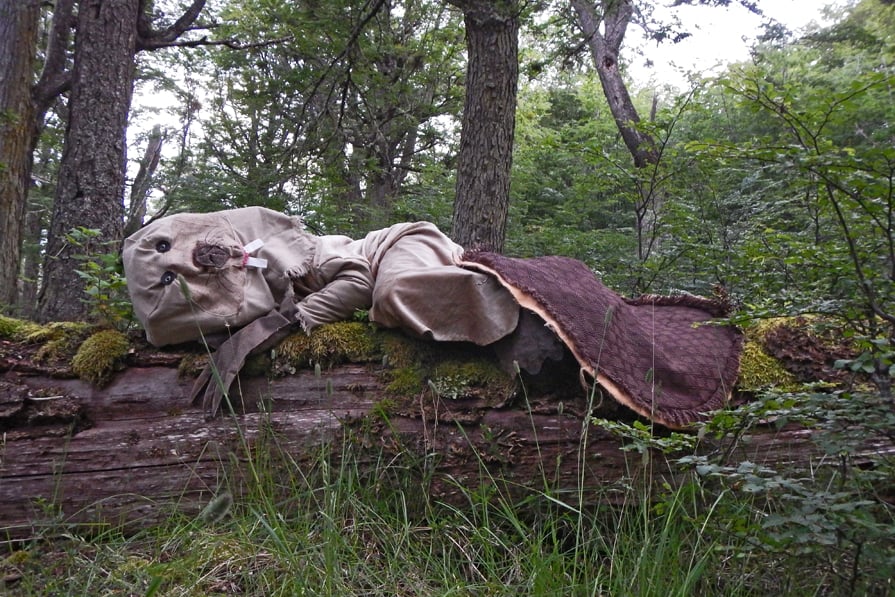
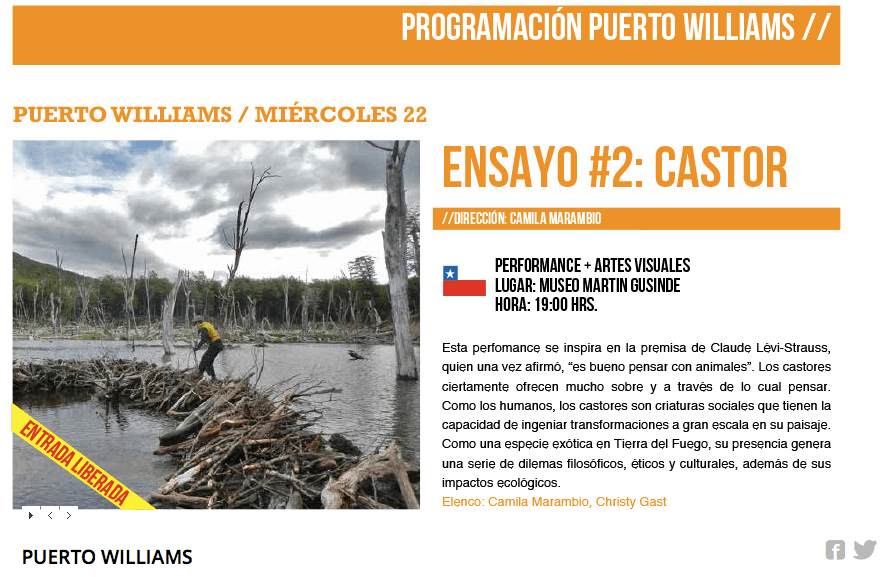
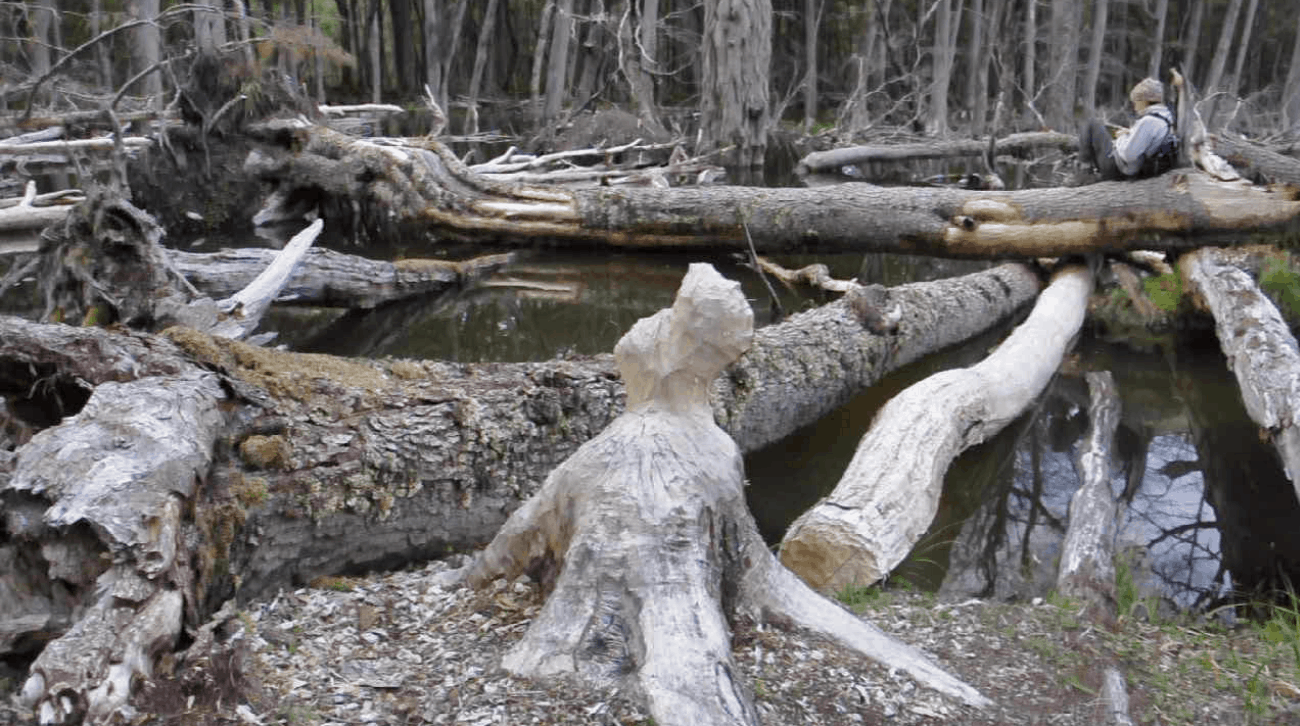
In Tierra del Fuego, beavers are strangely invisible, and simultaneously ever-present. They are fleeting. One rarely sees a beaver, as they spend their days hidden under tannin-dark waters. Instead, only trace impressions. Rows of chew marks on the bark of a fallen tree. Castoreum’s oily residue. Downed timber. Drag lines in the mud.

In the woods, predators lurk. Here, beavers are graceless, lumbering. On the other hand, the pond offers a lightness of being. A safe tranquility. Light captures and enlivens microscopic particles. The calm of a snow globe, these sediments drift along the water column.

Beavers are night creatures, nocturnal. Of course, they may not even notice the dark, as they have such poor eyesight. In a hazy blur, their world is profoundly enlivened by scent and sound. Surely, beavers do not dream in images. Instead, their dreams offer an acrid, musty sensorium. A vibrato of gnashing teeth.

A beaver’s life acquires form in the water. Over the millennia, beavers have “become” with land and water. At some point they learned forestry. Later, to build underwater dens. We all make spaces that comfort us.

Piles of rough timber, tree limbs; really, this is an architecture of kinship. Kinship resists the logic of trees. It is a much messier entanglement.

Like other forms of domestic life, here, home comes into being through routinized labor. Chewing and dragging, chewing and dragging…such repetition. In “becoming beaver”, what other attachments are lost?

Silt, decades old, hovers and skips along every surface, like the landscape of the moon. For astronauts, water signals life’s possibility, though this seems a low bar for encountering the magic of other worlds. Beavers practice this kind of magic–what we call “becoming in other worlds.

Let us resist the indications of industry. Busy as a beaver? Instead, contemplate the intimacy of water.

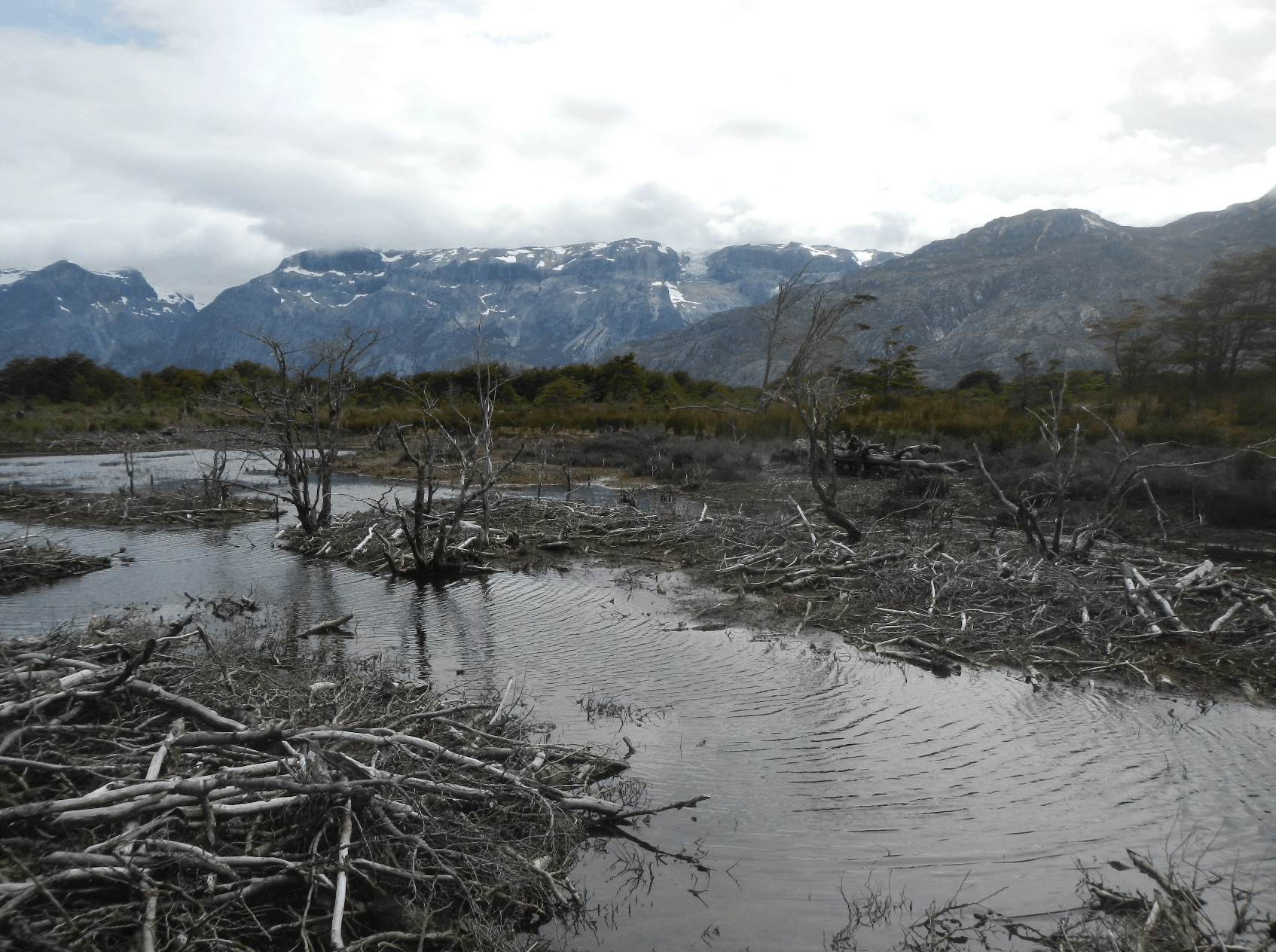
Beavers are remaking this land of fire. Where rivers rushed wild, now dead trees litter the landscape like so many discarded pick-up-sticks. There is little hope for the forest’s return.

Can a forest be saturated by grief? If so, this is a form of forest arboressence, or, a forest made unchanging and stable. Put another way, it is a grief bound by our attachment to nature’s purity–a purity that no one really believes.

What happens when we look beyond this grief, when we pause for a moment of speculative wonder?

Text by Laura Ogden, Camila Marambio & Christy Gast

Coastal Curriculum in Coney Island

/

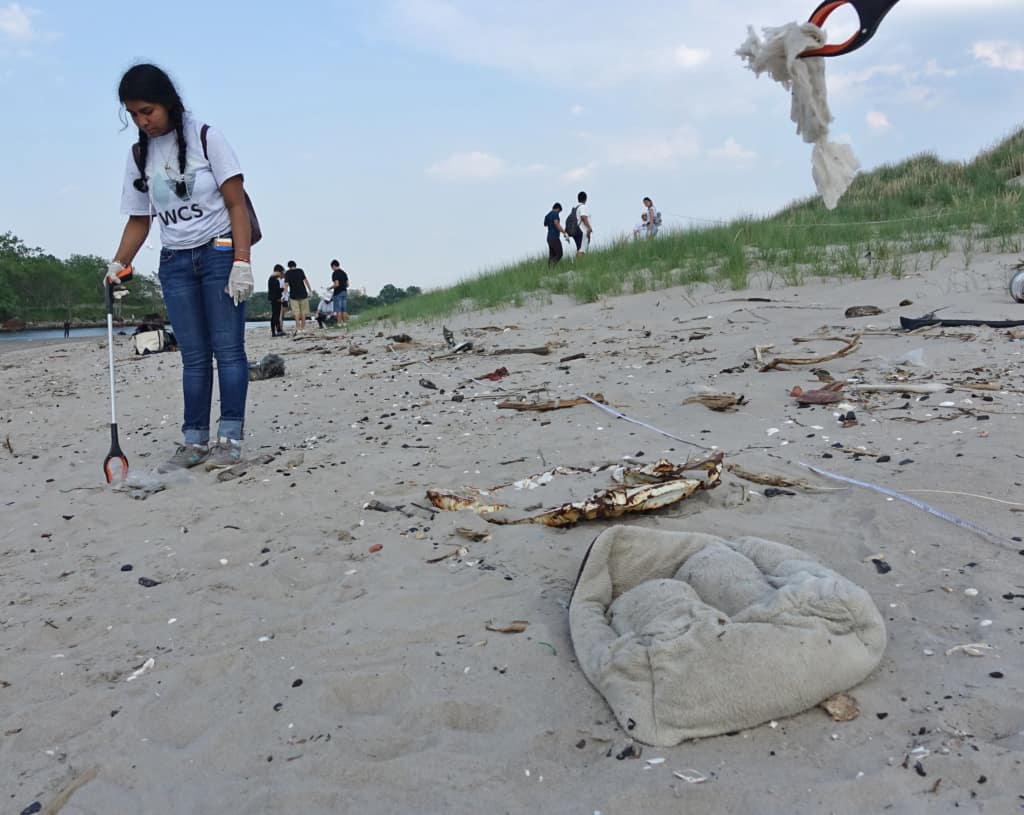
This short film was produced as the result of a series of workshops with a group of teenagers from the New York Aquarium’s Wildlife Conservation Corps, which focuses on public-facing science and ocean advocacy projects. Led by the Aquarium’s artist in residence Christy Gast, they began by employing the Plastic Census Protocol developed during Gast’s Ensayo #4 residency at Bahía Jackson in Tierra del Fuego. Over the following weeks, they teased a narrative out of the objects they collected, asking where they came from, how they got there, and how they could advocate for change. They worked with playwright Cory Tamler to develop a script, composer Paul Hogan to record the soundtrack, and Christy Gast and George Ferrandi on the animation.

_________________

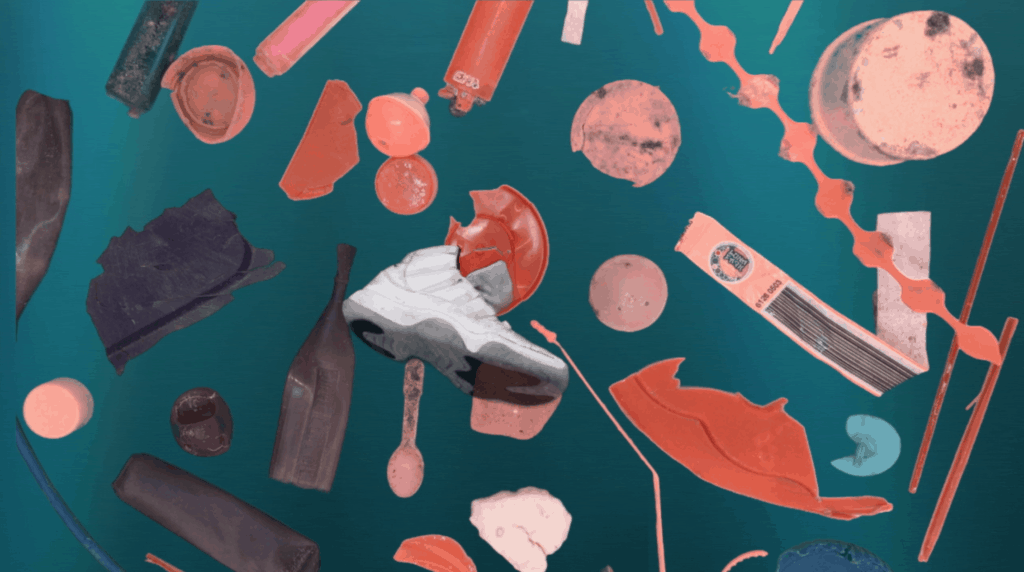
2 Lost Soles was created by an artist-led group of teens from The Wildlife Conservation Corps (WCC), a field based training program for students planning to pursue careers in natural resources fields. This short trailer combines still animation and real-time video to tell the love story of two lost “soles” as they leave the feet of unknown humans from the past. As they float through the ocean for a thousand years, they are subsumed by a lifeless galaxy of plastic trash produced by a past culture of consumption. In this cinematic version of the future, there is no life in the sea, only floating garbage. But if we think ahead and act now, we might be able to flip the script and protect the ocean for generations to come. Watch to the end to find out how you can help!

Tánana

We are pleased to share the trailer for Tánana, a documentary by our associates in Puerto Williams.

___________

TÁNANA, estar listo para zarpar en lengua yagán, es el regreso de Martín González Calderón al corazón del archipiélago del cabo de Hornos. Don Martín es un artesano yagán, pueblo que por más de 6000 mil años habita el territorio más austral del planeta. Creció en los hermosos y exuberantes canales del archipiélago fueguino, navegando a través de las miles de islas y parajes que componen la particular geografía del último rincón de América.

Las extensas travesías de caza que realizó junto a sus padres, le permitieron conocer los saberes y secretos más profundos de la navegación ancestral, recibiendo un legado que se transmitió por generaciones desde tiempos inmemoriales. Sin embargo, este modo de vida fue violentamente detenido, a raíz de la intervención de los estados de Chile y Argentina, especialmente a partir de los problemas políticos de los años 70. Desde entonces, la escasa población yagán aún con vida, no puede navegar como antes, concentrando su vida en Puerto Williams, Isla Navarino.

Cuarenta años después, Martín, motivado por la necesidad de transmitir sus conocimientos únicos sobre la cultura ancestral y el territorio, prepara una nueva travesía. Así, retoma su oficio de carpintero de ribera para construir una embarcación adecuada. Asentándose en Bahía Mejillones, único predio perteneciente a la Comunidad Yagán actualmente, a 30 kilómetros de Puerto Williams, y con ayuda de su familia, consigue sacar adelante está tarea, al mismo tiempo que les instruye respecto a tan importante conocimiento para la vida en los canales.

Listo para zarpar con su nueva embarcación, Martín y su yerno comprobarán que las nuevas exigencias para la navegación representan una gran traba, por lo que la expedición deberá requerir apoyo para alcanzar todos los lugares anhelados. De este modo comienzan su travesía a través de cientos de rincones por años sin visitar. Allí se encuentran con las ruinas y vestigios de su antigua vida, reviviendo sus profundos y únicos conocimientos sobre la memoria viva de los canales, de su deslumbrante historia, su impresionante fauna y geografía, en pleno corazón del archipiélago más austral del mundo.

La navegación, la aventura y los recuerdos de Martín, se entremezclan con sus habilidades artesanales, su soledad y su vida familiar. No obstante, tras la necesidad por dejar un legado para su descendencia y su pueblo, hay también un deseo especial por realizar, emular la hazaña de rodear el Falso Cabo de Hornos, como lo hizo a sus doce años de edad junto a su padre, como sencillos navegantes en su pequeña embarcación a remo y vela. En esa dirección trazó la ruta del viaje, esperando revivir, quizás por última vez, esos momentos de conexión ancestral única con los mares más difíciles del planeta, sabiendo que, además de ser uno de los últimos reales cabo horneros del mundo, es uno de los últimos grandes navegantes de su pueblo.

___________

Tánana, “get ready to set sail” in the Yahgan language, is the return of Martín González Calderón to heart of the Cape Horn archipelago. Don Martín is a yahgan craftsman, people who live´s for more than six thousand years in the southernmost territory of the planet. He grew up in the beautiful and exuberant channels of Tierra del Fuego Archipelago, sailing through the thousands of islands and places that make up the unique geography of the last corner of America.

The long hunting trips he made with his parents allowed him to know the deepest knowledge and secrets of ancient navigation, receiving a legacy that was transmitted for generations since immemorial time. However, this way of life was violently stopped, due to intervention of Chile´s and Argentina´s state, especially from the political problems of the 70s. Since then, the few Yahgan people still alive, cannot sail as before, concentrating their life in Puerto Williams, Isla Navarino.

Forty years later, Martin, motivated by the need to transmit his unique knowledge of the culture and ancestral territory, prepares a new journey. He recovers his skills as a shipwright to build a suitable boat. Settling in Mejillones Bay, the only property of to the Yagan Community today, 30 kilometers from Puerto Williams, with the help of his family gets to move this task, while instructs them about this important skill for life in the channels.

Ready to sail with his new boat, Martin and his son in law verify that the new requirements for navigation represent a major obstacle, so the issue will require support to reach all the cherished places. Thus begins their journey through hundreds of corners and places not visited for years. There they will find the ruins and vestiges of his old life, reliving his deep and unique knowledge and memory about the channels, with its dazzling history, stunning wildlife and geography, in the heart of the southernmost archipelago in the world.

Sailing, adventure and memories of Martin, mingle with his craftsmanship, his loneliness and his family life. However, after the need to leave a legacy for his descendants and his people, there is also a special desire to perform, to emulate the feat of surrounding the False Cape Horn, as he did as a twelve years old boy with his father, as simple sailors in their small boat, with oars and sails. In that direction he traced the route of the trip, hoping to revive, perhaps for the last time, those moments of deep ancestral connection with the most difficult seas of the world. Knowing that, in addition to being one of the last real cape horner of the world, he is maybe the last of the great navigators of his people.

Ensayos co-presents Cecilia Vicuña Performance Lecture @ Bella Union in Melbourne

/

Cecilia Vicuña – The Artist As… Poet

“lo precario” (the precarious); transformative acts that bridge the gap between art and life, the ancestral and the avant-garde.

THU 6 Oct 2016
6PM-8PM
Bella Union
Cnr Victoria and Lygon St, Carlton
Wheelchair Accessible

FREE

Liquid Architecture, Ensayos, Institute of Modern Art (IMA) Brisbane and Curatorial Practice at MADA (Monash Art Design and Architecture) are pleased to present a special performative lecture by the Chilean poet, artist, filmmaker and activist Cecilia Vicuña.

Vicuña’s lecture is part of The Artist As…, a year-long lecture series co-presented by the IMA and Curatorial Practice at MADA. The series examines the ways artists move through the world and how that movement might involve adopting other roles to pursue a project, a position, a politics, or a practice. For any given project the artist may act as architect, as ethnographer, as archivist, as producer, as curator, as activist, as choreographer, and so on. The Artist As… also recognises that many artists come to their practice as experts in other fields, bringing with them specialist knowledge that informs and shapes their work.

Cecilia Vicuña’s multifaceted work addresses the pressing concerns of the modern world; ecological destruction, human rights and cultural homogenisation. Born and raised in Santiago, Chile, she has been in exile since the early 1970s after the military coup against elected president Salvador Allende.

Beginning in the mid 60′s in Chile, Vicuña’s practise might be formulated as “hearing an ancient silence waiting to be heard”. Her works are fluid and tangential, often starting as poems, becoming images that morph into film, song, sculpture or collective performance. These ephemeral, site specific actions in nature, streets and museums combine ritual and assemblage. She calls her impermanent, participatory work “lo precario” (the precarious); transformative acts that bridge the gap between art and life, the ancestral and the avant-garde.
In Chile Vicuña founded the legendary Tribu No in 1967, a group that created anonymous poetic actions throughout the city. In 1974, exiled in London, she co-founded Artists for Democracy to oppose dictatorships in the Third World.

Vicuña has published twenty-two art and poetry books, including Kuntur Ko (Tornsound, 2015) and Spit Temple: The Selected Performances of Cecilia Vicuña (Ugly Duckling Presse, 2012). Her Selected Poetry is forthcoming from Kelsey Street Press, 2017. In 2009, she co-edited The Oxford Book of Latin American Poetry, 500 years of Latin American Poetry. She edited ÜL: Four Mapuche Poets, in 1997.

A partial list of museums that have exhibited her work include: The Museu de Arte Moderna do Rio de Janeiro, Brazil; Museo Nacional de Bellas Artes de Santiago; The Institute of Contemporary Arts (ICA) London; The Whitechapel Art Gallery in London; The Berkeley Art Museum; The Whitney Museum of American Art; and MoMA, The Museum of Modern Art in New York.
She was appointed Messenger Lecturer 2015 at Cornell University, an honor bestowed on authors who contribute to the “Evolution of Civilization.”
She divides her time between Chile and New York.

Ensayos Founder Marambio Is ICI Independent Vision Curatorial Award Finalist

/

ICI’S 2016 INDEPENDENT VISION CURATORIAL AWARD NOMINEES

camila-marambio_papudo
Camila Marambio, Ensayos Founder & Director

Established in 2010 as an initiative of the Gerrit Lansing Education Fund, the Independent Vision Curatorial Award reflects ICI’s commitment to supporting international curators early in their careers who have shown exceptional creativity and prescience in their exhibition-making, research, and related writing. The award, including a $3,000 stipend towards a new project, is given every two years to an early or mid-career curator to support their independent practice through ICI, and give them a platform to pursue and publish their research online. The Independent Vision Curatorial Award is significant in that it is one of the very few awards in the world to recognize rising curatorial talent.

Past recipients of the award are Doryun Chong (2010), Chief Curator at M+, Hong Kong; Nav Haq (2012), recently appointed curator of the 2017 Göteborg International Biennial for Contemporary Art, & Jay Sanders(2012), Curator and Curator of Performance at the Whitney Museum of American Art, New York – both selected for the Award by Hans Ulrich Obrist; and Eva Barois De Caevel (2014), an independent curator who earlier this year collaborated on the 37th EVA International, Ireland Biennial of Contemporary Art, Limerick, selected by Nancy Spector.

This year we reached out to 12 international curators and ICI collaborators have each nominated one emerging or mid-career curator for the award. From these nominations, Franklin Sirmans, Director of the Pérez Art Museum Miami, will select and present this year’s award at the ICI Annual Benefit & Auction on October 26, 2016.

The 2016 Gerrit Lansing Independent Vision Curatorial Award Nominating Committee is comprised of: Omar Berrada, Writer, translator, and curator; Joselina Cruz, Director and Curator at the Museum of Contemporary Art and Design (MCAD), De La Salle-College of Saint Benilde, Manila; Elvira Dyangani Ose, Lecturer in Visual Cultures at Goldsmiths, independent curator and member of the Thought Council at the Fondazione Prada; Ruth Estévez, Director & Curator, Gallery at REDCAT; Sam Bardaouil and Till Fellrath, Independent curators and academics, Co-founders of the multidisciplinary curatorial platform Art Reoriented, Munich and New York; Julieta González, Chief Curator / Interim Director, Museo Jumex and Adjunct Curator of Modern and Contemporary Art, Museu de Arte de São Paulo (MASP); Susan Hapgood, Executive Director, International Studio & Curatorial Program; Aileen Burns and Johan Lundh, Executive Co-Directors of the Institute of Modern Art, Brisbane; Lucía Sanromán, Director of Visual Arts, Yerba Buena Center for the Arts, San Francisco; Sally Tallant, Director, Liverpool Biennial; Emiliano Valdés, Chief Curator, Museum of Modern Art, Medellín; and Jochen Volz, Curator of the 32nd Bienal de São Paulo 2016.


The 2016 Independent Vision Curatorial Award Nominees are
:
Amanda Abi Khalil: Independent curator and Founder, Temporary Art Platform; Beirut, Lebanon.
Elisé Atangana: Independent curator and producer; Curator, Seven Hills, Kampala Art Biennale 2016, Uganda; Cameroon and France.
Rashida Bumbray: Independent curator and choreographer; Senior Program Manager, the Arts Exchange, Open Society Foundations; New York, USA.
Diana Campbell Betancourt: Chief Curator Dhaka Art Summit and Artistic Director, Samdani Art Foundation, Dhaka, Bangladesh; and Bellas Artes Project, Bagac; The Philippines.
José Esparza Chong Cuy: Pamela Alper Associate Curator, MCA Chicago; Chicago, USA.
Sabel Gavaldon: Independent curator; London, UK.
Candice Hopkins: Independent curator and writer; Albuquerque, USA.
Miguel A. Lopez: Chief Curator, TEOR/éTica; San José, Costa Rica; Co-founder, Bisagra, Lima, Perú.
Camila Marambio: Independent curator; Tierra del Fuego, Chile.
Louise O’Kelly: Founding Director, Block Universe Performance Art Festival; London, UK.
Fatos Ustek: Independent curator and writer; London, UK.
Vivian Ziherl: Curator, Jerusalem Show VII Before and After Origins (2016) and Founder, Frontier Imaginaries; Amsterdam, the Netherlands.

Más allá del fin, Issue # 2

This second issue of the periodical Más allá del fin brings together multiple approaches to the intersections between art, science, ecology, rights, performance and other life experiences taking place in and around Tierra del Fuego.

mas-alla-del-fin-2

Contesting Marginality: Three lectures on recent Chilean art and art historiography by Carla Macchiavello

/

Discipline and Ensayos, along with Gertrude Contemporary, the Australian Centre for Contemporary Art and The Alderman, are pleased to present three lectures on recent Chilean art and art historiography by Chilean art historian, Carla Macchiavello. The lectures will take place at three different venues in Melbourne between Tuesday 12 and Thursday 14 July. All are free to attend.

Tuesday, 12th July 2016, 6:00 for 6:30pm
The Alderman, Melbourne (upstairs)
Convened by Rex Butler

‘Rough edges or Extremadura: a brief panorama
of Chilean art, from centres to margins’

Since the 1970s, Chilean art has been haunted by a concern with borders and territoriality. During the 1970s and 1980s, margins were taken as physical and imaginary spaces from which to contest the repression imposed by the military dictatorship as artists working in conceptualist modes associated dissidence with crossing lines and trespassing borders. The return to democracy in the 1990s saw a re-evaluation of the notion of margin as those conceptual artists of the 1970s became part of a local canon of political art (known as ‘escena de avanzada’) and other forms of internal and global borders came to the fore. Moving from the 1970s to the 1990s and the present, this talk explores the enmeshed notions of landscape, territory, nationality, and ethnicity in Chilean art from the 1970s to the present, arriving at the more recent development of a marketable “extreme” conception of Chilean art and critical ‘end of the world’ reflections.

Wednesday, 13th July 2016, 6:00 for 6:30pm
Gertrude Contemporary, Melbourne (Studio 18)
Convened by Camila Marambio
Co-presented by Gertrude Contemporary

‘We were always fueguinos’

In the midst of the military dictatorship, the bodies and landscapes of Tierra del Fuego and the southernmost regions of Chile were imagined by several artists as the margin incarnated—an ambiguous border inside and outside the nation where a battle of inscriptions took place. During the transition to democracy in Chile, the images of fueguinos’ bodies and southern landscapes continued to be appropriated as signs of internal colonialism and a globalised yet marginal national identity. Today they still act as signs of contested identities and haunting memories of a violent past. This talk explores how the fluctuating appropriations and reenactments made by Chilean artists of images of Tierra del Fuego since the 1970s question identity, violence, and sovereignty.

Wednesday, 13th July 2016, 8:00pm
Gertrude Contemporary, Melbourne (Studio 18)

¿‘Onde va la lancha?
Christy Gast

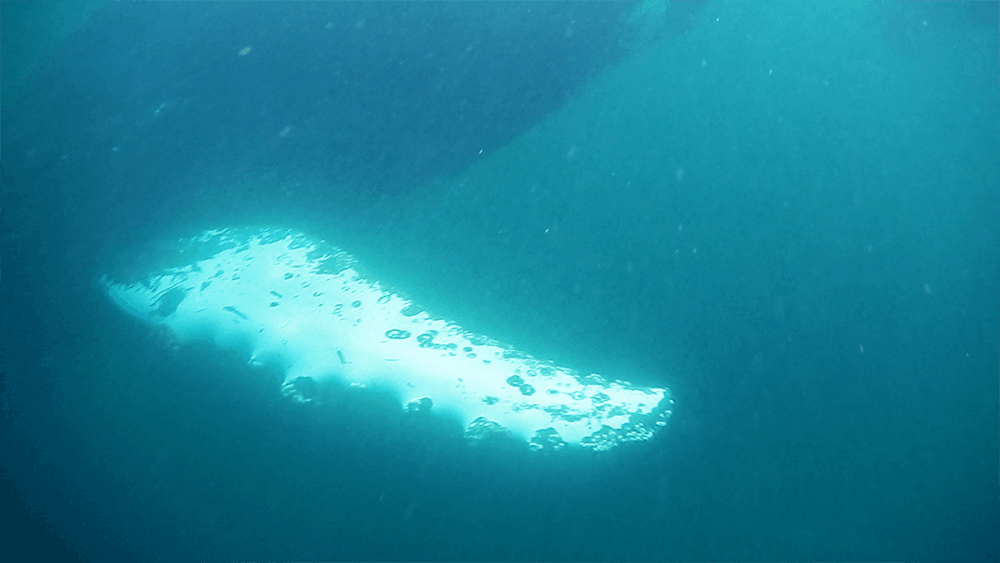
¿‘Onde va la lancha? is a 25-minute lecture-performance by New York–based artist, Christy Gast. Gast provides a live voice-over for a video projection that was filmed in the fjords of Tierra del Fuego. We find ourselves inside an artisanal fishing boat during a storm, its creaking and rocking provides the rhythm for a song; the audience joins in. We are under water with a whale. The whale whispers, we learn its song. We are underwater collecting shellfish; we sing the forgotten song of the west wind. The lecture begins as a conventional artist’s talk, but as the camera dives below water the tone changes—the audience and the artist are immersed in the world of the fjord and must come to terms with its inhabitants, past and present.

Thursday, 14th July 2016, 6:00pm
Australian Centre for Contemporary Art, Melbourne
Convened by Helen Hughes
Co-presented with the Australian Centre for Contemporary Art

‘Juan Downey’s Video Ecologies: thinking with the senses’

This lecture focuses on the confluence of ecology and a politics of the senses in the video works of Juan Downey (Santiago, 1940–New York, 1993). Downey was an artist who developed a wide-ranging oeuvre in video art to explore his concerns on displacement, communication across cultures, histories of colonialism, mediation, and the interlacing of body and technology. Through the medium of video, Downey embarked on a nomadic movement across continents, modes of knowledge and representation, entwining autobiography with ethnography, the documentary format with its parody and deconstruction, analyses of semiotics, politics, art histories and architectures of the north and south, and a utopian vision of technology with its critique to propose new forms of cultural agency and connection. The lecture will focus on videos from the Video Trans Americas series and The Thinking Eye series.

Carla Macchiavello is an art historian who works with Latin American contemporary art, performance and video, and the relations between art, politics and performative practices. She has published articles and essays on contemporary Chilean and Latin American art since the 1970s with an emphasis on artistic practices aimed at social change. After receiving a PhD in Art History and Criticism from Stony Brook University, New York in 2010, she worked as Assistant Professor in Art History at Universidad de los Andes, Bogotá, Colombia, and since 2015 she has been an Assistant Professor in Art History at the Borough of Manhattan Community College, CUNY, New York. She has curated exhibitions on recent Latin American art and formed part of curatorial and editorial committees, including La Otra 2011 (Bogotá), the journal Cuadernos de Arte of Pontificia Universidad Católica de Chile, Seismopolite, and Más allá del fin/Beyond the End for Ensayos, an art and science program in Patagonia.

Christy Gast is an artist based in New York whose work across media reflects her interest in issues of economics and the environment. Gast’s work stems from extensive research and site visits to places that she thinks of as ‘contested landscapes.’ These range from beaver-ravaged sub-Antarctic forests, to a mountain in Phoenix undergoing a politicised name change, to the extensively engineered canals and dikes around Lake Okeechobee that divert water from the Everglades. She is interested in places where there is evidence of conflict in human desires, and she traces, translates or mirrors those conflicts through her art practice. Her work has been exhibited at MoMA/P.S.1 Contemporary Art Center, Performa, Artists Space, Harris Lieberman Gallery and Regina Rex in New York; the Perez Art Museum of Miami, Bass Museum of Art, de la Cruz Collection, Locust Projects, Casa Lin and Gallery Diet in Miami; as well as Mass MoCA, the American University Museum, L.A.C.E., High Desert Test Sites, Centro Cultural Matucana 100 and the Kadist Foundation Paris.

Video still: Francisca Benitez, Décimas Telúricas, 2010.

Discipline is a Melbourne-based publisher and contemporary art journal edited by Nicholas Croggon, David Homewood, and Helen Hughes.

¿’Onde va la lancha? : Christy Gast performs at Gertrude Contemporary

/

Christy Gast: ¿’Onde va la lancha? 

Date: Wednesday 13 July 2016
Location: Gertrude Contemporary
Time: 6pm for a 6.30pm start, finishing approximately at 8.30pm.

Discipline, Ensayos, and Gertrude Contemporary are pleased to present ¿’Onde va la lancha?  a performance by artist, Christy Gast. The evening will be convened by Camila Marambio. The performance is preceded by a lecture by Chilean art historian Carla Macchiavello entitled ‘We were always fueguinos’.

¿’Onde va la lancha? is a 25-minute lecture-performance by New York–based artist, Christy Gast. Gast provides a live voice-over for a video projection that was filmed in the fjords of Tierra del Fuego. We find ourselves inside an artisanal fishing boat during a storm, its creaking and rocking provides the rhythm for a song; the audience joins in. We are under water with a whale. The whale whispers, we learn its song. We are underwater collecting shellfish; we sing the forgotten song of the west wind. The lecture begins as a conventional artist’s talk, but as the camera dives below water the tone changes—the audience and the artist are immersed in the world of the fjord and must come to terms with its inhabitants, past and present.


Biography:

Christy Gast is an artist based in New York whose work across media reflects her interest in issues of economics and the environment. Gast’s work stems from extensive research and site visits to places that she thinks of as ‘contested landscapes.’ These range from beaver-ravaged sub-Antarctic forests, to a mountain in Phoenix undergoing a politicised name change, to the extensively engineered canals and dikes around Lake Okeechobee that divert water from the Everglades. She is interested in places where there is evidence of conflict in human desires, and she traces, translates or mirrors those conflicts through her art practice. Her work has been exhibited at MoMA/P.S.1 Contemporary Art Center, Performa, Artists Space, Harris Lieberman Gallery and Regina Rex in New York; the Perez Art Museum of Miami, Bass Museum of Art, de la Cruz Collection, Locust Projects, Casa Lin and Gallery Diet in Miami; as well as Mass MoCA, the American University Museum, L.A.C.E., High Desert Test Sites, Centro Cultural Matucana 100 and the Kadist Foundation Paris.


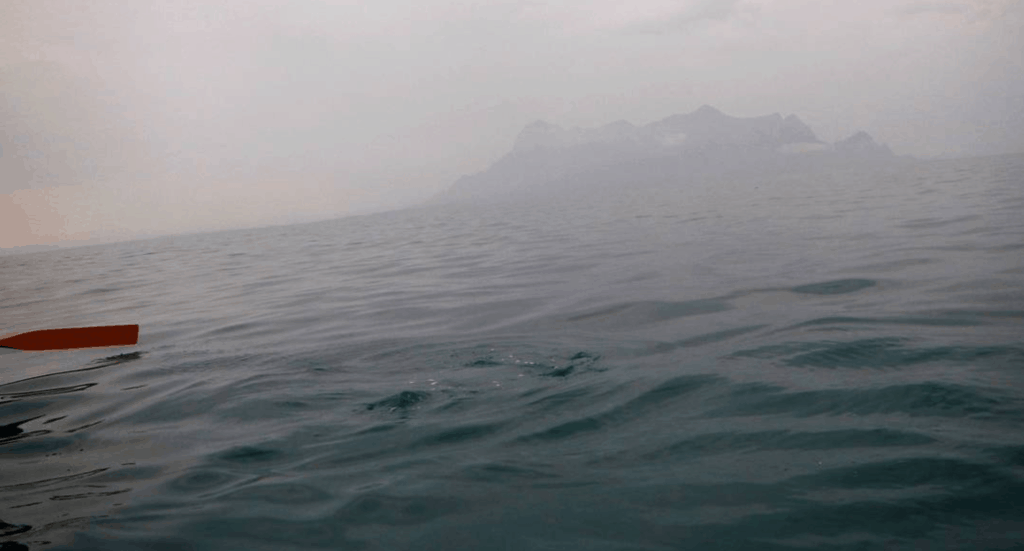
Image: Christy Gast, ¿’Onde va la lancha?, 2016. Video still (rough seas).

Denise Milstein on Ensayos at ISA Forum of Sociology in Vienna

/

Session: The Cultural Dimension of Innovation Processes
Oral Presentation: Trials in Tierra Del Fuego
3rd ISA Forum of Sociology
Thursday, 14 July 2016: 16:00
Location: Hörsaal 34 (Main Building)

Denise MILSTEIN, Sociology, Columbia University, USA

This paper examines the emergence of innovation and the articulation of future projects based on participatory action research in Ensayos, a collaborative program that brings together artists and scientists in the Tierra del Fuego archipelago of the sub-Antarctic. Over the past five years, the collaboration has grown into an international, multidisciplinary community devoted to engaging with the political ecology of the region. Several projects, both artistic and scientific, pursue common research questions, themes and concerns through overlapping collaborations. These address issues of sustainability for human and non-human populations in Tierra del Fuego, the conflict between the built environment and the protection of wilderness, the transformation of the ecosystem as a result of invasive species, and the impact of migration on indigenous populations. Innovative approaches, both for art and science, have emerged consistently as a result of the interactions between Ensayos participants. The paper describes the participatory action research process itself, and thereby reveals the patterns whereby both innovation and future oriented thinking emerge within the group. Based on oral history interviews and ethnographic observation, we create social networks, both conceptual and narrative, meant to highlight relations within the group. Together with a sculptor from Ensayos, we design a three dimensional representation of these networks and engage participants in building the physical networks over the ceiling of an exhibition space, and reflecting critically on the structure. The process reveals the dynamics of innovation in these uncommon interactions, as well as the research projects and artistic results that they yield.

Ensayistas at PSi 22 in Melbourne

/

Ensayistas Carla Macchiavello, Denise Milstein, Camila Marambio and Christy Gast will present at the PSi 22 conference in Melbourne, Australia. The full conference schedule is below.

Ensayos events @ PSi 22:

animal responseAn Animal Response
Wednesday July 5th in the Guild Theater
13:30-15:00
Workshop (max. 15 participants)
Christy Gast & Camila Marambio


PSi unhappy readymade‘I would prefer not’: A Case Against Utility and for Listening
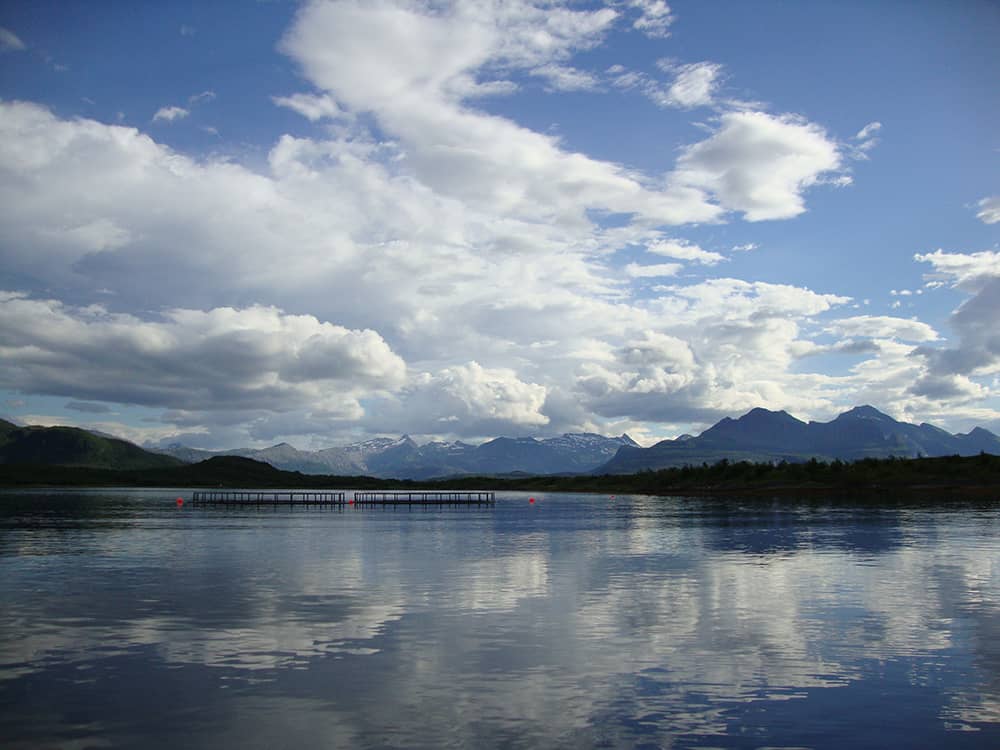
Thursday July 7th at Mcmahon Ballroom Theater
13:30-15:00
Chair: Camila Marambio
Denise Milstein: Useless Stories
Camila Marambio: Getting Lost in the Field
Carla Macchiavello: Care, Curiosity and Curating

Setting Sail with Sørfinnset skole/ the nord land

/

Investigations into Coastal Culture, Gildeskål, Norway, July 20th – 30th, 2016

With Ensayo #4

The boat as a floating studio and research station:
After 14 steady years on land, Sørfinnset skole/the nord land will, this summer, go to sea. Artistic investigations of the archipelago of Gildeskål will be an extension of Sørfinnset skole/ the nord land’s horizon, as well as a northern part of Ensayo#4.

Background:
Sørfinnset skole/ the nord land examines how contemporary art can function in a long-term dialogue with a small local community. One of the most important ingredients in the project is ecology, and a wider understanding of nature. This entails research into the concept of ecology as related to an extended understanding of artistic practice, which has been an ongoing agenda since 2003.

Since 2010, Ensayos has gathered and engaged artists, natural and social scientists, free thinkers and people with hands-on experience to discuss questions relating to land use, ecology and ethics in the front court of Antarctica, one of the worlds geographical extremities. Tierra del Fuego and Gildeskål are two points on the map connected by the world´s oceans. The maritime bound paths have been transportation routes for people and goods for hundreds of years. Norwegian sailors have travelled from north to south with goods on the so called Klipperuta (Cliff route) around Cape Horn, in dangerous waters. These waters were, for many old sailors, known as a wet grave. It is easy for us to travel, from the far north the far south, nowadays with planes. Perhaps this way of traveling is hiding from us important details and obvious connections.

How can we experience coinciding issues through the experience of opposite poles? Some of the artists and scientists that are participating in Ensayos have been working in both of the polar regions. The initial idea to establish such a trans disiplinary community is inspired by Sørfinnset skole / the nord land, which was established in Gildeskål in 2003. There are striking similarities and large differences between these two places on earth. The biggest difference is Chile´s past as a Spanish colony with the following demographic and nature-related consequences, as we see today.

In the region of Gildeskål one can also bring up questions about possible meetings between different groups of people and a possible repression. When it comes to biological invasive flora and fauna from other continents, we can say that Gildeskål until now has been saved, but the climate change, rising temperatures and consequences of modern utilization of the sea is changing the living conditions in the ocean.

The Conquestadores came and the Vikings left, the Sami people disappeared and the Fueginos were eradicated.

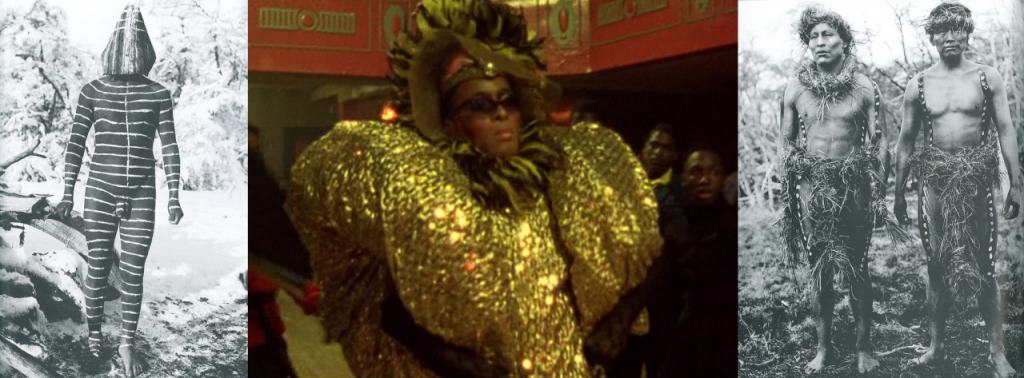
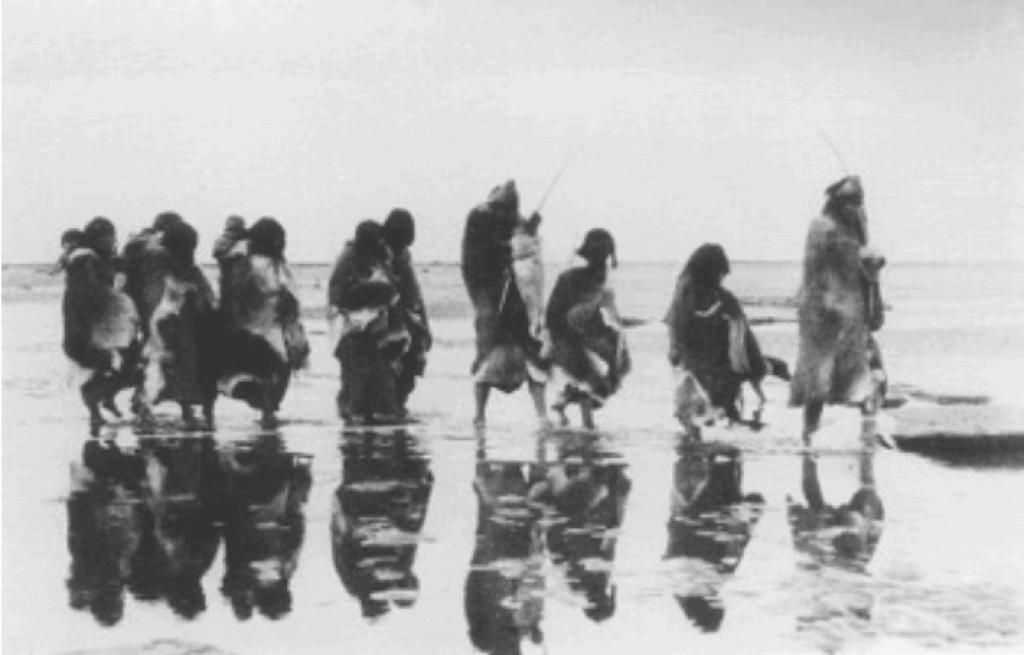
The Fueginos, indigenous peoples of Patagonia. Image shows a Selk´nam family in Tierra del Fuego in the year of 1908

We ask: What can we find with the tools of artist investigations? What is colonialization? What makes the changes in demographic patterns, livelihoods and climate? Will we be stranded by common challenges when it comes to geopolitical, eco-political, socio-economical and poetical links?

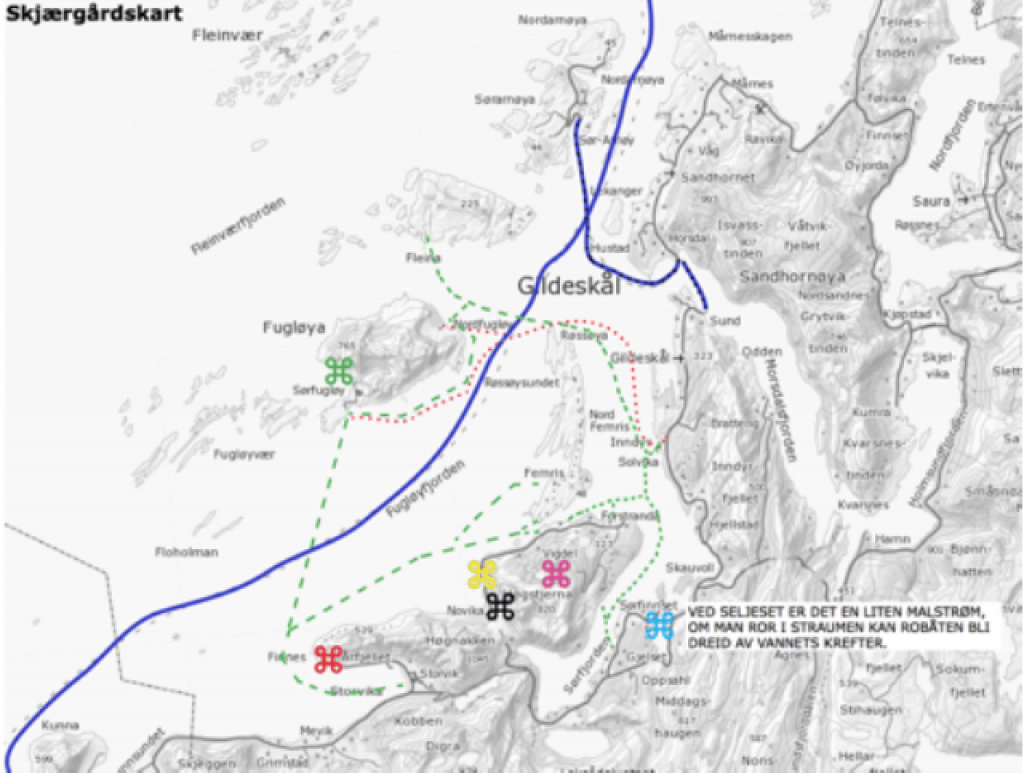
Before the upcoming investigations in Gildeskål this summer, there has been a previous output of Ensayo#4 in action at the artist-run space Kurant in Tromsø. There, our aim was to try to answer questions relating to issues of the coast and sea, such as management use, language, value and identity, inspired by the ongoing work of Wildlife Conservation Society at Karukinka Natural Park in Tierra del Fuego. The exhibition «Wild Living Marine Resources Belong to Society as a Whole» was opened on March 11th, 2016. The spine of this project was a deep examination of §2 of The Marine Resources Act of Norway. Artists and scientists were invited to together look into this and share their perspectives. The knowledge and experiences from Tromsø are therefore also an important part of our luggage when we go on this summer´s sea voyage. We will be sailing in the nearby archipelago and go ashore at: Sandhornøya, Sør-Arnøy, Nord-Arnøy, Fugløya, Fleina, Inndyr, Femris and the island group of Fleinvær to anchor in Sørfjorden (please see the program).

Excerpt of a map showing the archipelago of Gildeskål where the green stripes show some of our destinations.

In autumn of 2016, there will be an «Part 2» of the project at Kurant in Tromsø, where some of the experiences and results from our upcoming summer voyage will be presented both in a printed formate as well as in an exhibition.

PROGRAM: July 20th-30th

20th: Arrival at Sørfinnset.
21st: Preparations for the «Investigations of the Coastal Culture»
22nd: Hands-on work finalizing the Earth cellar in Gjeldset.
23rd: We set sail!

23rd-27th: Examination of Fauna and flora; on the islands of Femris, Arnøyene,
Inndyr and Fuggeløy Through the ongoing work of Sørfinnset skole / the nord land we have been focusing on the use of nature and the closeness of nature, this time we will include the natural life of the islands: At Arnøyene and Fuggeløy there is a rich bird life, and at Fleinvær one has been collecting the feathers of the Eider bird. The vegetation alongside the coast and beach is a nutritous location for rare orchids. At Femris and Øya by Inndyr there are several types of orchids and other rare plants. In relation to the examinations of nature and its different layers of landscapes we plan to ascend the mountain of Sandhornet and the top of Fuggeløy.

Create objects using floating garbage
That which is thrown overboard is not to disappear. We will collect and compile materials which have been processed by the sea, such as garbage or lost items. From this we aim to create two and three dimensional works that could possibly be presented at Kurant in Tromsø during the autumn.

The Ocean as a source for food
In a holistic ecological existence, food is essential. Food has also been an important ingredient in the project Sørfinnset skole / the nord land. In several of the invited artists’ work, food is an integrated part of the artistic practice. On our expedition we will collect ingredients in the nature such as sea weeds, shells, fish and plants. We aim to invite people to come onboard to join a conversation and a meal.

Creative Writing
We will make a simple publication as a result of the trip. This will be included in a publication by Ensayo#4, to be released in Tromsø during the autumn of 2016.

25th: The music of the Ocean and the wind: from sailor songs to psalms? Fleinvær
Through music we have learnt that traditions are being mediated and remembered, also such knowledge that is not captured by the written word. Many of the artists in the team work with music, sound and will bring along portable sound equipment for recordings and experiments.

26th: Memory and awareness; Femris and Sørarnøy
On several of the islands there are old graves from the Iron age. We wonder about those that lived before us, how they lived and worked. Through an archeological awareness and meditation over the past life, we will be inspired.

27rd-28th: The annual Gamme day (The turf house day)
A two day Joik workshop with Niko Valkeapää in the Gamme by lake Kjellingvatnet, an annual celebration of the Turf house with hands-on repairs of the construction, serving of Sami food and a Joik performance.

29th -Olsok- Summer party
The summer program is finnished and celebrated with an outdoor summer party around the fireplace at the cliffs of Klippfiskbergene by Seivågen.

Participants:
Karolin Tampere- artist/ curator (Estonia/ Norway)
Stefan Mitteterer (Norway/ Austria)
Kjersti Vetterstad- artist (Norway)
Christy Gast- artist (USA)
Geir Tore Holm- artist (Norway)
Søssa Jørgensen-artist/landscape architect (Norway)
Georgiana Dobre- dancer and choreographer (Romania)
Amy Franceschini  & Martin Lundberg/ the Futurefarmers, transdiciplinary collective (USA)

–by Søssa Jørgensen, Sørfinnset skole/the nord land

Admiralty Sound Expedition Report

/

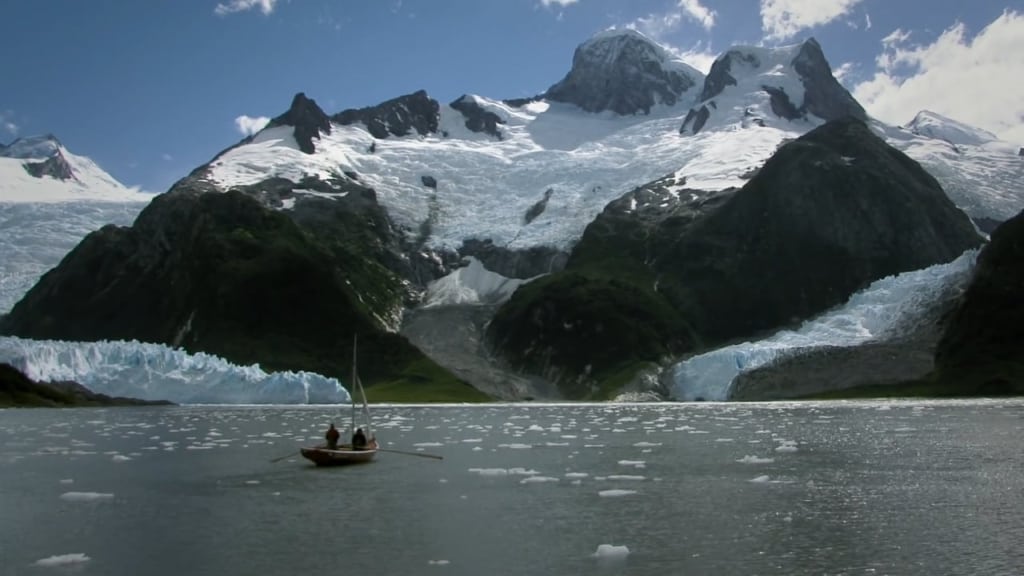
In Tierra del Fuego, where the Atlantic meets the Pacific, land and sea are not so much interwoven as fractured—splintered and shattered. At the southern terminus of the Andes, it is as if the mountains are using the remainder of their geological force to dive out of the deep and frigid sea.

Originally published in the Summer 2016 edition of the Miami Rail.

https://ensayostierradelfuego.net/wp-content/uploads/2016/06/Admiralty-Sound-Expedition-Report-Christy-Gast-for-Miami-Rail.pdf

Ensayos Network–A Web of Ideas

/

By Denise Milstein

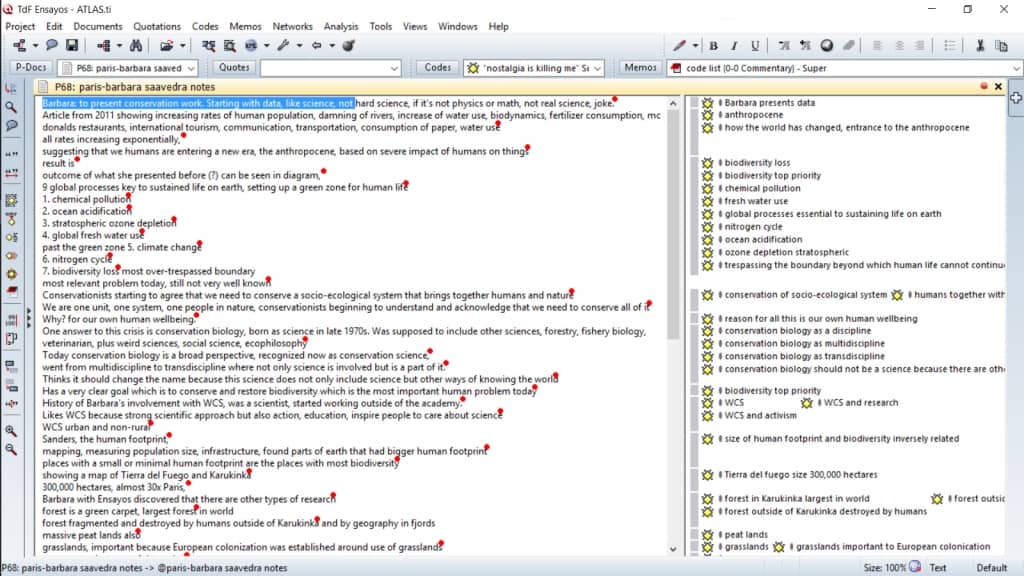
I joined in the Ensayos collaborative in the summer of 2015. By then, the group had been collecting a multi-media archive of its discussions, experiments, and activities for over four years. It was time to take stock of the paths Ensayos had traveled until then, to reflect on the present, and to imagine the future. As a sociologist, I brought to the group a background in qualitative data gathering, including ethnographic interviewing and participant observation; and experience building and analyzing social, narrative, and conceptual networks. The desire to see Ensayos reflected in a new medium motivated this project, which used qualitative data coding, network analysis, and participatory action research to build a conceptual network installation at the Bruce High Quality Free University Gallery in the fall of 2015.

I set out to code the archive for concepts that appeared in relation to each other in audio interviews and discussions, videos, and written documents. I aimed to build a network with those concepts, and to collaborate with Christy Gast to express it in a way that would allow participants to explore it, to engage with it, and to use it for thinking toward the future. Below I describe the process in three steps which seem distinct but, in reality, overlapped with one another over the course of the work: coding, analyzing, representing.

Coding

Coding can evolve in different directions depending on the question one poses to the documents. I was interested in tracing the evolution of ideas or concepts in the group. By concept I mean “a general idea or notion, a universal; a mental representation of the essential or typical properties of something, considered without regard to the peculiar properties of any specific instance or example,” as defined by the Oxford English Dictionary. I thought that the encounter of members from different disciplines – a sculptor and an ecologist; an art historian and an anthropologist; a curator and an environmental activist – might give rise to fascinating conceptual transformations over time.

In the fall of 2015, I listened to about thirty hours of audio material, in addition to poring over copious written documents, photographs, and a few videos.

Milstein coding Ensayos archive materials

Because we were interested in tracing the evolution of ideas over time, I divided up the documents according to the four phases, or the four ensayos the group has developed, and started tracing the paths between ideas expressed by the ensayistas. Grounded theory, which is an approach that avoids imposing a theoretical framework on the data, offered the best guidance for coding. It facilitated the perception of a theory or theories from the primary sources themselves. I was especially interested in instances where ensayistas connected concepts by articulating a causal or correlational relationship between them. I found, for example, that when glaciers came into the conversation, time was conceptualized differently, in a longue durée perspective, or that discussions of beavers and attempts to understand the world from their perspective gave rise to explorations of wonder and speculation. Because I used a coding language that reflected, as faithfully as possible, the language of the primary sources themselves, I ended up with hundreds of codes.

image (1) copy
Atlas.ti screen shot during the coding process

Analysis

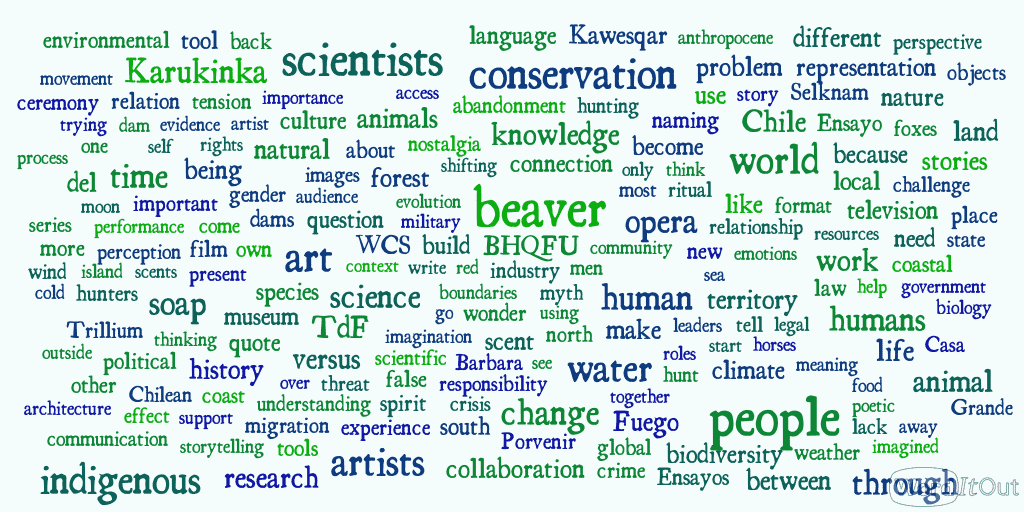
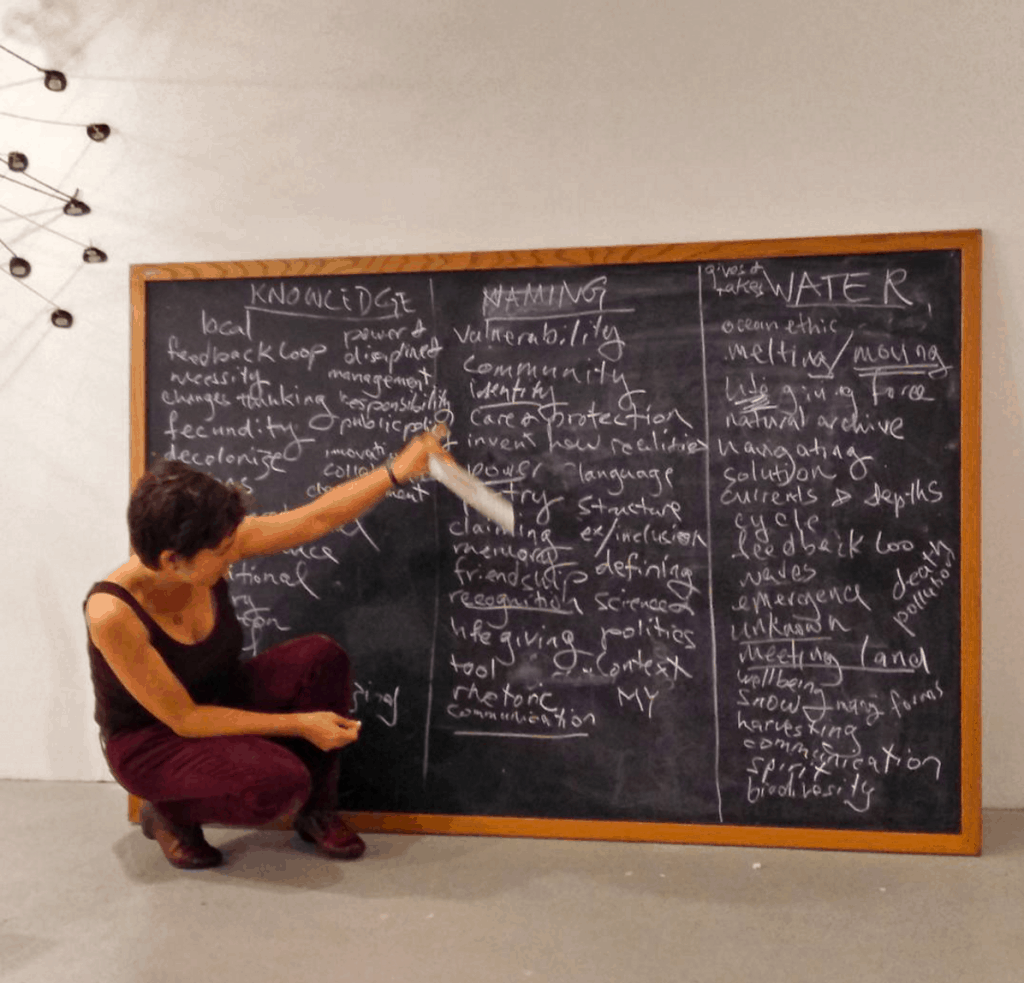
The next step involved finding a way to make out the structure, if there was one, that emerged from coding all this material. After trying several strategies, I discovered that certain concepts came up with much greater frequency than others, for example, the word “beaver,” which stood for the species that has invaded and depredated much of the fragile forest ecosystem of Tierra del Fuego, or the idea of “conservation,” “knowledge,” “naming,” and “water” which emerged later on.

WordItOut-word-cloud-1648771
Word Cloud for Ensayos 1-3

Once I was able to isolate the three to seven most frequent concepts that came up in each phase, I started searching for relations made explicit between these concepts. For example, the idea of beavers came up in conjunction with “management,” “colonization,” and “wonder.” This allowed me to create a bi-modal network made up of “nodes:” in this case, concepts; and “arcs:” the connectors between the concepts. In a bi-modal network, you have two types of elements. One set serves as a series containers, such as the most frequent concepts, and the other set “fills up” those containers. Another way to envision a bi-modal network is to imagine a study of friendship cliques. The containers might be parties, which, according to attendance, will be filled with party attendees. There may be some overlap among parties because individuals might attend multiple parties. Likewise, the most frequent concepts shared other concepts among them.

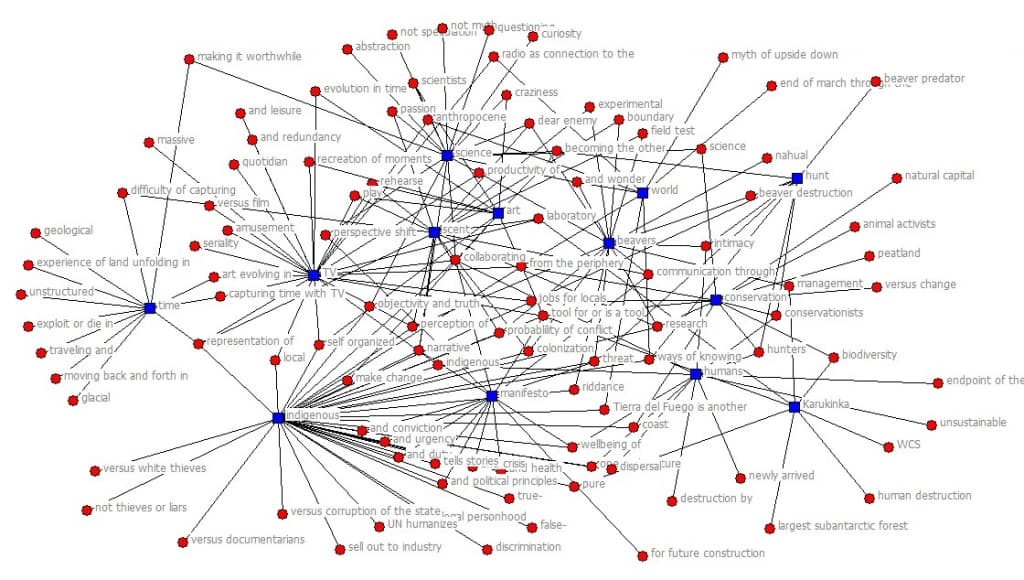
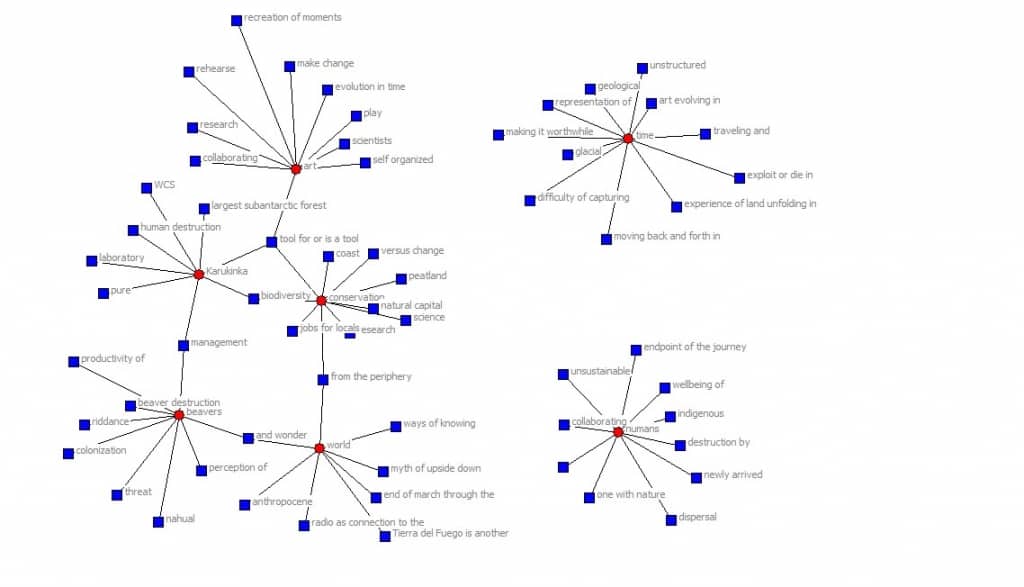
The result of this coding exercise is the network below, for Ensayo 1.

Ensayo 1 bimodal network

There you can see the “container” nodes as the red circles, and their “attendee” nodes as blue squares. The “arcs” or lines between the concepts represent a causal or correlational connection made in speech. This initial conceptual network shows, for example, that during the first Ensayo, members discussed the concept of time quite a bit, in relation to traveling, or in relation to art and how it evolves in time. You can also see that “conservation” was on the table as a concept in contradistinction to “change,” and in relation to “jobs for locals.” In this graph, the concept of “tool” attended three “parties:” “Karukinka,” “conservation,” and “art.” The connection was forged through multiple conversations, but the fact that the concept of “tool” came up repeatedly in different contexts indicates this concept is a key connector for ensayistas.

Representation

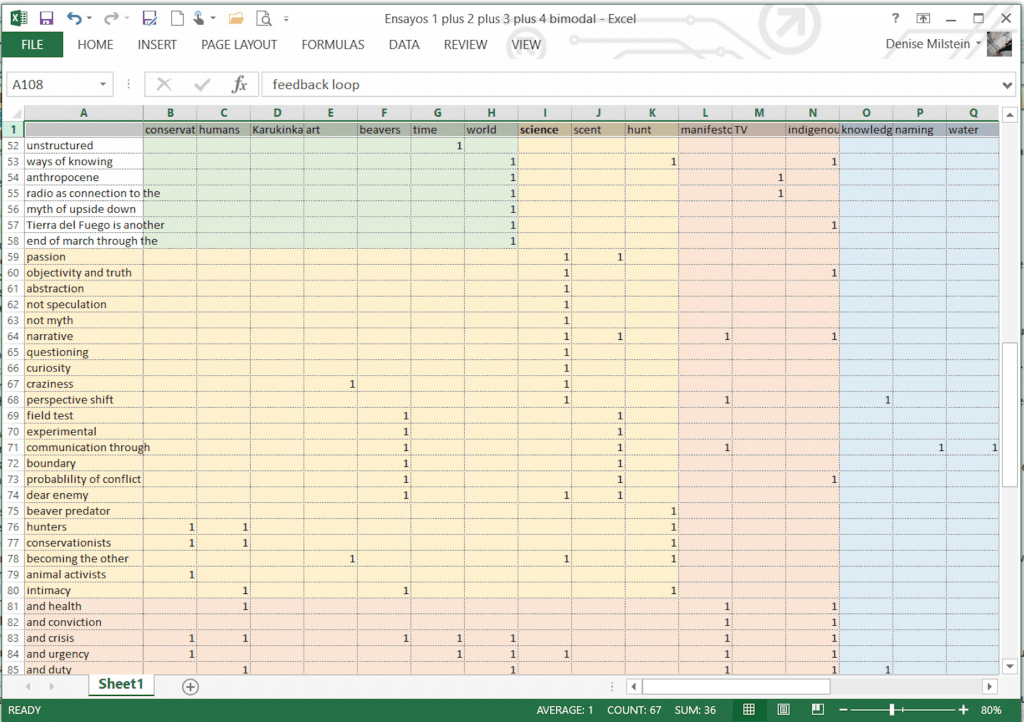
A network can be represented as a graph such as the one above or in the form of a matrix, which you see below. The image is the coding result of Ensayo 1, which examined the possibilities for multi-disciplinary collaboration and nomadic residency in Tierra del Fuego, and of Ensayo 2, which took up the question of invasive species, with a focus on beavers and the possibility for interspecies communication. The three concepts that came up most frequently in the material I explored from Ensayo 2 were “science,” “scent,” and “hunt.” Conversations during this time engaged intensely with scientific approaches to dealing with the beaver invasion, and explored and considered wildly varied solutions to the issue, from “hunting,” as a way of controlling and possibly decreasing the beaver population, to using “scent,” as a method for communicating with beavers, expanding our understanding of their perspective and agency, and creating a medium for negotiating a solution with the beavers themselves.

Here you can see the matrix for Ensayo 1 (in green) and Ensayo 2 (in yellow) and their overlaps. Each one represents a link (or, in network vocabulary, an “arc”) between concepts (or, again in network lingo, a “node.”)

Ensayos matrix
Ensayos matrix

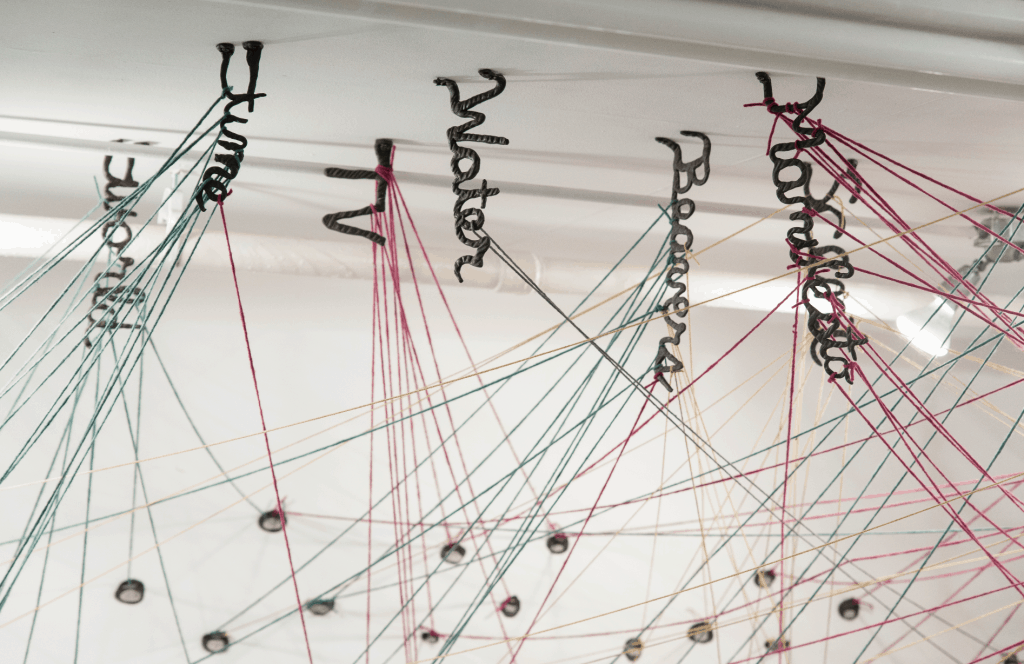
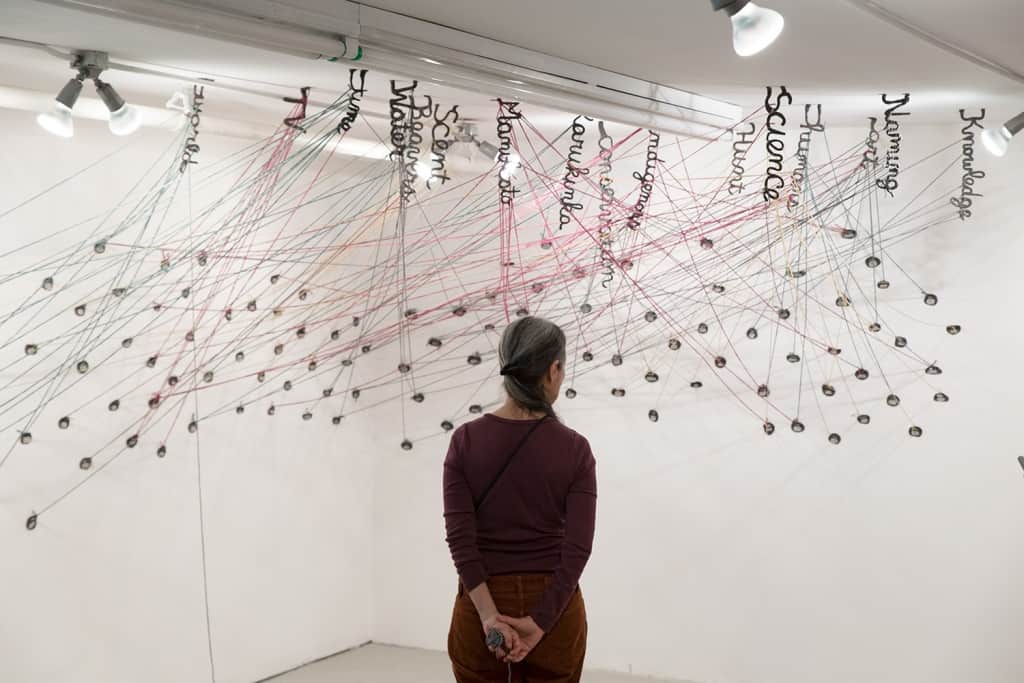
By the time I started working on Ensayo 3, Christy Gast had come up with a way to build a physical network with yarn and epoxy clay in a corner of the BHQFU gallery space. We were simultaneously using the space to hold a four week seminar on Ensayos and show the results of research, projects, and art work from the past year. As such, the ensayistas and students present all took part in the building. As you can see below, the “container” concepts were the words themselves, screwed to the ceiling. For the “attendees” we used anchors that attached to the wall, each one labeled with the name of the node.

Installation detail @ FUG

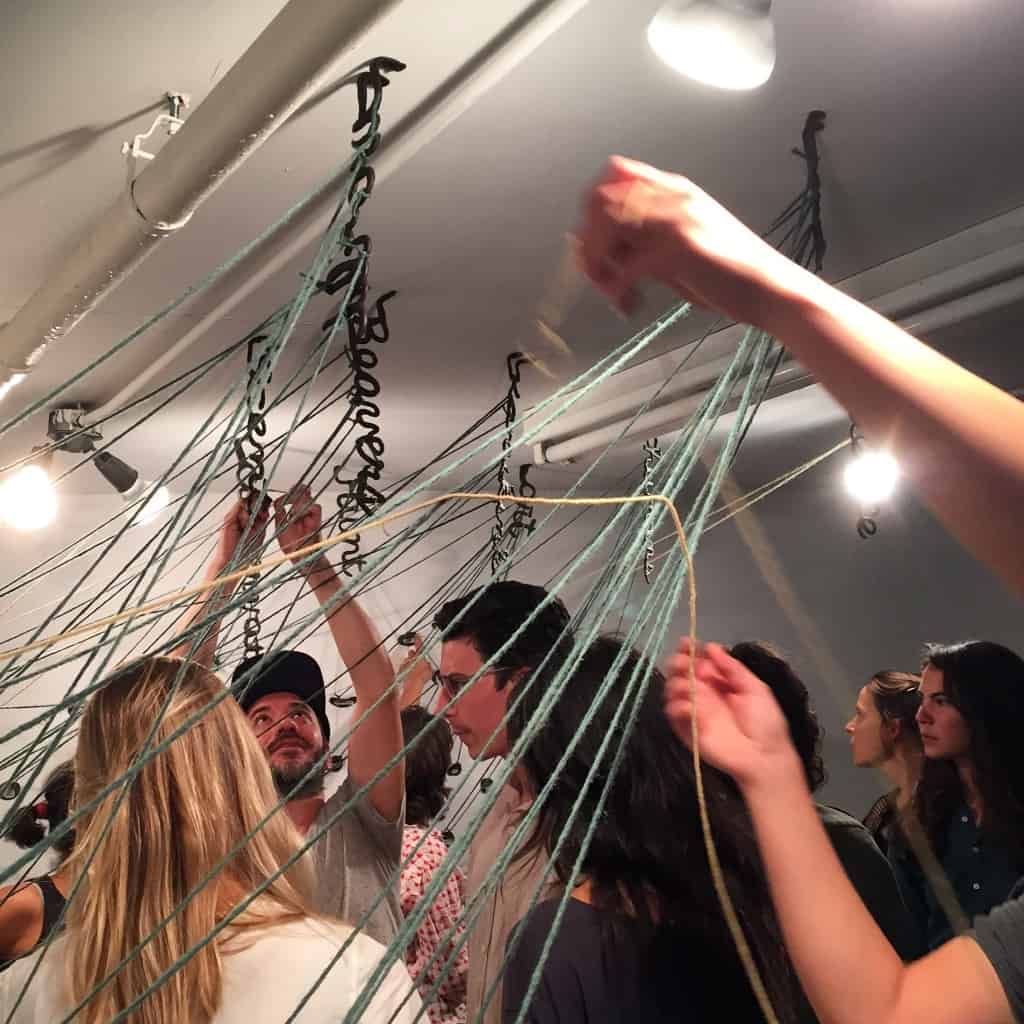
As we built the network together, in small and large groups, the process of building itself became an opportunity for critical reflection. We discussed the Ensayos and we explored, critiqued, and tweaked the method for coding and network building that we were using for try to understand our work.

In this way, we continued from Ensayo 2 to Ensayo 3, which, at the time was evolving to incorporate oral history to the process of creating a television series. The one hour features would blend a variety of filmmaking approaches to reflect the institutional and juridical conflicts which entangle the people who live in Tierra del Fuego with each other, the state, and its institutions. The key concepts there were “manifesto,” “TV,” and “indigenous,” and by the time I was done coding it, we had three superimposed networks, which made for a compelling though challenging network to interpret!

Ensayos 1 through 3 networks

Still, the sculptural representation of this network allowed us as constructors and then as viewers to travel from one node to the next over the arcs, and to think and consider the meanings of all these connections.

BHQFU students building web

The last Ensayo, number 4, is new enough that I had very little data to work through. And yet, the majority of the members of Ensayo 4 were present in New York for the BHQFU residency. We decided as a group to turn the process inside out and generate our own network by brainstorming the nodes and arcs between them.

Creating Ensayo #4 codes

This unexpected methodological turn became a fascinating experiment in participatory action research. The work of creating our own connections after three weeks of observing the materialization of the networks forged over the previous years allowed us to look into the future in a new way.

We built the Ensayo 4 network last, and by the time we were done, we could see the results and differentiate among phases according to the color of the yarn. We followed the arcs between nodes, but, as with any map, the work in itself did not fully represent the voices that had contributed to building it. The next phase in this project involves exploring different mediums, including virtual reality, as tools to facilitate traveling through these networks without losing sight of the content or the interacting agents. The connection to primary sources is key, especially because we expect to engage our audiences actively, that is, to use the network to open spaces for reflection, discussion, and for envisioning the future.

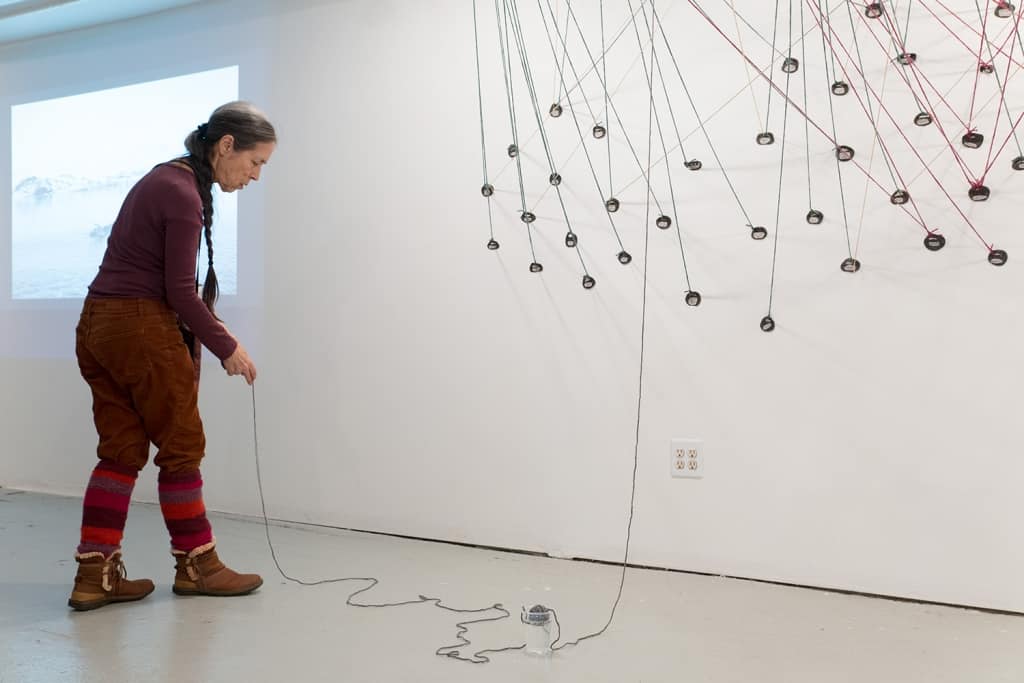
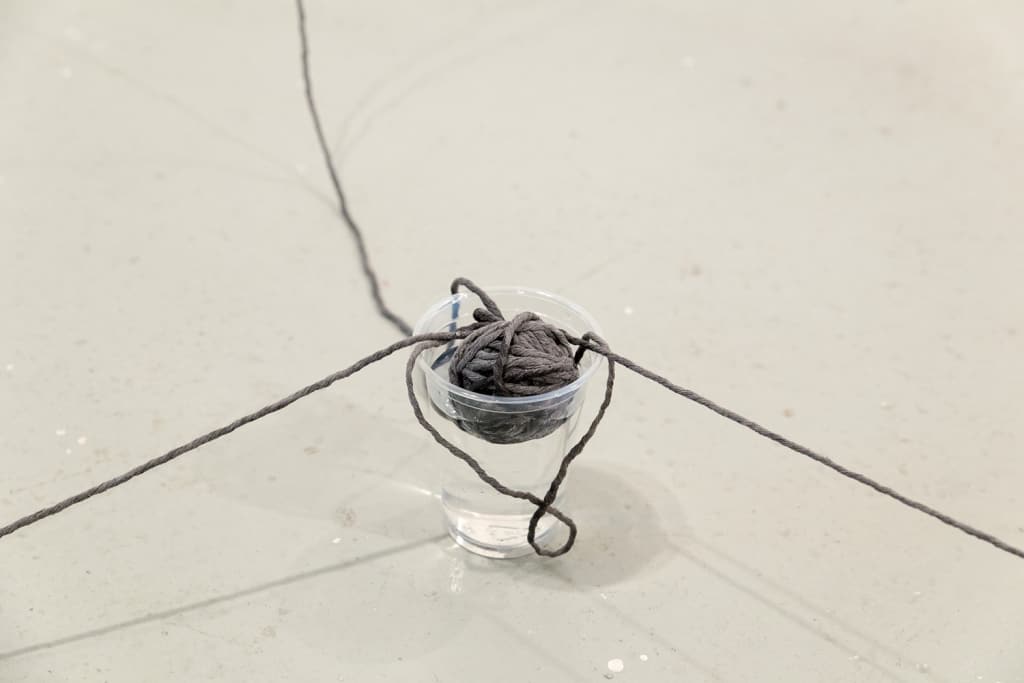
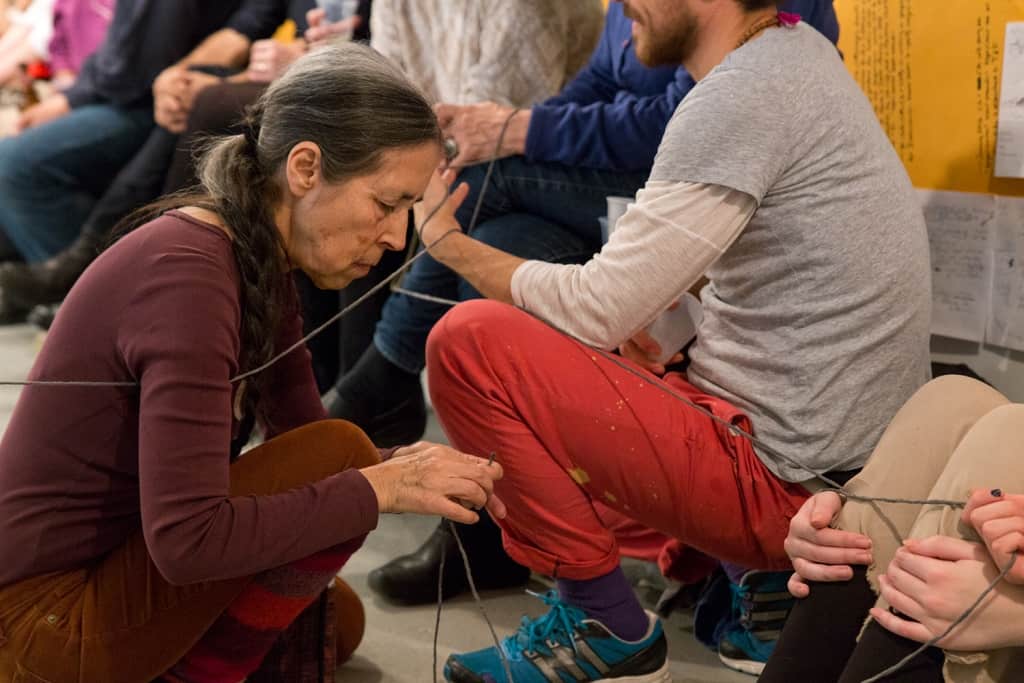
On the closing day of the BHQFU exhibition, Cecilia Vicuña, Chilean poet and artist, performed a piece that began under our installation of the network. She attached the end of a ball of yarn to the word “water,” one of the container nodes for Ensayo 4, and led it, trailing, over the floor, then wound it loosely around the ensayistas and our guests, until her extension of the network meandered all around the room. We could feel the connections between us with every movement, as the yarn tightened or loosened. Wound up in the yarn, we listened to Cecilia chanting in semi-darkness, as she wrapped the yarn around a final ensayista, the youngest one, and dipped the end of the ball of yarn in a glass of water. The performance took us beyond the intellectual experience of the network, into an experiential realm where the connection became tangible. In that moment, the borders we typically construct between intellect and emotion, and between ourselves and the non-human world, dissipated. Our ideas about the past and future, our experiences, our physical presence and relationships with each other and the world, all led to the water in the glass, and through it, back into our connected selves.

Ensayos network @ BHQFU

Cecilia Vicuña performance

Cecilia Vicuña performance

Cecilia Vicuña performance

Ensayos_BHQFU_Performances_63
Cecilia Vicuña Performance

Christy Gast / Field Work @ Galería Patricia Ready, Santiago de Chile

/


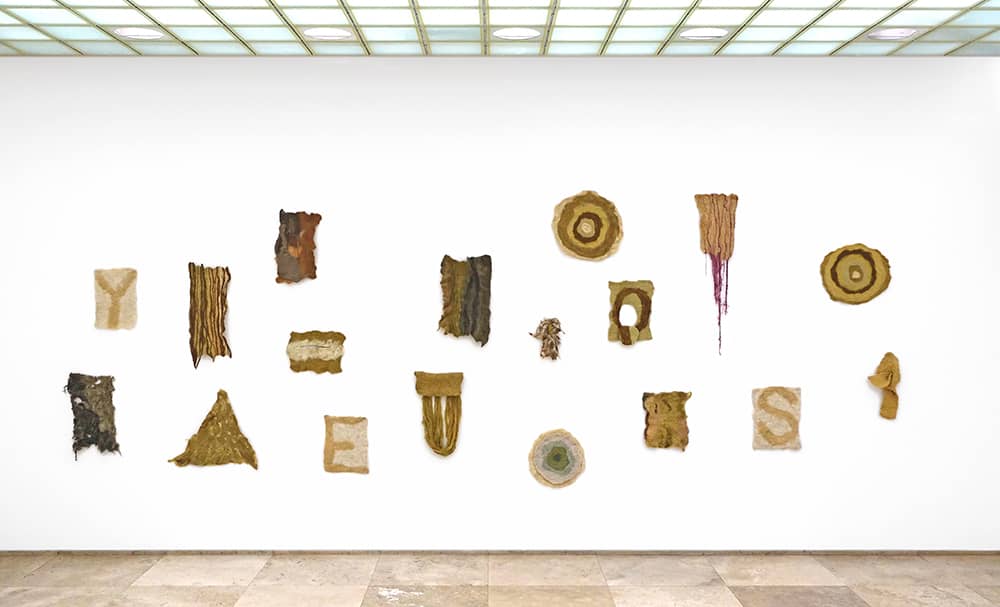
En su primera exposición individual en Galería Patricia Ready, Christy Gast presenta “Field Work” (Trabajo de Campo). La Sala Gráfica albergará alrededor de 20 esculturas de pequeño formato compuestas por elementos de la naturaleza: fieltro y tinturas naturales extraídas del bosque patagónico. Catálogo con ensayos por Camila Marambio, Denise Milstein y Bárbara Saavedra. Christy Gast, Field Work, Galería Patricia Ready

A solo exhibition at Galería Patricia Ready in Santiago, Chile. Felted wool sculptures colored with dye extracted from plants at Karukinka Natural Park in Tierra del Fuego. Essays by Ensayos collaborators Camila Marambio, Denise Milstein and Barbara Saavedra. Christy Gast, Field Work, Galería Patricia Ready

Cecilia Vicuña: 5 poemas Selk’nam

/

En los ochentas y noventas yo pasaba largos meses del año en Buenos Aires, participando de una comunidad de pensadores de la amerindia. Gracias a nuestro amigo José Pérez Gollán, director del Museo Etnográfico de la UBA, conocí la obra de Anne Champan sobre los Selknam. Escribí estos poemas (inéditos hasta hoy) y otros textos en esos años de descubrimiento de la América profunda y siempre negada.

Cecilia Vicuña

http://www.ceciliavicuna.com


………………

Jelj

Jelj, la ceremonia de paz:
meditar y esquivar las flechas.

Temánkel, el dios
y Kénos su enviado

Cultos no,
ofrendas sí,
…………….decían

Hohuen,
los primeros creados
eran cerros y estrellas.

Hachai, el espíritu
de las piedras negras

Short, el espíritu
de las piedras blancas.

¿Y las piedras con musgo?


………………

La nadadora

No es un canto,
es un ser de voces
la nadadora.


………………

Yuepín

Sus pastos,
sus pastos

en el cuerpo
del encargo
………………yuepín
no hay
que cantar
el canto
de otro
………………a menos
………………que
venga
en sueños
………………a menos
………………que
te lo den
por encargo
………………desde
………………el más
………………allá.


………………

X.

“A pretense of grass”
Barbara Guest

No fué un accidente
la extinción

Fue un efecto buscado,
una intención.

Un propósito
de las compañías:

Tomarse Tierra del Fuego

Borrar el estorbo
Selknam.

Des
hacerse

Del estorbo:
sus canciones
su cuerpo,
su historia.

Su modo
e’ vivir

Libre y suelto

Fluidez de
las especies
de Karukinká!

Ya sin ellos,
los pastos.
¿qué son?

Ya no pueden
cantar

Se fué el Selk’nam

Y una a una
se fueron
las especies.

El guanaco,
el molusco
y el pasto
Karukinká.


………………

Lolaá*

Te hicieron mén
diga
……..Lolaá
……..Lola Maris
……..Mariscadora

Te hicieron
Lolaá
……..tu erás
grandes tetas
naúfragas

Con ropá
te encerraron
Lola Kiepjá

Con ropa
te guardaron

Naúfragos flotadores
tus tetas Lolaá

ya no bajando
ya no
ya no a maris
………………..car
mari
……..men
mariscar

Atina sentir
tus grandes tetas
mariscadoras
mariscadoras

ya no
ya no
ya no
su mariscal

ya no
ya no
ya no

naúfragos flotadores
tus tetas
Lolaá

ya no hay mariscal!

……..
……..
……..
……..

*Nota: Lola Kiepjá, la última shamana Selk’nam murió en l966.
Con ella murió el conocimiento, la lengua y el pueblo Selk’nam.
Las grandes compañías pagaban 1 Libra esterlina por cada Selk’nam muerto, pero pagaban 2 Libras por cada mujer Selk’nam muerta. La prueba de la muerte era una oreja cercenada (para ellos) y para ellas, las tetas cercenadas.

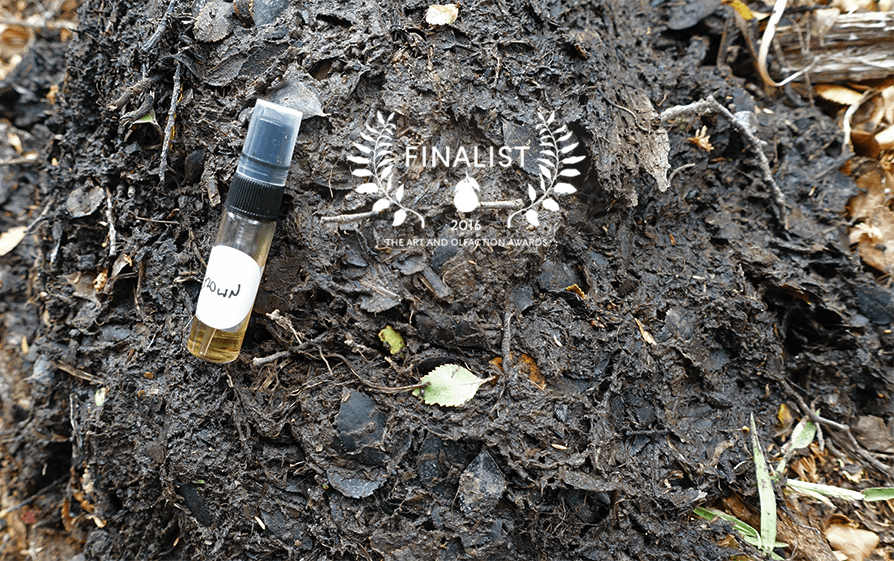
Dear Enemy a Finalist for Art and Olfaction Award

/

April 1, 2016
MILAN—The Institute for Art and Olfaction is pleased to announce the finalists for the third annual Art and Olfaction Awards, to be held at the Hammer Museum in Los Angeles on May 7,
2016. This announcement took place in a special ceremony at Esxence in Milan.

As with last year, two winners will be selected from the categories Artisan and Independent, and one winner will be selected for the Sadakichi Award for Experimental Scent. Each winner will receive The Golden Pear, which continues to cement its status as a prestigious achievement in the independent, artisan and experimental perfume world.

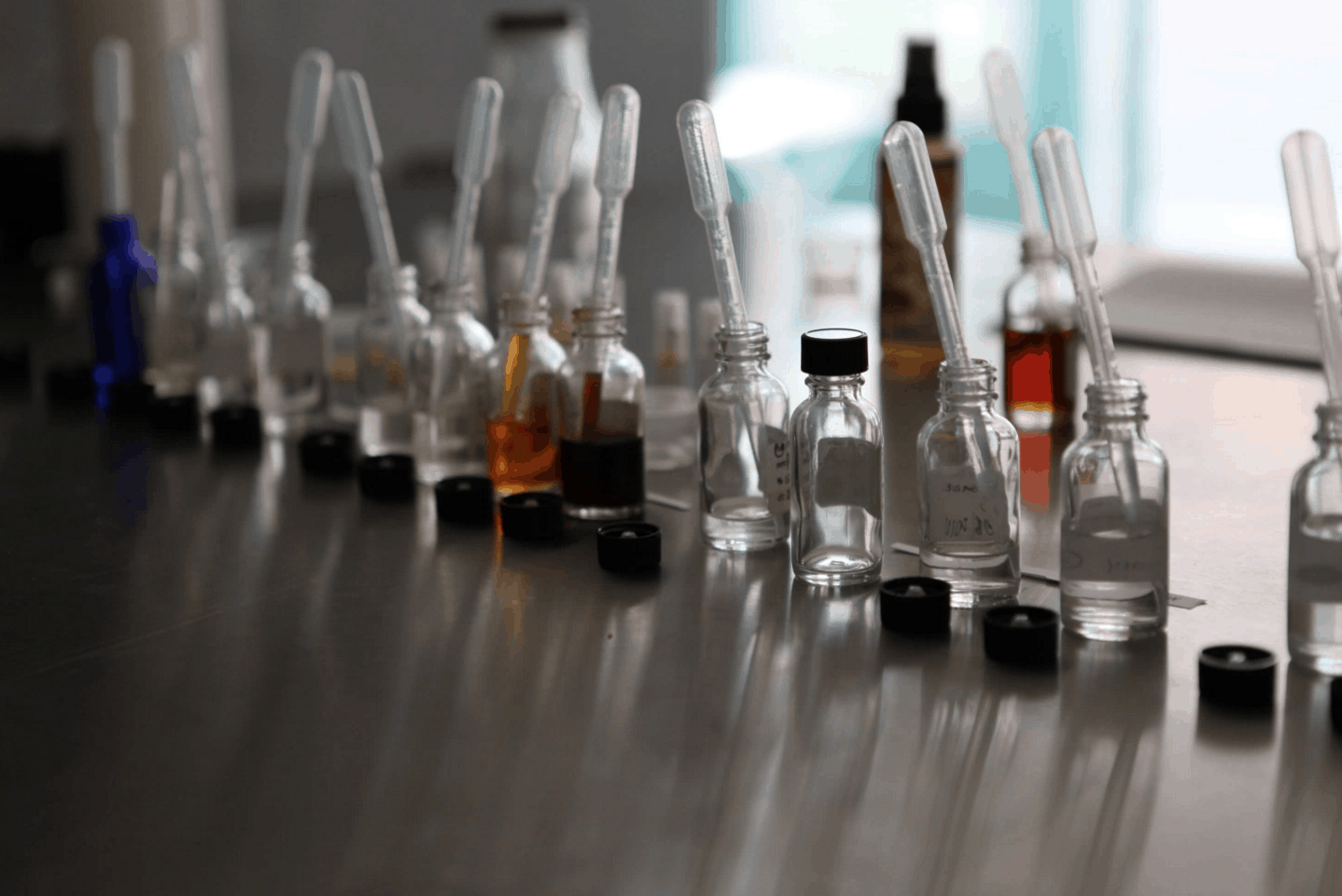
The finalists were selected by a group of highly qualified judges from the perfume world, the art world, and other creative industries. The artisan and independent category submissions were judged blindly, presented in generic vials and tracked by a numerical code. The preliminary round judges selected the finalists, and the finalist round judges will select the winners.

Independent Category Preliminary Judges: Steven Gontarski, Yvettra Grantham, Neal Harris, Laura Johnson, Sherri Sebastian, Lizzie Ostrom (aka Odette Toilette)

Artisan Category Preliminary Judges: Antonio Gardoni, Hank Jenkins, Ashley Eden Kessler, Daniel Krasofski, James McHugh, Persephenie

Independent & Artisan Categories Finalist Judges: Mandy Aftel, Mark Behnke, Sarah Horowitz-Thran, Kaya Sorhaindo, Andy Tauer, Luca Turin

Sadakichi Award for Experimental Scent Projects Judges: Allison Agsten, Dr. Kóan Jeff Baysa, Peter de Cupere, Deji Bryce Olukotun, Ashraf Osman


The finalists for 2016 hail from 14 countries and represent a broad diversity of practices and styles.

SADAKICHI AWARD FOR EXPERIMENTAL WORK WITH SCENT – FINALISTS

Century’s Breath
Cat Jones – Sydney, Australia

Dear Enemy
Christy Gast & Ensayos – Tierra Del Fuego, Chile and New York, USA

Signal
Carrie Paterson – Los Angeles, USA

The Juice of War – Hiroshima and Nagasaki
Maki Ueda – Amsterdam, The Netherlands

Western Drive
Kellen Walker – Austin, USA

ARTISAN AWARD – FINALISTS

Albino (A Study in White)
by DSH Perfumes – Boulder, USA

Bird of Paradise
by Thorn & Bloom Perfume – Somerville, USA

Cape Cod Wild Beach Rose
by Nomaterra Fragrances – New York, USA

Incendo
by La Curie – Tucson, USA

Love for 3 Oranges
By Aether Arts Perfumes – Boulder, USA

Miyako
by Auphorie – Kuala Lumpur, Malaysia

Musk Rose Attar
by Rising Phoenix Perfumery – Atlanta, USA

Namibia
by Frazer Parfum – Capetown, South Africa

Peach Tree Garden
by Phoenix Botanicals – New York, USA

Salomé
by Papillon Perfumery – Salisbury, UK

INDEPENDENT AWARD – FINALISTS

Bat
by Zoologist Perfumes – Toronto, Canada

Dark Ride
by Xyrena – Los Angeles, USA

Elephant + Roses
by Maria Candida Gentile Maître Parfumeur – Sarzana, Italy

Fougère Nobile
by NOBILE 1942 – Genoa, Italy

Néa
by JUL ED MAD Paris – Paris, France

Panorama
by Olfactive Studio – Paris, France

Past | Presence
by Roads – Dublin, Ireland

Rose de Taif Extrait
by Perris Monte Carlo – Monaco, Monaco

Salim Attar
by Tabacora Parfums – Jelesnia, Poland

Waiheke Dreams
by Juliana Parfums Co. – Auckland, New Zealand

We will announce the winners in each category at the Third Annual Art and Olfaction Awards on Saturday, May 7 in an open-to-the-public event at Hammer Museum, with special guest emcee Zackary Drucker (Whitney Biennial 2014; Co-Producer, Golden Globe and Emmy award-winning Transparent).

Please check artandolfactionawards.com for attendance information.

###

The Art and Olfaction Awards was founded in 2012 as an independent awards mechanism designed to celebrate innovation and excellence in artisan and independent perfume, and experimentation in scent within arts practices. The Art and Olfaction Awards are a program of The Institute for Art and Olfaction, a 501(c)3 non-profit based in Los Angeles, CA.

The Institute for Art and Olfaction is a 501(c)3 non-profit based in Los Angeles, CA. The Institute for Art and Olfaction advances public and artistic engagement with scent. We do this by initiating and supporting arts projects that utilize the medium of scent, by providing accessible and affordable education in our experimental laboratory as well as in partnership with institutions and community groups, and by celebrating excellence in independent and artisan perfumery through our yearly award mechanism, The Art and Olfaction Awards. Through these efforts, we extend the world of scent beyond its traditional boundaries of appreciation and use.

MORE INFORMATION:
http://artandolfactionawards.com/
http://artandolfaction.com/

For press inquiries please contact Saskia Wilson-Brown
saskia@artandolfaction.com – 415-518-3613 – skype: saskiawb

Wild Living Marine Resources Belong to Society as a Whole

/

Ensayo #4 exhibition at Kurant, Tromsø, Norway in March 2016

Wild Living Marine Resources Belong to Society as a Whole

11.03 Opening 19.00
12.-13.03 Open Exhibition 12:00 – 17:00
12.03 Performance by Søssa Jørgensen 14:00
12.03 Film screening at Verdensteatret followed by a talk. The Agronaut by Kjersti Vetterstad 19:00

Svein Kristian Arntzen (UiT), Camilla Brattland (UiT), Jørund Aase Falkenberg, Kjersti Gabrielsen (Havforskningsinstituttet), Christy Gast, Geir Tore Holm, Ane E. Johansen, Jahn Petter Johnsen (Norges fiskerihøgskole, UiT), Søssa Jørgensen, Maria Karlsen (Natur og Ungdom), Alfred Karoliussen (Fiskernes Agnforsyning), Michelle-Marie Letelier, Camilla Nicolaisen, Vidar Nikolaisen (Fiskernes Agnforsyning), Maja Nilsen, Randi Nygård, Carolina Saquel, Ánde Somby (UiT), Barbara Savedra (Wildlife Conservation Society, Chile), Karolin Tampere, Kjersti Vetterstad, Cecilia Vicuña, Paul Wassmann (UiT).

Organised by Randi Nygård and Karolin Tampere together with Henrik Sørlid at Kurant.

What can science, law, management, language, and cultural expressions tell us about our relationship with nature? Does nature have other inherent values than potentially being a resource for us to use? Is society part of the ecosystem and the ecosystem part of society? Or is it necessary to view ourselves as outside of nature in order to manage it?

The exhibition at Kurant is the start of a long term project taking place in 2016 and 2017, departing from section two in the introduction to the ‘Norwegian Marine Resources Act’ of 2008, which states “Wild living marine resources belong to Norwegian society as a whole”. The law made the management of the Ocean into a ecosystem-based management.

We wish to look at this legal document from many different perspectives; through the nuanced information given by researchers, fishermen and locals, through translations of the text into concrete objects and sounds, and through poetical interpretations. What does local experience-based knowledge say about management in relationship to the perspectives of the law? How can you understand an ecosystem as a whole? Is it possible to see ourselves as part of nature in new ways through studying it, through curious attention, direct contact and playful investigation? Our language most often separates nature and culture, but if nature in itself is a kind of evolving language, does it contain the same division? Are there powers in nature writing us and our culture forth? And is our freedom, our expressions, and our consciousness, subsequently part of a larger wild living system which we are usually unable to perceive? How and which values are created in nature, science, and in our culture?

We will look at the law in scientific, artistic, and ordinary everyday terms, and through the symbolism and representation of objects. We want to include the seal, the whale, and the cod through sound, images and performances.

We are curious about ecosystem-based management, the culture and language of the cod, the influence that climate change is having on the wild living and on society as a whole. We want to expand our thoughts about what values nature contains. And we want to talk about what a society as a whole is, how it works and what kinds of responsibility its members have. We shall therefore start the project with conversations around the Marine Resources Act with professors in Arctic and Marine Biology, Fishery and Management, two employees at Fiskernes Agnforsyning, two local artists, an associate professor at the Faculty of Law musician, writer and Sami joik artist, a Post doc from Centre for Sami Studies, an associate professor of Ocean Law, the head of the biobank Marbank at The Institute of Marine Research, the head of Tromsø Natur og Ungdom and a biologist and director of The Wildlife Conservation Society in Chile. Aspects of the conversations will form part of the exhibition at Kurant, and there will be a publication in autumn.

By placing greater abstract systems, such as, climate models, information and data from science, politics or law, in contact with geographical areas, individuals, animals, plants and objects, and by interpreting this information in poetical, intuitive, and bodily manners, we hope new images of ourselves and nature can arise.

The exhibition-project is funded by Billedkunstnernes Vederlagsfond and Arts Council Norway. A great thank you to all the participants, Kysten Tromsø County and Norwegian Visual Artists Association`s (NBK) Artist-in-residency in Ny-Ålesund, Svalbard.

And thank you to Lise Doksæter and Petter Kvadsheim in the project “3S” (Sonar Safety Sea mammals) FFI, the Institute for Marine Research and Lise Langgård lending us their recorded sounds of fish and sea mammals.

PROGRAM

Saturday 05.03
21.00 A celebration of the 126th anniversary of the Battle in Trollfjorden
The Battle in Trollfjorden was a violent confrontation between coastal fishermen and commercial trawlers that helped push forward necessary changes in the Lofoten Law. We will celebrate this day with diverse historical and maritime presentations by Henrik Sørlid, Randi Nygård and Karolin Tampere, there will be conceptual smoking of cod by the artist Camilla Renate Nicolaisen and music by DJ Matti Aikio og Nicolas Siepen.

Friday 11.03
19.00 The exhibition opens
Smokehouse
Artist Camilla Nicolaisen will be smoking salmon and halibut in her self-made smokehouse. The process lasts all evening, and the public can bring their own pre-salted food for cold smoking.
20.00 ‘Onde va la Lancha, performance lecture by Christy Gast
The artist will share songs of the sea that she learned from humans and animals in Tierra del Fuego.

Saturday 12.03
The exhibition is open 12.00-17.00.
14.00 When I fish it doesn’t matter if it bites or not.
Performance by Søssa Jørgensen in the city-bay.
Does the artist only wish to have the line in the water, or is there another reason for not catching anything? The public is invited into the sea. Via text and that which can be found on the bottom of the shore – a local status will be formulated. Sound by K. Tampere.
19.00 Screening of THE AGRONAUT at Tromsø Filmklubb Verdensteateret followed by a conversation between Randi Nygård and the director Kjersti Vetterstad.

The eternal encounters the perishable in the documentary The Argonaut, which follows the hermit Montserrat Canudas Jorba’s life at her farm on a property outside the village El Bruc in the Spanish region of Catalonia. The title of the film plays with the greek myth Jason and the Argonauts and Jorba’s role as navigator in the landscape she lives in and off. The Argonaut is, as she imagines it, a time traveler from the times of the fossils into the future. Close studies of plants and animals that inhabit the place, are juxtaposed with images and stories from Jorba’s life on the farm – a life marked by acceptance of the mechanisms that form our environment. «We shall all return to the earth» she says in the film. «We are also biodegradable».
Kjersti Vetterstad (1977) is an visual artist living in Drammen.

Sunday 13.03
The exhibition is open between 12.00-17.00

Wild living marine resources belong to society as a whole is a part of Ensayos#4, which is an interdisciplinary project that began in 2015 and deals with management, language, values and identity related to the ocean and the coast in certain parts of Norway and Chile. The goal is to understand, express and manage the big environmental issues we are facing in new and better ways. ENSAYOS is a program initiated in 2011 by curator Camila Marambio, the project is based on collective residency periods inspired by the existing conservations efforts of WCS Karukinka Natural Park and motivated by the strong sentiment that this location, despite its remoteness, is a cultural and geographical center from which to speculate and exercise emergent forms of bio- cultural ethics.

Trans América

/

By Christy Gast for the Miami Rail March 2016

On December 26 I set off for a trip mas allá del fin, beyond the end of the world, with the Ensayos research and residency program in Tierra del Fuego. There, the Andes shatter toward Antarctica, leaving a dizzying archipelago of mountains encased in ice, surrounded by belligerent seas and howling winds. As I packed, paring down my cameras and gear to what I considered the bare essentials for a mobile studio, the work of Chilean video artist Juan Downey was on my mind.

Born in Santiago in 1940, Downey was an early adopter of video as an art medium and a proponent of cybernetic utopianism, optimistic that technology could expand the senses and connect individuals. His seminal installationVideo Trans Americas was created between 1973 and 1976 using a Portapak, the first video camera that could leave the studio. The Portapak gave artists of Downey’s generation mobility. Since each second of footage was less precious than that filmed with celluloid, early video work tended to push durational boundaries, as well.

Video Trans Americas condenses several years of black-and-white video travelogues, mostly filmed in (and with) indigenous and working-class communities throughout South and Central America, into a fourteen-channel video installation. On view at the Museum of Modern Art, New York (MoMA), in their recent exhibition Transmissions: Art in Eastern Europe and Latin America, 1960–1980, the videos are bound together within the installation by an outline of the Americas stretching contiguously from the walls to the floor.

torresgarcia40
Joaquín Torres García, América Invertida (Inverted America), 1943. Ink on paper, 22 x 16 cm. Museo Torres García, Montevideo © 2016 Sucesión Joaquín Torres García, Montevideo

Downey’s graphic outline of the continent brings to mind América Invertida, Joaquín Torres García’s small, but iconic ink drawing from 1943, which was simultaneously on view at MoMA. Torres García flips South America’s cone to the top of our frame of reference, a reorientation that feels physically manifested as the viewer moves through Downey’s installation.

Footage, including of street protests in Cuzco, Peru; the ruins of Machu Picchu; weavers in Chiloé, Chile; and a Texas blues singer, play on pairs of cube monitors encased in black plinths. These are placed throughout the space so that, when walking between the monitors, one might simultaneously cross the Amazon, pass over the Caribbean, and come to rest somewhere over New England. The installation places disparate individuals and remote communities within walking distance of one another on a stateless continental mass.

Transmissions focused on conceptual and political artistic practices during the Cold War, and Video Trans Americaswas instigated in part by the 1973 coup d’etat in Chile. The installation was produced amid this climate of social movements against authoritarianism throughout the continent, and Downey trained his camera on marginalized communities, putting the Portapak’s potential as a tool for cybernetic utopia into practice. The portable video camera allowed for instantaneous playback, and Downey employed both technological and cultural feedback in his process. He recorded documentary-style footage while on the road, which he watched with his subjects on-site, using live feed, and screened again to people he met in other places, connecting previously unlinked communities in a sort of analogue precursor to web 2.0.

In his drawings, sculptures, and writing from this time, Downey considers the cyborg, a futuristic man-and-machine hybrid, saying “technology operating in synchronicity with our nervous systems is the alternative to a disoriented humanity.” Are we these cyborgs, our movement through the world, mediated by our tiny screens? If so, this utopian view of hyper-connectedness, technology as an extension of the senses, is questionable. However, nearly two decades before the Internet was available to civilians, Downey encouraged interaction by shooting with his subjects, putting the camera in their hands and letting their eyes guide the lens, and using simultaneous playback as he filmed.

tayari_two_yanomami_with_cctv_1977
Juan Downey, Yanomami jugando con CCTV, 1976–77. Courtesy the Estate of Juan Downey and Marilys B. Downey

In Video Trans Americas and other video works he made during this time, Downey maintains both a technological self-awareness and an awareness of the social orientation of his work. These concerns are equally apparent in The Laughing Alligator, which was screened at Artists Space Books & Talks in New York this past December. It is a half-hour single-channel narrative video shot during the eight months that Downey, with his wife Marilys and stepdaughter Titi, lived in the Amazon with a small community of Yanomamo.

In the mid-1970s, when Downey filmed The Laughing Alligator, the Yanomamo lived in villages of about five hundred people, moving every few years when the soil that nourished their banana and yam fields began to be depleted. The village Downey and his family lived in consisted of a communal roof around a central plaza of flattened earth, with sleeping hammocks hung from the rafters. Toward the beginning of the film, Downey is being led through the forest to the village. There is an implied showdown between Downey with his camera and the Yanomamo man who is leading the expedition, who springs from the brush with his rifle pointed at the artist.

This shot-reverse-shot editing, with Downey narrating the encounter in voice-over, explicitly refers to the reigning anthropological treatise on the Yanomamo at the time, Napoleon Chagnon’s The Ax Fight. Chagnon referred to the Yanomomo as “the fierce people,” supposing a deep-seated cultural propensity for violence and warfare. The Ax Fight literally focuses on a single event—an ax fight between two individuals that draws a sizable crowd—and positions this violence at the center of the community, the bare dirt plaza, and at the center of Yanomamo culture.

Downey blithely mirrors this self vs. other posturing in the shot-reverse-shot structure of his showdown scene. However, the ruse is quickly up. A flash of humor crosses the gunman’s face, his eyes relax, he grins, and lets out a belly laugh. This looped gaze, where the camera is both observing and being observed, is sustained throughout the film, whether Downey is behind the camera or in front of it, whether it is his gaze or the camera is being operated by a local person filming his or her own home. It is this sensitivity, this empathy that is so apparent in the act of looking and being looked at with curiosity and openness, that interests me.

The camera is a tool for documenting the world, and the impulse to take it to exotic places has been strong since the advent of recording technology. The artist’s way of looking through the lens, the style of observation, the type of attention that is given to that which is being filmed, something akin to empathy, is another kind of tool.

What happens when empathy guides the way we look through the lens? And how does it work when the camera is pointed not at other people, but at other forms of life, the minutest beings that make up our world? How can I access not just the exterior, the surface, but the inner life of the species on the other side of my lens? These questions were on my mind as I packed my studio gear for Tierra del Fuego, intending to film lichens that have been clinging to the same rocks since before Darwin passed through in the Beagle Channel.

elephant seal WCS
Elephant seal with transponder at Bahia Jackson photo Alejandro Vila for Wildlife Conservation Society

I have extended my trip an extra month to join an expedition of Wildlife Conservation Society scientists who will survey a colony of elephant seals in the Admiralty Sound at Karukinka Natural Park—just beyond the point where the Pan-American Highway dead ends into the Patagonian Sea. There, in support of marine conservation, marine biologists and veterinarians will construct a curious cybernetic assemblage. Satellite transponders will be affixed to the heads of the seals with epoxy, so that as the animals migrate around Cape Horn, their route can be plotted, a highly technological form of interspecies communication.

At the end of the Austral summer, the elephant seals will return from Chile to Argentina, crossing historically fraught national borders via the treacherous southern seas. In doing so, they will show us an image of their own world, the boundaries of land and sea that sustain their lives, that have scientific and political value in the field of marine conservation. This human-animal collaboration will create an extra-continental map of the Americas. For my part, Downey’s connected gaze, and the idea that technology gives us access to a world beyond our own senses, will be a starting point as I train my lens on these other lives and spend ten days living in their world.

Christy Gast is an artist whose work across mediums reflects her interest in issues of economics and the environment.

Seno Almirantazgo and the Fjords of Tierra del Fuego – Ensayo #4

/

albatross
Islote Albatross

WHEN

February 8-18, 2016

WHAT

Christy Gast was invited to join the Wildlife Conservation Society of Chile’s 7th Marine Expedition to the Admiralty Sound as artist-in-residence. Along with two veterinarians, three biologists, a ranger from Karukinka Natural Park and four sailors, the group set out from Bahía Mansa on the Marypaz II on February 8, 2016. The group navigated through the fjords and channels of Tierra del Fuego to conduct a survey of elephant seals and albatross in Bahía Jackson at the terminus of Seno Almirantazgo. They conducted a census of elephant seals on the beaches of Bahía Jackson and tagged two elephant seals(Rockwell and Kent), who will transmit their movements via satellite so that scientists might study their paths through the sea. They attempted to count and tag the nesting colony of albatross on Islote Albatross, but learned that, due to the presence of minks, none of the albatross born this season had survived. They encountered a leopard seal in Seno Brooks, and many ostione (scallop) fishermen in Seno Parry. Gast led a census of marine plastic on the beach at Bahía Jackson in an attempt to discover how much plastic is on the beach and where it came from. She shot videos of the process of tagging elephant seals, and much underwater video.

WHY

Due to the warming climate, the waters of Tierra del Fuego and the Southern Ocean receive more and more boat traffic, both commerce and tourism. The government of Chile is promoting tourism in southern Tierra del Fuego, and with the completion of the highway to Caleta Maria, more tourists are arriving to Seno Almirantazgo by land and sea. In addition, Seno Parry, connected to Seno Almirantazgo, was recently opened for commercial fishing. The goal of this expedition was to discover how the animals are using these waters–how and where they live, where they move, and when–in order to advocate for conservation.

WHO

Christy Gast

HOW

Thanks to Wildlife Conservation Chile

ostione fishermen
Ostione diver, Seno Parry


Dear Enemy: Experimental Scent Mounds at Estancia Vicuña

/

Christy Gast’s field notes from the beaver experiment at Estancia Vicuña

January 31st, 2016

I borrowed a shovel from the guarda parques at Karukinka and walked across the pamapa and the turba towards the river that flows in front of Estancia Vicuña. There, I had been told by the chief ranger Mauricio Chacon, was an active beaver dam on the small chorillo that flowed through the turba towards the larger river.

I walked down the sloping pampas, seeing and hearing guanacos laughing at me in the distance. They are almost the same color as the grass on that vast plain. At a lower elevation, the land I was walking on became more spongey. Little hills almost the size of furniture, like footstools or dog houses, these were made of turba or peat. In between the earth was very squishy and aerated, made of decomposing turba. It’s kind of like a swamp, it can give away and suddenly your leg is in water up to your thigh.

This is the first time I’ve seen a beaver dam in the turba. There aren’t many trees here, so the beavers excavate extremely long tunnels so they can travel safely out to the small stands of trees that manage to grow in this waterlogged area. This way they can stay hidden as they travel the long distance to their snacks, and they can remain in the water, where’ they’re more graceful than on land. The loose, living turba must be quite easy for them to dig through, because their network of tunnels here is extensive.

I reach the pond. Yesterday I wasn’t convinced that it was active because I walked to the nearest trees and had trouble telling if the beavers had been eating there recently. I thought maybe they had already been killed or trapped, which was the case at the dam behind Puerto Yartou. Mauricio told me it was definitely active, so I came to do the scent mound experiment.

I made four mounds on the side of the castorera closest to Vicuña, crossing several canals as I did so. I avoided making my mounds right next to the beavers’ mounds, so I adjusted to spacing a bit. I numbered thes A1 through A4 in my notes. I used the shovel to make the mounds. Sometimes it was difficult to get earth, and instead I pulled up shovels full of brown, rotting turba. When I did get earth, it was so consistent that it was very easy to mold into nice, round mounds like pregnant bellies. I tried to pat them smooth, and as I did a thin layer of water formed on top. Some of the mounds retained my fingerprints. I sprayed them with the scents, and I noticed that the scents left a thin, slightly oily film on top of the wet turba.

I walked across a big dam, which was made of small sticks with turba packed in between. It was difficult to keep my balance because the sticks were so small, but I noticed that the beavers had been patching this dam very recently. I felt like a beaver myself, scooping up the rotting turba to make my belly mounds.

The other side of the dam was a bit further than the first side from the castorera, and the edge of the pond and canals was fairly freshly dug so it was difficult to find a place where I could get some dirt. Under the water was mostly rotting turba. I did find some dirt, but it wasn’t as lovely as the dirt on the other side. I made four mounds, 1B through 4B. Then I followed the largest canal through the turba to a stand of small trees to see what and where the beavers had been eating. I wasn’t sure if they were lenga or ñirre trees, but there were some calafate and mata negra bushes, as well. Mostly mata negra, which grows out of the small turba hills rather than out of the wet soil below.

I walked downstream along the river, and followed that through the pampas for a while until I cut back uphill to Vicunã where my dinner was waiting.

February 1st, 2016

With Mauricio Chacon, the chief of the guarda parques, I returned to the beaver dam this morning. We both had missions related to the beavers. It was his job to put up new traps to try and rid this chorillo of them, and I was checking the mounds. It was an obvious comparison, but I found Mauricio to be very beaverlike when he was installing the traps.

He gathered sticks that the beavers had cut and speared them into the ground to form an X over the canal. This would hold the trap in place. The trap was an apparatus that the beavers would swim through without noticing, getting caught, which would cause them to drown. He thought that this was more humane than the traps that cause beavers to starve to death. Mauricio butchers and eats beavers when he catches them, and tans their hides to make mate bags. These bags are prized by all those who have them.

First I checked the mounds on the side of the castorera nearest to Vicuña. I didn’t see any changes to the mounds themselves, but there was clearly a new marking of castoreum sprayed by a beaver next to the mound that I had sprayed with the brown scent—4B. I remember that the brown scent refers to places where the beavers don’t thrive—the tops of mountains and places like that. And here, at the dam in the turba, which is flat and wet, this is the scent that the beaver reacted to. It’s difficult to imagine if this was an aesthetic determination on the part of the beaver, or if it was just a random decision. The castoreum was sprayed next to the mound, just below it in the canal where I had dug the hole. You can see the hole, the castoreum residue, and the mound in one of my photos.

On the other side of the dike, I had a big surprise. In fact, a delight. A beaver had trampled one of the mounds! What could it mean? The mound was about half the height as I had originally made it, and the beaver’s paw prints made deep impressions. I imagine the beaver slamming its little body down on my mound. What was it thinking? What did it want me to know? Who was it communicating with? Did it like the mound or not? Did it like the smell? I was so happy to see those paw prints, those deep claw marks in the mound. Some sort of communication was happening. This was on the mound that was sprayed with the green scent. I can’t remember what kind of place the green refers to. Does it refer to the turba? Why did the green and brown scents elicit responses?

I filmed the scent mounds as I reviewed them, and I spoke my observations so that my immediate impressions would also be recorded. Afterwards, I crossed the dike between the upper and lower ponds and helped Mauricio finish setting up his traps. Tomorrow he will look for beavers. I wonder if the scents have set them on alert, so they’ll be wary of Mauri’s traps.

********

For the next two days, Mauricio checked his traps and hadn’t caught any beavers. On the third day I returned to Punta Arenas.


Ensayos en el fin del mundo

/

Por cinco años, un programa de investigación ha explorado nuevas maneras de aportar a la conservación de la biodiversidad de Tierra del Fuego integrando el punto de vista del arte y las ciencias sociales en un ámbito que es mayoritariamente científico y eco-político.

Article on Ensayos for Chilean newspaper La Tercera by Catalina Jaramillo in January, 2016

El martes 10 de noviembre un grupo de 18 científicos, humanistas y artistas de diferentes partes del mundo, se reunieron en Pioneer Works, un centro de arte e innovación ubicado en Brooklyn, para hablar sobre conservación en Tierra del Fuego. El centro, de más de dos mil metros cuadrados, es uno de los más importantes en la escena cultural de la ciudad, y para la ocasión, su mismísimo director y fundador, el taquillero artista Dustin Yellin, dio el tour de bienvenida.

El grupo, diverso en edades y disciplinas, se reunía ahí para hablar sobre Ensayos, un proyecto pionero que ha atraído la mirada de artistas europeos y estadounidenses, científicos de la Wildlife Conservation Society (WCS), una de las organizaciones más antiguas y prestigiosas del mundo dedicada a la preservación, y de intelectuales como el antropólogo y filósofo de la ciencia Bruno Latour.

“Estamos practicando nuevas formas de estar en Tierra del Fuego”, explicó Camila Marambio, curadora chilena de 36 años, ex directora de arte de Matucana 100.

Hace cinco años, la curadora, nacida en Estados Unidos pero criada en Chile, visitó por primera vez Tierra del Fuego y sintió que este era su lugar en el mundo; un territorio diverso y complejo, binacional y contradictorio, por ser a la vez prístino y continuamente explotado. Y entonces decidió cuidarlo. Contactó a la ecóloga Bárbara Saavedra, directora del Parque Karukinka, un terreno de trescientas mil hectáreas en la Patagonia Chilena que le pertenece a la WCS, y le propuso trabajar en conjunto.

La idea de Marambio, que tiene una maestría en estudios curatoriales en la Universidad de Columbia en Nueva York y otra en Arte y Política en Sciences Po, París, era integrar la mirada del arte y las ciencias sociales en la conservación del parque. Saavedra aceptó y así surgió el primero de cuatro ensayos.

“La definición de ensayo es un intento de hacer algo práctico. Es lo que hacemos como científicos”, dijo a Tendencias Julie Kunen, directora ejecutiva del programa de América Latina y el Caribe de WCS, en Pioneer Works. “Pero el proceso de indagar es universal. El valor de este proyecto es que está juntando estos mundos en pos de la conservación. Hay gente que se acerca a estos temas por medio de la ciencia, otros por medio de las emociones, y Camila es un proponente de unificación”.

El valor de lo inútil 

En estos últimos cinco años, Ensayos se ha enfocado en tres asuntos que impactan a Tierra del Fuego: la restauración del ecosistema mediante el manejo de especies invasivas, la geografía humana tras la brutal colonización de grupos indígenas autóctonos y la conservación de la costa. En todos ellos, su mirada complementa y complejiza la mirada de la ciencia.

Los castores, por ejemplo, representan una de las mayores amenazas a la biodiversidad de la Patagonia. En 1946, 25 parejas de castores canadienses fueron introducidos cerca de Ushuaia, Tierra del Fuego. Hoy, hay más de 100 mil y, según Bárbara Saavedra, se están comiendo, literalmente, el bosque más importante del mundo en esa latitud. Por eso es necesario erradicarlos.

Pero Ensayos propuso que antes de erradicar, era necesario escuchar a los castores para hacerse cargo de su realidad como seres vivos. En una performance, por ejemplo, Marambio, la artista estadounidense Christy Gast y la pareja de científicos Derek Córcoran y Girogia Graells pasaron un tiempo en la castorera del parque vestidos como castores, con vestuarios hechos por Gast, para intentar convertirse en castores y sentir como ellos. En otro ejercicio más reciente, Gast comenzó a trabajar con científicos del Instituto de Arte y Olfato de Los Ángeles, California, para crear un perfume que les permita atraer o repeler a los castores y así continuar la conversación.

“No estamos produciendo soluciones inmediatas a problemas complejos, sino que al revés, estamos aportando con más complejidad, con preguntas que vienen desde otro lado, con una actitud de revisar las soluciones que ya existían”, explicó Marambio.

Para Saavedra, la conservación de la biodiversidad es un problema complejo, que requiere incluir todas las miradas, yendo más allá de cualquier disciplina. En su opinión, la visión científica no está por sobre las otras.

“Nosotros confluimos desde nuestra mirada científica-técnica, pero se nos ha abierto el mundo trabajando con artistas”, dice Saavedra. “Al enfrentar una pregunta específica -como la restauración de un ecosistema dañado por el castor o la conservación de las costas- cada persona con su visión pone a disposición de otros su saber, y es capaz de mirar el de los otros, para en conjunto aventurarse a un proceso diferente de aprendizaje: integrado, inclusivo e identitario”.

Al hablar sobre Ensayos, Marambio muchas veces usa la palabra inútil. La palabra ya tiene un lugar en Tierra del Fuego; Bahía Inútil es una de las más imponentes de la Isla Grande, pero al ser poco profunda, no sirve para fondear barcos, por lo que permanece relativamente intacta. Por años, el equipo de Ensayos se ha preguntado qué puede hacer el arte para ayudar a las organizaciones científicas en el proceso de conservación. “Y una y otra vez llegamos a la respuesta de que el arte es bastante inútil en ese contexto”, se ríe. Pero, al igual que con la bahía, su inutilidad puede ser positiva.

“Abogar por la inutilidad en estos días donde la eficiencia se valora por sobre todo, es realmente abogar por una manera alternativa de vivir”, argumenta Marambio.

Para el grupo, es más importante escuchar, observar, cuestionarse y compartir, que producir cualquier resultado. La inutilidad del proyecto levanta la ceja de quienes no entienden el sentido, pero para su directora, es un ejercicio de libertad. “Ensayos ejercita la vulnerabilidad, aquella misma que es percibida cada vez que alguien pisa por primera vez la Tierra del Fuego y siente el viento desatado, ve el cielo infinito, escucha el constante oleaje de las aguas del estrecho batirse contra las costas de la Isla Grande”, dice.

Pero en cinco años de proceso, Ensayos ha tenido resultados: performances, publicaciones, charlas, encuentros y muchas jornadas de trabajo de campo con artistas, curadores, antropólogos y biólogos en Tierra del Fuego (una con el mismísimo Latour), París, Estados Unidos y el Círculo Ártico. El año pasado, el equipo presentó una exhibición/simposio de un mes en la prestigiosa Fundación Kadist, en París, y este mes realizaron un seminario de un mes en la escuela BHQFU en Nueva York. Todo, con fondos privados e internacionales, autogestionados.

“Este proyecto es realmente la visión de Camila, una curadora que ha trabajado en instituciones muy importantes en todo el mundo, que tiene una mente increíblemente aguda y la capacidad de pensar sobre el arte en una manera realmente distinta”, dice la artista Christy Gast. “Ella podría estar viviendo y trabajando en cualquier parte del mundo, pero ha decidido hacer de este proyecto en Tierra del Fuego su obra de vida”.

Además de la creación de la fragancia, los próximos proyectos de Ensayos incluyen la continua lucha por una legislación adecuada para el borde costero y la realización de una telenovela judicial que dé a conocer grandes casos legales que hayan definido el territorio. La historia de la maderera Trillium y el nacimiento de Karukinka, por ejemplo; o la historia de Caleta María o Puerto Yartou. Cada uno de ellos tendrá un narrador local, entre ellos Bárbara Saavedra, Ivette Martínez y María Luisa Murillo.

Lo que mueve a todo el grupo es la profunda convicción de que lo que están haciendo tiene el potencial de afectar decisiones importantes para el futuro de Tierra del Fuego, y por qué no, de otros esfuerzos ecológicos en el resto del mundo. Conservar no es sólo cercar, dice Bárbara Saavedra.

“Nuestra contribución no es siempre tangible o visible”, concluye Karolin Tampere, curadora noruega de Ensayos. “Pero Ensayos es lo que está permitiendo a todo este grupo de personas conversar sobre estos temas”.

Ensayo #4 – Whale Sound

/

whale sound 1WHEN

January 13-15, 2016

WHAT

Camila Marambio and Christy Gast were invited to observe Whale Sound, a joint tourism and scientific effort, during a two-night cruise to their base camp at Isla Carlos III. For three days and two nights, scientists and tourists navigated through the fjords of Parque National Francisco Colane, where a resident colony of humpback whales spends the summer. Scientists whale sound 3studied the whales’ movements and associations, sharing their research and thoughts with a small group of tourists from Europe and South America.

WHY

Ensayo #4 focuses on coastal development and marine resources. Whale Sound is developing a sustainable model of tourism, which supports their scientific research program.

WHO

Christy Gast / Camila Marambio

WHERE

Parque Nacional Francisco Colane

HOW

Thanks to an invitation from Whale Suound

Estancias Miguelito y Vicuña – Ensayo # 2

/

WHEN

January 5-10 (Miguelito) and January 29-February 4 (Vicuña), 2016

WHAT

The goal was to implement the Beaver Research Plan developed by ecologist Derek Corcoran and biologist Giorgia Graells during the residency at the Institute for Art and Olfaction in 2015.

Beaver Research Plan

WHY

To determine whether humans and beavers can communicate via scent.

WHO

Christy Gast / Camila Marambio / Denise Milstein / Julián Donas Milstein

HOW

Through the application of perfumes to experimental scent mounds built along beaver-impacted rivers in Tierra del Fuego.

Dear Enemy: Experimental Scent Mounds at Rio Calavera

/

Camila Marambio’s field notes

1st day (January 8, 2016):

Site selection, scent mound recognition, experimental scent mound molding, spraying scent mounds

The work of today was collective. Cristina, Julián and Christy and I sourced the material for building the mounds. We dug mud from the river bed and piled it over a precarious structure of twigs and sticks. This material was already very smelly itself. Soft deteriorating organic matter, anaerobically decomposing.

I oversaw the general shaping of the mounds, patting down the handfuls of mud to form the mound. I used sticks to do this, as extensions of my own hands, both because I wanted to embody a sense of otherness but also because I wanted to protect myself from the getting too cold. We should have brought a bucket. *There are tools that we could have next time: bucket, shovel, amongst others, but how much do we want to mechanize or professionalize this experiment is the honest question that assaults me as I make this observation.

We built four mounds on either side of the beaver lodge, according to the instructions that Derek and Giorgia gave us, the protocol.  On finding the beaver lodge we distinguished what looked like an original beaver scent mound and built our experimental one in the likelihood of this one, respecting its height and width. Overall the size of our experimental mounds resembled the beaver mounds and were as apparently haphazardly assembled.

It was a cold day and we were at a site that was clearly active. My thoughts often strayed to think of the solitude of beavers, of how many days, weeks and even months they might spend in these forests without seeing humans. Their technology, beaver technology, it seem so suited to this territory which they reconfigure. Laboriously  applying themselves, they fashion their homes.

We speculated as to whether we were sourcing mud from exactly their same site, and discussed trying not to get mud that would already be “scented” by beavers so that our scent could impress itself. Our scent… what are these really about? A scent that carries our intention to communicate with them. How do you communicate with someone whose language you do not speak? Well, you try and learn their language, and that is precisely what we have been applying ourselves to; our scents are not territorial markings in the traditional sense of these being a way stake out a territory. Our markings are the first attempts to speak a second language, to utter a few syllables in a tongue that is olfactory and that as such is clumsy but craves  to establish contact. An encounter in or on or of new terms.

What are we trying to achieve? To establish a rapport, to create a lexicon, to recognize a common ground between us humans and the beavers of Tierra del Fuego.

We spoke of decomposition and of smells. We “ewed”, fussed, and overall amused ourselves. This playful character of the experiment is crucial to me. As I reviewed the video material Christy recorded I saw a family of beaver, two mothers (Camila and Christy), two children (Cristina and Julián). Going about their way, without much expertise, but with a whole lot of diligence. Sensibly I believe we are politically active, that we are driven by a very urgent agenda: to recompose a common world in which difference prevails.

After building the mounds we sprayed them with the scents, again following Derek and Giorgia’s protocol. In hindsight I wonder if we sprayed enough castoreum. Night time was almost falling upon us, so we retired.

2nd day (January 9, 2016):

Christy and I returned to the scent mounds to record interaction. Upon not finding any evident interaction,  we decided to spend time with these “results”. To look, smell and think with an inclination to sensing the power of  our uselessness.

Scent requires proximity, even though it is airborne it lands somewhere and emanates from some thing. Lying belly down on the went ground bringing our noses close to the earth, we sniffed. Lacking the refined language of “noses”, connoisseurs of perfumes, we fumbled for the words. Used cliches such as: floral, musky, earthy, manly, etc. I am not bothered by the evident unskillful descriptions because what the also evidence is a heartfelt attempt at exercising what Dona Haraway has called “becoming with”. Sympoiesis (interfacing between different viewpoints to establish a principle of collaboration ((synergy)) by which the expertise of either standpoint can be combined, and enhanced, to bring out new understanding) is the substance of ensayar, of Ensayos, and it has already afforded us/me so much. If it wouldn’t have been for our insistence on a collectively-producing system in which information and control are distributed among components, I wouldn’t have discovered that it is possible to travel through a time/space/mattering continuum to imagined spaces in the past/future/present in which I am a beaver, in which I know nothing, in which smelling an experiemntal scent mound is the most precious thing I could be doing, because it means nothing and yet has the absolute potential to surprise me.

As I hear Lola Kepja’s song to beach a whale with invisible arrows, I hear her skillful ensayos to collaborate with the whales of the Beagel Channel in the well being of her peoples without compromising the whale peoples. Why without compromising, because it is a call. Only those willful to respond to it shall.

I now sniff everything. It has become a custom or habit and what it has made me notice is that when I sniff, I touch. I get up too close, I break spatial boundaries of proximity and more often than not what I find is that texture and scent are intimately intertwined.  The skin of a lime must be scraped to let loose the oily essence that is so uplifting, this perpetration of the surface is a leaning into lime.

As we leaned into the experimental scent mounds I discovered the small coigue leaves, the rotting pan del indio, the soot that lies beneath the floor of bark and dirt, I understood very viscerally that the beavers, the forest, the residues, the fungi, and I were all living and dying together.

I think now that we have to continue to pursue our wild speculation, our “curious practice”, our inclination to a multi-perspectivism, to losing one’s self in the shapeless smelling required to puncture our blind spots, our givens.

Caleta Maria Diary

/

Julián Donas Milstein, age 10–There is a large field, bugs and animals in the tall grass that surrounds me. The grass prickles my skin. The ground mushy, old charcoals from a campfire long gone. An icy peak, towering over the landscape. What adventures await? As my eyes follow a trail of mountains, they abruptly slope down, turning into sea. That sea, gray yet blue, white foam matching the color of the ice on the mountains. That sea looking like a river, that sea, ice cold. I follow the chain of mountains and it meets with another chain, forming a verdant valley. As I take in these sights, a constant, relentless wind is pushing and pulling. The pure, cold air bites into my skin. I am part of it. The air, the colors, the wind, the moment. I am part of something greater than I could ever imagine.
grassy field

Karolin Tampere, Randi Nygård and Camila Marambio on Clocktower Radio

/

artonair_logo

Karolin Tampere, Randi Nygård, and Camila Marambio of The Ensayos Residency Program, a research initiative to engage in matters related to the political ecology of Tierra del Fuego in Patagonia. Tierra del Fuego in Patagonia is a landmark that, despite its remoteness, can function as a cultural and geographical center from which to speculate and exercise emergent forms of bio-cultural ethics.

It’s Gettin’ Hot Down Here

/

Press Release

“It’s gettin’ hot down here”
Ensayos: Trials on an Archipelago
Closing Reception: Saturday, November 14th, 6-9pm
FUG: 431 East 6th Street, Basement

BHQFU, New York’s Freest Art School, is pleased to present ​TRIALS ON AN ARCHIPELAGO​, a residency, seminar, and exhibition focusing on ​Ensayos​, a nomadic research program based in Tierra del Fuego (TdF) at FUG (Foundation University Gallery). Since 2010, ​Ensayos ​has brought together artists, scientists and other thinkers and doers to address issues of land use, ecology and ethics at the end of the world.

Ensayos focuses on three issues impacting TdF: ecosystem restoration through invasive species management, post-colonial geography, and coastal conservation. These are investigated with researchers from the Wildlife Conservation Society-Chile’s Karukinka Natural Park, a major partner in “thinking through” the global implications of these local problems. So far, the results of this experimental research and creative process have included performances, academic papers, a documentary, an exhibition, and many fieldwork sessions—in Tierra del Fuego, Paris, Los Angeles and the Arctic Circle. Current projects include a fragrance, a telenovela and advocating for legislation.

During October and November, FUG will serve as Ensayos’ New York basecamp—part residency, part exhibition and part seminar. The seminar, led by curator Camila Marambio,​who founded and directs Ensayos, looks at research or project-based artistic practices using Ensayos as a working model. Throughout the month, a web-like installation will grow in the space, combining elements of artist Christy Gast​’s research on plant-based textile dyes and sociologist Denise Milstein’​s social network mapping. The formal elements of this narrative web are determined by chance (colors derived from the forest) and technology (a coded data set), and reflect input from many voices, highlighting the questions of authorship that arise from complex, multidisciplinary collaborations. The FUG residency opens Ensayos’ process to the public, functioning as a space to give form to an evolving set of inquiries.

“It’s gettin’ hot down here”, curated by Camila Marambio, presents:

– A ritual performance for the dream of water by the artist Cecilia Vicuña.

– A reflection on the essay My animals told me to keep my mouth shut and listen, but my ears are small and can barely move by the artist Søssa Jørgensen.

– A reading by the artist Geir Tore Holm, a coastal perspective on the oceans as cultural heritage.

– Field and video recordings from Spitsbergen in the Arctic by artists Karolin Tampere and Randi Nygård.

– Weaving a web with artist Christy Gast and sociologist Denise Milstein.

***Special seaweed cocktail and other marine snacks will be served.

Geir Tore Holm-Stronger than Stone

Geir Tore Holm

Exerpt of performance transcript
Stronger than Stone, Saskatoon/ Trials of an Archipelago, BHQF, NYC (2015):

SO RICH. SO GREAT. SHE SO GREAT!

IN THE OCEANS IS THE ORIGIN

I COME FROM THE GULF STREAM WATERS

OH, IT´S SO HOT!

I AM THE SHORES
SO SORE
THE INTERFACES

TEMPERATURE IS RISING
ACID WATER

HARD FOR THE TEN PERCENT LEFT OF THE BIG FISHES
THEY FISHES ME TO HARD
TO MUCH INDUSTRY!
TO HARD!

LAST YEAR WAS THE BEST COD FISHERIES IN NORTHERN NORWAY, EVER
SO THEY SAY

HAŊŊA
THE LONG TAILED DUCK
OVER THE HEAD OF ME:

AY AŊŊA, AY AY AŊŊA
OW, OW
OW, OWEL, OW

AY AŊŊA, AY AY AŊŊA
OW, OW
OW, OWEL, OW

AY AŊŊA, AY AY AŊŊA
OW, OW
OW, OWEL, OW

El olor de los castores enlaza a las artes y las ciencias

/

ciencia austral 1By Giorgia Graells for Ciencia Austral

Hoy mientras desayunaba leí una revista local de Harrisburg PA, muy parecida a esas que los estadounidenses hacen para que los turistas conozcan una ciudad o estado, sin embargo esta tenía harto contenido, entrevistas y notas desde la comunidad para la comunidad.

Una nota me llamó la atención. Hablaba de cómo nos cuesta reconocer los cambios que una cuidad experimenta con el tiempo. En particular, una frase me hizo eco: ”nosotros solíamos hacer esto, ellos hacen las cosas de esta otra manera” (en relación al des-identificarse con un grupo  y dividir a la comunidad)… fue principalmente porque sólo hace un par de días habíamos estado conversando sobre el mismo fenómeno, pero desde otra perspectiva “la conservación biológica”.

Fue una conversación fluida y sincera que tuvimos con Camila Marambio y Derek Corcoran mientras caminabamos por el Griffith Park en Los Angeles (justo bajo del letrero de Holliwood), como parte de las actividades que realizamos en nuestra residencia en The Institute for Art and Olfaction de la misma ciudad.

Art and Olfaction? Si, arte y olores, ya que estuvimos realizando un proyecto hermoso llamado “Dear Enemy” (o “Querido Enemigo”), una idea de cómo nos podemos relacionar y comunicar con los castores, una especie invasora en la Patagonia. Christy Gast (la artista) armó el proyecto y se ganó los fondos para poder trabajar en el Instituto y costear los gastos de transporte, Camila (curadora) gestó parte del proyecto y fue quién nos congregó hace un par de años en la Isla de Tierra del Fuego para tener una conversación interdiciplinaria con un grupo de profesionales de distintas áreas (Ensayos)…  Derek y yo habíamos trabajado con castores hace ya unos cuanto años, pero aquella vez era la primera que veíamos al castor desde su punto de vista… todos concordamos aquella vez en la isla, rodeados por un bosque semi destruido: “si los castores se comunican por el olor, ¿Cómo nos comunicamos con ellos?”… Y llegamos al instituto para tratar de hacer algo con nuestra idea.

Partimos reconociendo fragancias, armando distintas mezclas, naturales o sintéticas, tonos bases, medios o altos, en qué proporción… cosas de olores…

Y nació de forma espontánea el trabajo interdisciplinario, multidisciplinario, (indisciplinado como decían las chicas) porque logramos comprenetrar tan bien nuestros trabajos que artistas y científicos trabajamos a la par en toda actividad que realizamos, en cada detalle llevado a cabo para los objetivos del proyecto.

Seguimos…,  Derek confeccionó un mapa, con información de su tesis de doctorado, para mostrar según el número de descendencia que podría tener un castor, cuatro áreas dentro de Patagonia. Christy y camila ubicaron el mapa con una proyectora de transparencias en una pared. Yo lo dibuje. Con Derek lo pintamos.

ciencia austral 2

Con Camila determinamos ocho fechas claves dentro de la hisoria del castor en Patagnia (incluyendo cosas determinadas dentro de mi tesis del magister). Chrisy trajo unas figuras de fieltro que ella confeccionó y tiñó con tintes naturales de Patagonia, las ubicó en la pared.

ciencia austral 3

Institute for Art and Olfaction, Los Angeles, October 2015 – Ensayo #2

/

As a result of a collaborative inquiry about how to approach the conflict between humans and beavers in Tierra del Fuego, artist Christy Gast, curator Camila Marambio, ecologist Derek Corcoran and biologist Giorgia Graells have taken to experimenting with the fabrication of scents that would deter beavers from moving into specific territories. These fragrances, produced at the Institute for Art and Olfaction, will be field tested in Tierra del Fuego and North America next year and exhibited in IAO’s experimental project space under the title Dear Enemy.

The Dear Enemy Effect is a behavioral phenomenon observed in animals who are less aggressive to neighbors with whom they have clearly established boundaries. Beavers establish boundaries through building scent mounds –piles of mud, leaves and pond-bottom debris- around the perimeter of their territory. They then smear castoreum, a substance that comes from their castor sacs, over the mound. Chemical compounds in the castoreum, gleaned from the shrubs, leaves and twigs that the beavers eat, convey to young roaming beavers that a particular pond is occupied.

WHO

Derek Córcoran / Christy Gast / Giorgia Graells / Camila Marambio/ Saskia Wilson-Brown

WHERE

Institute for Art and Olfaction, Los Angeles, California.

HOW

Thanks to an grant from the Art Matters Foundation.

ensayos art and olfacation 3

Before Talking to a Beaver in Tierra del Fuego, Apply This Scent

/

beaver
A North American beaver. (Photo: Steve/WikiCommons CC BY-SA 2.0)

Ensayos #2 project Dear Enemy is featured in this article by Andi for Atlas Obscura

In 1946, a group of Canadian beavers got a free one-way ticket to Argentina. Specifically, they were headed for the archipelago Tierra del Fuego, a swath of islands on the southernmost tip of South America. The Argentine government thought the beavers would be the lynchpin of a new fur industry—but they were wrong.

Now, nearly 70 years later, one artist is trying to communicate with these beaver transplants—and she’s doing it entirely through smell.

Split between Argentina and Chile, Tierra del Fuego boasts cool summers and wet winters, and is marked by forests, mountains, and glaciers. There are foxes, hummingbirds, and king penguins, and a variety of whales and seals swim off its shores. And, thanks to the Argentine government, after 1946 there were beavers—beavers imported directly from Canada.

At the time the beavers arrived, beaver pelts were at a premium, which is why officials hoped to create a home-grown fur industry. (The original number of beavers imported has been reported at various numbers, from 20 to 50.)  The plan to establish a fur trade failed, but the beavers, sans natural enemies, flourished.Scientists have estimated that the modern beaver population has swelled to over 100,000 or more.

And, as beavers are wont to do, the critters are cutting down trees and building dams. That’s no big deal in their Canadian homeland, but it’s a problem when you’re talking about an invasive species whose chomping grounds include the protected lands inside the Karukinka Natural Park. In 2006 Argentina and Chileteamed up to explore solutions to the beaver problem—a moment of cooperation for the countries, who have a historically acrimonious relationship. Since then, they have launched eradication efforts including trapping and rewarding beaver hunters.

Perhaps this doesn’t sound like the setup for a partnership between artists, scientists, and a Los Angeles-based art center focused on smell—but it is.

A blending station and student organ at The Institute for Art and Olfaction. (Photo: The Institute for Art and Olfaction)

Multimedia artist Christy Gast has danced, made videos, sculptures and cyanotypes. Her work is strongly place-based; she has created projects around theEverglades, a roadtrip, and the Herbet Hoover Dike among other locales. She is also part of Ensayos, a Tierra del Fuego-based consortium of artists, scientists, and other interested parties. Founded in 2010 by curator Camila Marambio, the group creates work exploring regional issues, particularly invasive species. The group’s members are spread around the globe, but  travel to Tierra del Fuego for projects. It was through this partnership that Gast got the idea that she should try to talk to beavers.

While traveling in Tierra del Fuego, Gast got to know biologist Giorgia Graells and ecologist Derek Corcoron, who conduct field research on beavers. They wondered: What if you could communicate with beavers? Maybe you could tell them something useful, such as “You have no natural predators in Tierra del Feugo, so you don’t need to chop down trees and build dams for protection.” Smell seemed like a good place to start.

Beavers don’t see or hear well, so they lean more heavily on their sense of smell. But for a beaver, the most important smell organ isn’t the nose. It’s a gland in the nether regions called the castor sac.

“The way the beaver uses it is to mark a mound that it builds,” says Gast. ”It squirts the glandular secretion on it and it also pees on it and creates a muddy, musty smell that tells other beavers that this is one beaver’s territory. And it can regulate the intensity of the smell by eating certain things.”

continue reading at Atlas Obscura

Trials on an Archipelago: Seminar at BHQFU in New York

/

BHQFU, New York’s Freest Art School, is pleased to present ​TRIALS ON AN ARCHIPELAGO​, a residency, seminar, and exhibition focusing on ​Ensayos​, a nomadic research program based in Tierra del Fuego (TdF) at FUG (Foundation University Gallery). Since 2010, ​Ensayos ​has brought together artists, scientists and other thinkers and doers to address issues of land use, ecology and ethics at the end of the world.

Ensayos focuses on three issues impacting TdF: ecosystem restoration through invasive species management, post-colonial geography, and coastal conservation. These are investigated with researchers from the Wildlife Conservation Society-Chile’s Karukinka Natural Park, a major partner in “thinking through” the global implications of these local problems. So far, the results of this experimental research and creative process have included performances, academic papers, a documentary, an exhibition, and many fieldwork sessions—in Tierra del Fuego, Paris, Los Angeles and the Arctic Circle. Current projects include a fragrance, a telenovela and advocating for legislation.

During October and November 2015, FUG will serve as Ensayos’ New York basecamp—part residency, part exhibition and part seminar. The seminar, led by curator Camila Marambio,​who founded and directs Ensayos, looks at research or project-based artistic practices using Ensayos as a working model. Throughout the month, a web-like installation will grow in the space, combining elements of artist Christy Gast​’s research on plant-based textile dyes and sociologist Denise Milstein’​s social network mapping. The formal elements of this narrative web are determined by chance (colors derived from the forest) and technology (a coded data set), and reflect input from many voices, highlighting the questions of authorship that arise from complex, multidisciplinary collaborations. The FUG residency opens Ensayos’ process to the public, functioning as a space to give form to an evolving set of inquiries.

A new issue of the Ensayos periodical “Más allá del fin/Beyond the End”​will accompany the exhibition, with contributions from Bruno Latour, Laura Ogden, Bárbara Saavedra, and Cecilia Vicuña, amongst others. This issue of the periodical delves into the notion of “rehearsal” through a collection of essays that can be interpreted as scores.

Ensayos participants: ​Christy Gast (artist), Giorgia Graells & Derek Corcoran (biologists), Sossa Jorgensen (artist), Fabienne Lasserre (artist), Carla Macchiavello (art historian), Camila Marambio (curator), Denise Milstein (sociologist), Maria Luisa Murillo (artist), Randi Nygård (artist), Laura Ogden (anthropologist), Alfredo Prieto (archeologist), Bárbara Saavedra (ecologist), Carolina Saquel (artist), Juan Andrés Silva (sociologist), Karolin Tampere (curator), Geir Tore Holm (artist), Sofía Ugarte (sociologist), Cecilia Vicuña (artist), amongst others.

About Ensayos: ​Ensayos is a nomadic research program that enables experimental interdisciplinary practice as a model to deal with ecological issues in Tierra del Fuego (TdF). The program is motivated by the strong sentiment that TdF, despite its remoteness, is a cultural and geographical center from which to speculate and exercise emergent forms of bio-cultural ethics.

In 2010, Camila Marambio—inspired by the existing conservation efforts of the Wildlife Conservation Society-Chile’s Karukinka Natural Park—proposed a program to integrate artists and humanities scholars into WCS-Chile’s existing scientific research teams on Tierra del Fuego. Since September 2011, Ensayos has focused its investigative efforts on some of the most critical issues for the isles of the region: habitat restoration through the control of invasive species, post-colonial geography, and coastal conservation and sustainable management. Each inquiry is the responsibility of different groups of individual agents who share their concerns by exchanging methodologies with each other in a playful practice of expanding the possible.

Ensayos was developed with cooperation from Karukinka Natural Park, and residencies have been hosted by: Estancia Vicuña and Lago Escondido in Karukinka Natural Park; Casa-Museo Alberto Baeriswyl in Chilean Tierra del Fuego; Museo Martin Gusinde, OMORA and Festival Cielos del Infinito on Isla Navarino, Chile; CADIC/CONICET research station in Ushuaia, Argentina; the Kadist Foundation and Muséum National d’Historie Naturelle in Paris; Dartmouth College in New Hampshire; and the Institute for Art and Olfaction, Los Angeles. The program was the subject of an exhibition at the Kadist Art Foundation, Paris, in 2014.

Photo María Luisa Murillo, Señales de fuego I, 2015

Dear Enemy

/

Dear Enemy
by Ensayos (Camila Marambio, Christy Gast, Derek Corcoran, Giorgia Graells)
September 28 – October 10, 2015
Research in Tierra Del Fuego, Chile
Exhibition and Residency at The Institute for Art and Olfaction

A TEAM OF ARTISTS AND SCIENTISTS CREATE A PERFUME DESIGNED TO HELP HUMANS COMMUNICATE WITH THE BEAVER POPULATION IN TIERRA DEL FUEGO.

The Institute for Art and Olfaction is pleased to present Dear Enemy, a project by  collaborators from ENSAYOS including Camila Marambio (artist/curator), Christy Gast (artist) Derek Corcoran (ecologist) and Giorgia Graells (biologist).

Between September 28th and October 10th, during a two-week residency at the IAO, they will explore the creation of fragrances that might facilitate interspecies communication between humans and beavers in Tierra del Fuego.

During the course of their residency, they will draw from their creative and scientific backgrounds to explore material applications of fragrance – with a goal to create a set of scents that might affect or manipulate beavers’ actions. These fragrances will be incorporated into a series of Gast’s sculptures on view in IAO’s experimental gallery, and will be field tested in Tierra del Fuego and North America next year.

This project came as a result of a collaborative inquiry about how to communicate with the invasive Canadian beavers to be found on the Tierra del Fuego archipelago, so as to include them in the decision making process about their own endangered future on the islands. The Dear Enemy Effect is a behavioral phenomenon observed in animals who are less aggressive to neighbors with whom they have clearly established boundaries.

This project is being created through ENSAYOS – a research and residency program in Tierra del Fuego, and a grant from the Art Matters Foundation.

ARTIST’S TALK

Join artist Christy Gast, ENSAYOS curator Camila Marambio, ecologist Derek Corcoran, biologist Giorgia Graells and IAO Director Saskia Wilson-Brown on Thursday October 8th for an informal presentation and discussion about Gast’s work, the Dear Enemy project, the scent development process, and the biology of beaver communication.

Thursday October 8th
7:00 – 8:30 pm
IAO HQ: 932 Chung King Road, Los Angeles CA 90012

Please RSVP at hello@artandolfaction.com 

PROJECT COLLABORATORS

Christy Gast – Artist/Lead
Camila Marambio – Director ENSAYOS/Co-Lead
Derek Corcoran Barrios – Ecologist
Giorgia Graells – Biologist
Saskia Wilson-Brown – for the Institute for Art and Olfaction

Caring, Curiosity and Curating, Beyond the End

/

Written by Carla Macchiavello for Seismopolite Journal of Art and Politics.

On Saturday, June 7, 2014, a curious event took place at the auditorium of the National Museum of Natural History (Musée National d’Histoire Naturelle) in Paris, France. In a setting that combined a theater of operations, a courtroom and a classroom, framed by dark wooden furniture and large scale paintings of monumental and heroic looking early human communities, a group of human beings temporarily took on the roles of nonhuman animals, varied states of matter, human invented entities and subject positions, as well as concepts. Signs pinned onto the performers’ clothes read “Dead trees”, “philosopher”, “useless work”, “hunter”, “food”, “State”, “sheep”, “dogs”, “scientists”, “artists” (materials interpreted by a group of biologists, philosophers, anthropologists, dancers, artists, historians, curators, and children).[i] Under the direction of a sociologist inhabiting a beaver’s costume (an allusion to the performance’s title, “Dans la peau du castor”), the group enacted in a spontaneous manner constellations of relations (“family” connections) among the beings and ideas they represented by joining others in temporary assemblages. Shifting at least twice during the course of the activity, the relations among the actors-beings were anything but stable: as a particular configuration was built, multiple dialogues, attractions and rejections took place, and positions were rethought and reconfigured (I happened to be the “hunter” and was constantly rejected by animals, humans, and even the sun! alike, left to lurk around the other beings). Instead of a master class, lecture, or exposition, playacting took over the auditorium as a rehearsal of possible responses and exchanges between beings, ecosystems and materials. It was an exercise in becoming other, a self-conscious fiction performed by humans who were trying to think beyond purely anthropocentric terms about their relations with animals, foliage, moss, light, minerals, among other beings.

Continue reading the rest of the article:

Caring-Curiosity-and-Curating-Beyond-the-End

Residency at Ny-Ålesund Scientist Village, Spitsbergen, Norway – Ensayo #4

/

Coastline along the Kongsfjord which is the fjord where Ny-Ålesund is located

WHEN

27/04/2015 – 13/05/2015

WHAT

Randi Nygård and Karolin Tampere travelled together to the scientist village Ny-Ålesund on Spitsbergen where they spend two weeks. In this place the environment is monitored from various international research stations. From the village they made one day excursions on skis to investigate and through different media, register the coastline along Kongsfjorden. They also visited the nearby glaciers Kongsvegen, Kronebreen and Vestre Brøggerbreen. During their stay they interviewed scientists at work from Norway, China, Italy, Austria, USA and Germany on questions relating to their site specific scientific research.

The main target of investigation in the village during this time of year was related to monitoring ice and snow. Having the privilege to spend time alongside these specialists of environmental change, Nygård and Tampere were introduced to various scientific and perspectives on snow and ice. Ancient air captured in the ice can tell us about the climate on earth hundred thousands of years back in time, and the glaciers move in different paces and rhythms which in turn exposes the newly discovered microbes living in and under the ice.

Different sizes of icebergs that come from the two calving glaciers.

WHY

The Arctic may seem like a frozen desertlike environment, where changes happen very slowly, but the fact is that this region is warming about twice as fast as the global average. The weather conditions of The Arctic can be both an early indicator of the future climate of the rest of the Earth and a driving force for weather patterns across the globe.

The main purpose for the residency period was to meet with natural scientists and learn about the purpose and complexities of ice and the cold in relation to larger ecosystems in the ocean, and thereby gain knowledge to engage in the discourses related to sciences of the sea and water as part of the environmental change. It was also to investigate the location as a critical zone, where the findings and learnings of the natural sciences, the management of the land and its resources and the international laws, form part of the same picture. An image which can be extended around the globe through the weather, the melting of the glaciers, the currents, rising water in the oceans and the clouds and winds.

WHO

Randi Nygård/ Karolin Tampere / Scientists residing on location monitoring different aspects of the environment with their instruments in Ny Ålesund

HOW

Thanks to NBK- The Norwegian Artists Society. Tampere and Nygård were granted the Artist-in-residence cabin which gives permission and accommodation to stay in Ny Ålesund. Bildende Kunstneres Hjelpefond funded the travels and stay. Kingsbay AS provided their guests with skis, rifles and other equipment needed for a successful and safe stay in the outdoors.

Ensayos#4 would like to thank:
Klemens Weisleitner (University of Innsbruck), Jack Kohler (Norsk Polarinstitutt), Rune Storvold (Norut), Svein-Erik Hamran and Mats Jørgen Øyan (Forsvarets forskningsinstitutt), Songtao Ai and Fang Peng (Wuhan University, China), Hans Christian Steen-Larsen (Université de Versailles-St Quentin), Hagen Telg (National Oceanic and Atmospheric Administration), Nick Cox at The British Antarctic Survey (BAS), Jamie Buchanan-Dunlop at Digital Explorer and Dr Angelo Pietro Viola (Institute of Atmospheric Sciences and Climate, Italy).

Ny-Ålesund as seen from the small plane landing strip.

Workshop at Paris Climat 2015

/


About Ensayos workshop at Paris Climat 2015:

The artists from Ensayos (Randi Nygård, Christy Gast, Carolina Saquel and Karolin Tampere) shared performative tools and radical listening techniques developed through fieldwork experiments focusing on sensitizing to, being with or becoming non-human actors in Patagonia and the Arctic. The delegates were trained in (re-)presentation, presence and interaction through activities inspired by the Forum theater as practiced by Augosto Boal.

About Make It Work–Paris Climat 2015:

On 29, 30 and 31 May, 2015, at Nanterre-Amandiers, a unique experiment will take place. It will be a political, diplomatic, scientific and artistic experiment; one in the spirit of learning for all who participate. For three days, 200 students from around the world will take part in a public simulation of the UNFCCC international climate negotiations, COP21, which will take place in Paris in December. The conference marks a major deadline in a race against time and against the effects of global climate change, with its many devastating consequences so apparent today, and certainly in the future.


Interview with Tara McDowell

/

By Camila Marambio for the for the Miami Rail

This conversation took place on two different occasions at the same restaurant in Fitzroy, Melbourne, in February and early March 2015. The curiosity that sparked this exchange is the recent move by the art historian and curator Tara McDowell to Australia in the capacity of Associate Professor and Director of Curatorial Practice at MADA, Monash University of Art, Design & Architecture.

CAMILA MARAMBIO (MIAMI RAIL): Tara, you have what seems like a very sincere commitment to novel ways of furthering curatorial writing and practice and have written about the particularities of recent artistic and curatorial shifts. Could you describe what informs your thinking in creating and directing one of the few Ph.D. programs in curatorial practice?

TARA McDOWELL: I cofounded The Exhibitionist journal and worked for several years as the editor, so I was in the very privileged position of having a flood of curatorial writing coming to me by really talented practitioners. When you have, let’s say, fifteen to twenty writers per issue, you begin to notice certain emerging themes, common interests, or common questions. For one issue, there were a number of people who were generally feeling very tired of the debate about whether artists were acting like curators or curators were acting like artists. It was in the wake of the polemic around Anton Vidokle’s essay “Art Without Artists?,” which criticized of the auteur curator who instrumentalizes art and acts as an artistic voice organizing exhibitions. This critique felt so reactionary, so pointless, and perhaps not where we should be putting our energies. There was just a sense of exhaustion with this debate and a sense that we are all simply creative or cultural workers—or this other kind of emergent creative worker class that people have called “the cognitariat.”

RAIL: I read that issue and remember sharing the feeling of exhaustion with that line of thinking that it only breached a sense of solidarity among creative workers.

McDOWELL: In response I wrote a text called “The Postoccupational Condition,” in which I attempt to map this shared situation onto debates around precarity and labor, trying to understand what it means when we no longer identify with a specific kind of labor or occupation. Does it mean that solidarity is no longer possible? Suddenly it seems like a situation where we’re all laboring, like freelancers, on creative projects with no support, no pay, no infrastructure, and no accountability, not even a job description. Rather than insisting on the dichotomy between artist and curator, I wanted to question how this emergent, hybridized, independent project-based person survives. What are his or her labor issues? There is a term, the precariat, which combines the proletariat and precarious and perhaps best defines this shared experience. There are strong, optimistic arguments for what the emergent class can do (if it coheres in any way) and there are very negative, pessimistic responses about atomization. That is the real concern: every person becomes an island when creative work becomes project-based. You fund-raise for every project, you are willing to accept so little, and you are never not working, but you do it because you care and you’ve invested so much of yourself.

RAIL: I wonder if you know a body of work by the artist Cecilia Vicuña that she calls Lo Precario or “The Precarious,” in which she expresses the impermanent, fluid, and all-encompassing nature of artistic activity through poetry, image, and performance. She reflects specifically on how precariousness is gendered and specifically “southern.”

McDOWELL: I’m also beginning to understand how precarity is gendered, and “southern.” I feel the precariatis not the freelancer—who we usually think of a as a white, upper-class, upwardly mobile Western worker (designer, ad man, or otherwise)—but instead the housewife, who is the ultimate figure of multitasking. Housewives have an unending labor activity that do because of care and emotional investment. There is no “office,” of course; the work happens in the home, but it also happens everywhere and all the time. The housewife is meant to be a bit of a provocation, a nod to an imbalance in the art world. Most well-paid positions, such as museum directors, are filled by men. But if you were to take a cross-section of the volunteer labor of a museum, such as the interns, mostly women do this kind of work. Even the vast majority of assistant curators or emerging curators are women: hungry, ambitious women who are willing to do things for free and often don’t organize or have a sense of shared standards. When labor organizes, you are able to establish standard artists fees (what the New York-based activist organization W.A.G.E. is working toward) and curatorial fees. Any time a curator organizes a project, the first thing to go is her fee: she will insist that the artist is paid before she is. The move away from defined labels or defined roles toward a looser definition of a cultural worker needs to be interrogated in light of these labor issues. I’ve also been thinking about what Portuguese sociologist Boaventura de Sousa Santos calls “Epistemologies of the South” and what it means to insist on the value of speaking from a specific, southern or indigenous position, which is complex in Australia—a place that is geographically south but politically north. Haiti is farther north geographically, but is south if we follow De Sousa Santo’s argument, so it’s a socio-political-economical distinction rather than a geographical distinction. But I do feel that Australia suffers from an occasional sense that everything from outside matters very much, but that what you are doing here doesn’t matter as much. Paradoxically, of course, it is such an incredibly well-resourced country and with such important histories and traditions of its own. I’ve noticed a kind of identity crisis in which a constant negotiating of one’s position with the global contemporary coexists with an insistent localism, an intensely unapologetic local position that refuses to care what the outside thinks. So, there is a range of different people adopting one or the other position or something in between.

RAIL: Does your interest in founding a curatorial practice Ph.D. program have to do with the need to create a set of standards for the well being of practicing curators?

McDOWELL: Well, before I started this program I traveled around and talked to as many people as I could who were involved in curatorial education, because even though I worked as a curator I’ve never had any formal curatorial education myself. I did my undergraduate, masters, and Ph.D. in art history, so I’m coming at it from another perspective. But there are very good things that come when you are slightly displaced from your professional activity. After my study tour, I decided that I didn’t want to add to the literature on curating, which often feels tedious and narrow and too self-referential. It speaks of how expansive the world is and how expansive curatorial practice is, but the writing itself is so narrow. So the idea of a writing retreat came about as a form for the program, an anti-conference. I thought about the biennial as a format and perhaps making a biennial retreat, but only in that the retreat happens every two years! [Laughs.] And I thought the retreat should also be off-center, which Australia already is, but because of the difficulty of getting interesting curators to come teach so far away, it would be more useful to have the retreat be related to a major art event. That way my students would have a meaningful encounter outside of Australia. I had also been thinking a lot about the German theorist and artist Stephan Dillemuth. We were at the first Tbilisi Triennial together, where he spoke about “bohemian research,” or that no artistic research ever truly happens in institutions. Everything interesting happens outside of institutions. An institution brings people together, but essentially you need to carve out space outside of institutions, you need to have skepticism or to prod some distance between yourself and the institution. Artists have the studio as such a space, but curators rarely have space outside the institution because they are always working on institutional projects and have little time for speculative thinking, wild thinking, thinking outside productivity or outcomes. I decided that it might be useful for curators to have this. I don’t believe in any space totally outside of art institutions, but the goal was to create some space or retreat from that position, and that it would involve intense hospitality and conviviality.

RAIL: Five years ago, I was asking myself the same sort of question: How do I create a space where I and other colleagues can think and act aimlessly, uselessly even, outside of institutional constraints and pressures. It was a perfect coincidence that around that same time I traveled to Tierra del Fuego and discovered a place that understands its profound difference; a place so remote and ultimately so “southern” that it is almost physically absent from the world—though it exists so extensively in peoples’ imaginations—that it offered me a residency away from the art institution. However, already during the first residency period that I organized there, Tierra del Fuego revealed itself as a place of such complicated positions and geopolitics that it requires an evolving relationship to interests and positions, which ultimately involves much more work than if I was working for an institution! I suppose that the model of the retreat as opposed to the residency allows for a sort of withdrawal from the context that can truly afford one the time and space to delve into a single task.

McDOWELL: Yes, the retreat is a more speculative format. Carolyn Christov-Bakargiev made use of the retreat as one of the positions explored by Documenta 13, but I was also thinking about Banff, in Canada (as was she), and about how the residency is so common for artists, but much less common for curators. Until a few years ago, it was almost unheard of that a curator could do a residency—all spaces of escape, or nonprofessional, nonproductive spaces of activity felt much less accessible for curators than for artists, whom I think of as actually coming from that space and then stepping into the space of institutions and then again retreating to the studio. Whereas the curator has nowhere to retreat to. I have seven Ph.D. students. Of those seven, three are independent and four are embedded in institutions, but even those who are independent have been at some point in their lives at institutions and only left them to come to the program. Being in an institution is the default position for the curator, but not for the artist. Sure, the art world and the exhibition are institutions, but I’m speaking about where you go every day, a daily institutional life. The retreat is a political gesture in the hyper production, hyper-activity of the curatorial, a belief that we can create a space for other types of thinking. Curatorial discourse feels to me very circular, over-determined, and self-referential, and it can be difficult to get outside of that model and language. Latitudes, which is two curators from Barcelona, emailed me that at a curatorial master’s program yesterday, the students were shocked because they had spoken about art—the students told them, “we never get to talk about art anymore.” This is the extreme situation we are in. The retreat is co organized with the curatorial collective Vessel and set in Bari, Italy, just after the opening of the Venice Biennale, and we decided to concentrate on curatorial writing. Since several of the members of Vessel are writing dissertations in English, which is not their first language, and raises issues around translation as well. I think there is an incredible frustration in that dual displacement: first being displaced from your primary language and then being displaced into the language of academia. It’s a double alienation that happens both on the part of the writer and on the part of the reader because academic writing can be very alienating. There’s not as much pleasure in the act of writing or reading in this dual displacement, so we began to think about how you could own those mistranslations. People who are non-native speakers use English in an incredibly beautiful way that is often evocative in an entirely different way than a native speaker would be capable of, and we hoped to find ways to bring that into the writing.

RAIL: But there is also a dangerous process of mimicry that occurs with non-native and native speakers alike, which is ultimately an adaptive tool that creates an art speak or shared vocabulary that in turn creates a homogenization of contemporary art writing. I just have this sense that there is this latching on to terms at the detriment of all the possible other ways in which we could think to describe the world or what we are doing. Like you said, writing, for so many curators, is somewhat of an expediency and this is precisely why your idea of retreat seems to me so very poignant. To retreat into the realm of language sounds like a precise form to go deeper. We all want to go deeper into our understanding of the world and of our place in it. When I started working with scientists in Tierra del Fuego, it was because of this thirst. So, at first I strove to grasp every bit of knowledge that the scientists were sharing with me, but in doing so I lost my footing. The stumbling made me realize that rather than try to apprehend all their information, what I had to do was strengthen my position so that when we would converse it would each be from our from our own depths, and this would lead each of us to stay vigilant to one another’s reactions. It is in that shared space that we could actually break through our shallow bottoms.

McDOWELL: Sometimes, in terms of the idea of going deeper, I think of how contemporary art is a constant accrual. There is always so much more—with every biennial, there are forty artists I have never heard of. I can’t imagine another body of knowledge that is so constantly replenishing or so constantly acquiring layers. If you are a historian of pre-Colombian art or the Renaissance, it is a set body of knowledge. I’m sure there are depths that you can discover, but you certainly don’t have the sense that, “Oh my God, my area of study is constantly growing and growing.” So pressures arise to remain nimble or to remain skimming, treading water on the surface [laughs]—counter-pressures to going deep.

RAIL: How do you deal with the realization and concurrent disillusion that the Eurocentric art world or art system disarms depth and potentially the political agency of artistic and curatorial practices?

McDOWELL: I think you have to believe in the propositional. To me, art is just a space for the propositional. You have to believe in the power of that or of modeling that. Last year, during the Biennale of Sydney, there were a number of calls to boycott the biennial. It was very black-and-white for the activists, you simply do not participate in this event, but it was much more gray for the artists involved. I felt their pain and agony over this decision and how radically different the decision was for activist and artists. The artists received a fair amount of pressure to withdraw, especially the artists with political practices or socially engaged practices, because for the activists, there would simply be no possibility for any intervention in that space. The only response was nonintervention or boycott. It was really interesting to see that divide. It felt like a chasm, artists on one side and activists on the other, and I had never felt that, I had always felt like there was much more of a common ground. I could imagine some artists asking themselves during that event whether they would cross over to the other side.

RAIL: In what way do you envision curatorial Ph.D.’s will change the future? Not only of the field, but beyond it too?

McDOWELL: The MA in curatorial practice has become widespread in the past twenty years, but when I began looking for models for the Ph.D. program I was founding in Australia, I found very few existed. It felt like being at the vanguard of something, and that there was a real possibility to shape this new situation. That it comes out of Melbourne is very exciting because the first of something is not happening in New York or Europe, which means we’re not repeating the same paradigms. There is a kind of provincializing of the centers that is happening, so we can be at the forefront of something from Melbourne. It’s happening in Melbourne because this city has several extremely successful fine art Ph.D. programs, so there’s a phenomenon of artists getting Ph.D.’s, which is not the case in, say, the United States. My feeling about curatorial practice is that there is almost always some kind of artistic precursor to it, so I’m not surprised that’s the case here. The fine art Ph.D. developed in Australia and the United Kingdom and remains a very fraught area—there are plenty of people who will tell you that it is not good for artists and not good for the arts community. Yet here artists can be supported by the university. If not the university, and not the market (not in Melbourne), where else will they find support? We need artists to be able to afford rent, to raise children, and to have retirement—they deserve that just as much as any participating member of society. As for the new curatorial practice Ph.D., it’s hard to know what the impact will be. The Ph.D. process asks you to be ready to test, defend, and revise your thinking, and then do it all over again. It’s daunting but also deeply generative. I hope it gives curators more time, and makes curators more thoughtful and considered, but also more daring.

Camila Marambio is the founder and director of Ensayos, a nomadic research residency program that considers Tierra del Fuego the center of the world. She received an MA in modern art: critical studies at Columbia University and Master of Experiments in Art and Politics at Science Po in Paris; attended the Curatorial Programme at de Appel Arts Center in Amsterdam; and has been curator-in-residence at the Kadist Art Foundation in Paris and Gertrude Contemporary in Australia.

MADA2
Participants at the Bodily Algorithms workshop, April 4, 2011, Ian Potter Sculpture Court at Monash University Museum of Art, hosted by Tim Schork, Charles Anderson, and Gideon Obarzanek

Cecilia Vicuña with Camila Marambio

/

Cecilia Vicuña, SANGRE MAGALLÁNICA / AL SUR DE LOS ECOS, Conflicta, Punta Arena, Chile, January 2015. Photos: Macarena Perich

During Cecilia Vicuña’s recent busy visit to Santiago, Camila Marambio spoke with her at her childhood home. The relaunching of her 2006 LP “Kuntur Ko” by the independent New York record label Hueso Records brought her home to offer a series of timely performances and rituals composed in response to the destruction of glaciers in Chile.

CAMILA MARAMBIO (MIAMI RAIL): You began this year with a call, or Llamado, to perform a series of rituals this week in Santiago.

CECILIA VICUÑA: Yes. It’s very important that this Llamado be made here. I have in my body the memory of Chile being a place that, for a time, was the light of the world. Why did Chile become the light of the world? The beginning of the answer to this question lies with the Incas, because they, too, saw Chile as the light of the world, a place to create the so-called santuarios de alturas, or high sanctuaries. They created forty of them, all along the mountaintops of Chile because here they saw the confluence of a vision, of the union and cycle of water from the glacier to the ocean and back. Singing and sound rituals were dedicated to cleanse the water, and so this ancient relationship of coevolution between human and water has been going on here for more than 3,000 years.

During the time of the Unidad Popular [Popular unity, the coalition of left-wing, socialist, and communist parties in support of Salvador Allende’s candidacy and government in 1970–73], Chile found a way to create this extraordinary social movement that was a confluence of the indigenous way and a new culture of decolonization, which had already begun in the ‘60s in full force. This was totally democratic because all voices were heard. The dissonance created one voice, which expressed the need to find a form of social justice, but with complete freedom, with complete independence. This particular phenomena is based in the ancient rituals of the indigenous people of the Americas, especially the people of Chile who created sonido rajado, or torn sound. Sonido rajado was a way for all people to participate in a ritual and become one instrument.

RAIL: Why make this Llamado—this call—now?

VICUÑA: The United Nations gathered in Lima in December 2014 but completely failed to come to an agreement about how to fight climate change. So in the last few hours of this gathering, they came to the following conclusion: that we have one year for each one of the 126 member countries to produce a concrete plan for what each is willing and able to do. This is to be presented in Paris in December 2015. So I asked myself: What can be done? What can we hope for?

I immediately remembered the ancient spirit of the people of Chile that knew how to create rituals where dissonance and difference is not only allowed, but required. Because the new sound, the new language, is going to be born only out of the total freedom and dignity of each different dissonant voice.

My friend José Pérez de Arce, who has written so much about dissonance, and about this sonido rajado of the Bailes Chinos of Chile, told me that in Rancagua—just south of Santiago—this past November there was a big gathering of indigenous sages. He spoke to one sage there from Paraguay who told him of the atrocities that his peoples are suffering there. Simply the most brutal form of persecution of contemporary culture: it’s not just a desire to take hold of their lands, of their water, of their forests. It’s something beyond that. It’s a desire to limit the human imagination. Because the ancient peoples have held on to an ability to communicate with different dimensions through rituals, which allow people to enter into a reciprocal exchange with other species, with the dead, with the people of the future. They know how to do that, they have been doing it for thousands and thousands of years. So to destroy these cultures is to destroy a human possibility, a potentiality for the future. Hope, as I understand it, is to carry forth the future and what needs to be done now and that the artists of the world have to create collective rituals where all kinds of people can participate, because everyone has to become a messenger of the civilization of the future. If we don’t do that, there will be no civilization in the future, no human language. Look at what just happened in Paris yesterday: 3.7 million people marched for peace. This had never happened. The possibility is there to mobilize for what these indigenous sages call “resisting through beauty, resisting with beauty and in beauty, because beauty will bring back beauty.”

cecilia vicuna canto
Cecilia Vicuña, Galeria D21, Santiago, January 9, 2015. Photo: Christian Pino

RAIL: So it’s in the creation and performance of rituals that you see the future actually drawing itself toward us? And you make a call to humanity: If we are to continue to exist, we must practice rituals that resist the force that has limited our ability to be in touch with the immaterial dimensions that inform and support our existence.

VICUÑA: I think we have to use every resource of the human sensibility and the human imagination to call the future forth. Because you have forces that are involved in creating artificial human brains to supplant human intelligence. Billions of dollars are being spent in creating artificial intelligence. Which means that the powers of the state are making decisions based on the belief that humans are not able to think properly. That is one view of the future: to be run by machines. Even Stephen Hawking says this is dangerous, because this artificial intelligence will program itself to get rid of us.

On the other hand, we have another possibility, to expand the humanness of the human; to expand our humanity to recover our potentialities of sensibility, of imagination, of connection and empathy, and of analysis and criticism. The system is like a creature. It wants to survive and its survival involves the destruction of the planet, so it’s headed in that direction. A lot of people—governments, corporations—believe that is the future, artificial intelligence. The intelligence of the system, the intelligence of artificial technology.

While we humans still have the chance to gather, we must. We need to use our ability to convene, because we have a very small window before the disasters start to take place. The state of terror will prevent people from organizing, will prevent people from voting, will prevent people from having all the rights that they have accomplished through two hundred years of social movements. We have to be active on all levels, in both the social movements and the political sphere, but above all, we have to be active in connecting. We have to find each other. In this ritual of the Bailes Chinos,the key is to have all the instruments playing a different sound at the same time. What makes it possible that all these different sounds become one? The trick is that they’re all playing different sounds, but they’re listening at the same time. Listening is the bridge.
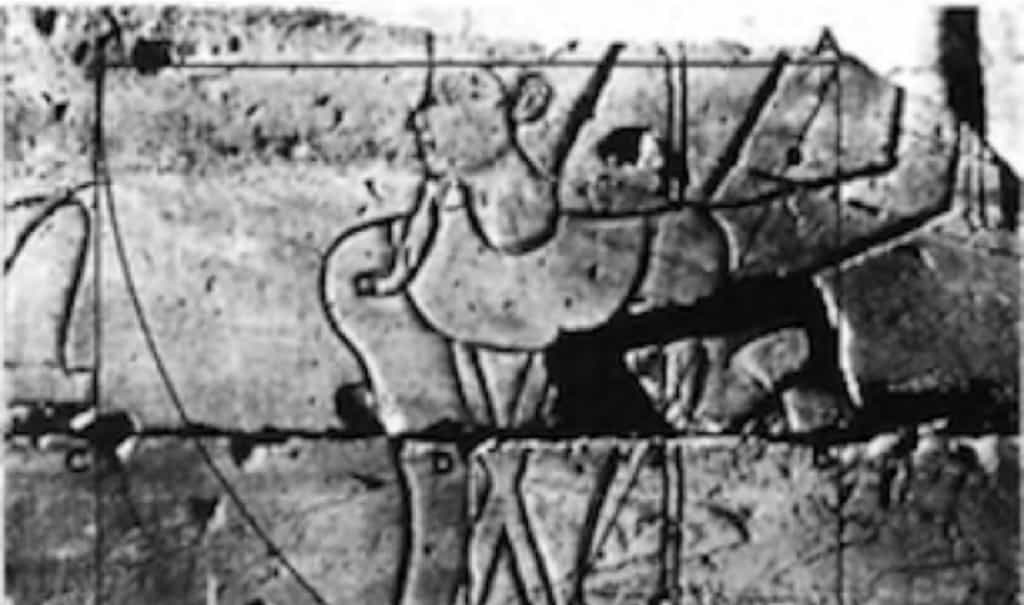
RAIL: I’ve been thinking a lot about response-ability lately, and as the word denotes it is surely a result of deep listening. If I actively listen to another human or an object or an animal, I expand my ability to respond to the subtler calls I hear it emitting. You have an ability to listen that I would call beyond human. How have you fostered this?

VICUÑA: I think I was lucky to be born in a special silence. I grew up in a place called La Florida. Today it’s a big shanty town south of Santiago, but when I was born, La Florida was countryside. I was left alone because my father worked in the city and my mother was too bored to stay in this place, so she just left. There was no radio, no television, nothing. So I learned to be in silence, which is critical to be able to listen. During these long, lonely, and silent days, my listening expanded immensely. I learned to listen to the frogs, to the birds, to the animals, to the Earth, to the wind. I became an expert listener, because through listening I felt the presence, the connectivity, and the warmth of everything that was alive. I felt loved, and I recognized my need to be loved. I think it’s because I put out this will to be held that they held me. This intense relationship born from listening has never died, and I’m able to go into that space at any moment. I can go into that space when I’m in bed at night dreaming, when I open a book of poetry, or when I meet someone for the first time and I can open up immediately. Becauselistening in Spanish is oir. Oir is from the Latin root os. Osis an opening. So listening really means opening up. Each opening leads to a new opening, to a new opening; it’s like opening a fractal.
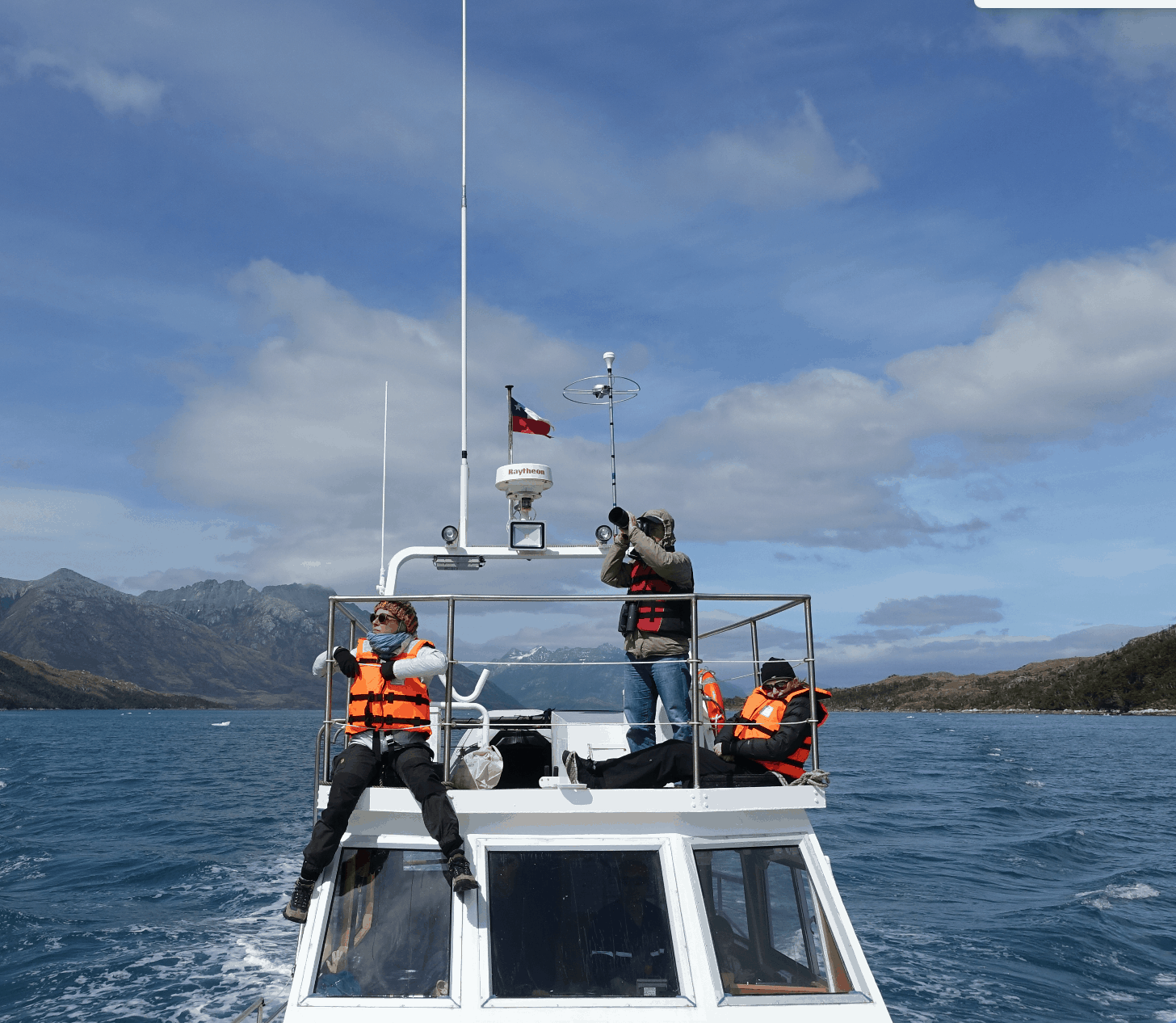
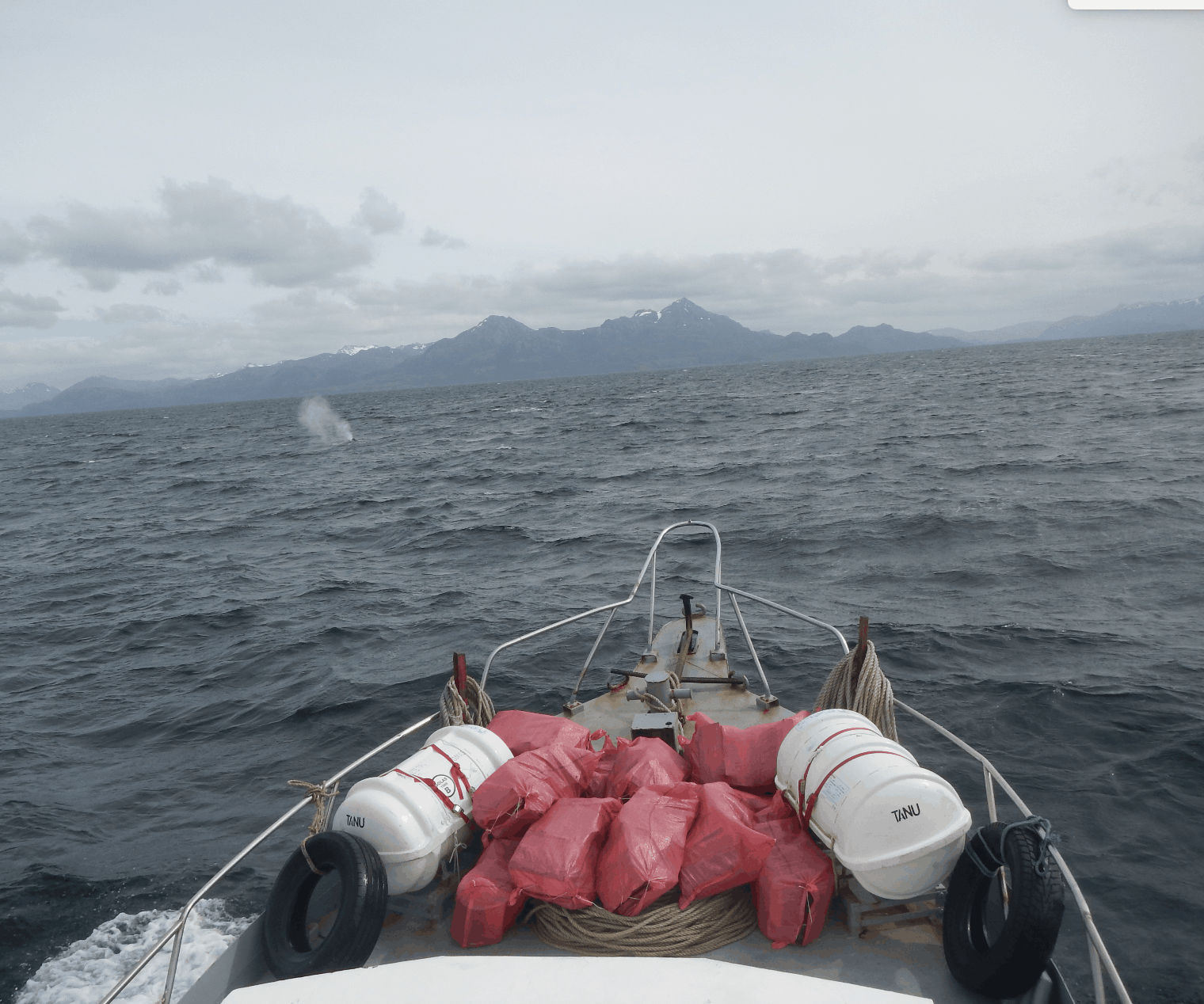
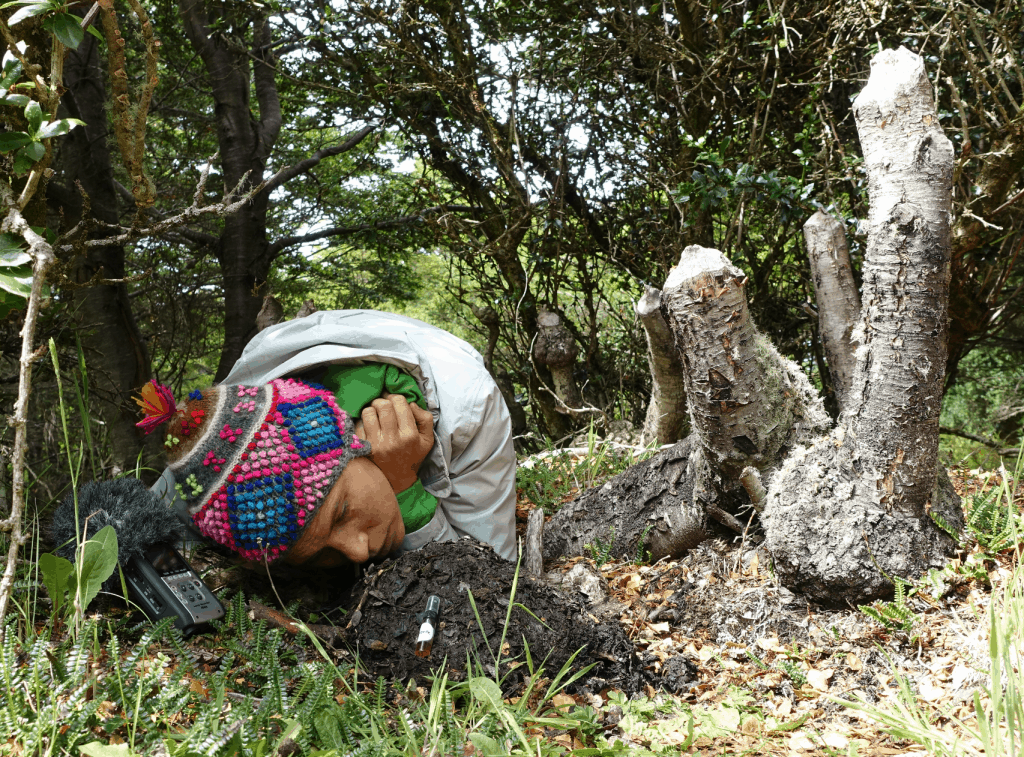
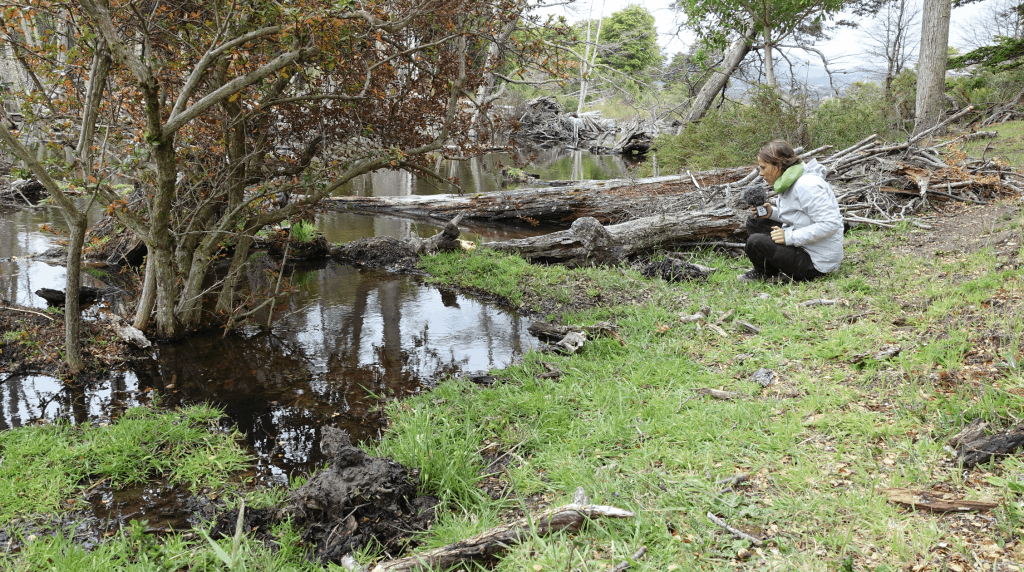
RAIL: As you describe this, I’ve become very aware of the holes in my head. The two that we call ears, but then we have lots of other holes in our head, including all of our pores. In fact, we are completely permeable. But still, there seems to be a tendency of the mind to consider itself a closed system, an independent system. Solipsistic thinking is a possibility, but it is just one possibility. Yet it is the reigning paradigm, and as such, it marginalizes the playful discovery of our interdependence, of emergence, of coevolution.

VICUÑA: That is so true. It is a belief system. The perception of the mind is really a belief system that has been sort of enthroned by one civilization of the planet, by the civilization that has become the owner of the “right idea.” There’s a fantastic philosopher, Enrique Dussel, from Argentina, who has really beautifully traced how the Eurocentric view was born, in a given moment in time when Europe started to generate this idea of themselves as being the ones who had this one correct idea and this justified the conquering and exploiting of everybody else.

I think we have already endured too much, almost 500 years of that process, and it is pretty clear that this idea brought about the destruction of the diversity and richness of human possibilities, not the other way around. If it had been the right idea we would now be on fertile ground for new creativity, we would not be in danger of losing fresh water, we would not be in danger of losing the ability to feed each other, we would not be endangering the existence of bees and pollination, we would not be in danger of the oceans losing oxygen. We have to realize that this idea was not such a good idea after all, and ask ourselves: Where are the other ideas? Who’s going to create that new vision of the world?

It has to be us, the people who have been in darkness, the people who have been despised. The people who are still attached to the ancient ways of relating to our bodies, of relating to the land, of relating to the wind, to each other. The ones who find joy in making love, in being full of joy and full of abandonment, the ones who know how to do, what in Spanish is so beautifully called entrega: the giving of ourselves to others without thinking, without making anything of it, just because that’s the way it is and it gives us joy. That’s what I’m writing about now: the ancient concept of sacrifice, embedded in one animal, the deer.

I’ve been investigating the deer, as teacher, for ten years. Why is the deer the master in Buddhism, in South Africa, and in the ancient Americas? I am especially focusing on the people of the Sonora desert, which is where you are from!

When I think of that, that you were born in the land of my devotion, I am moved to tears, because I have no other connection to that land except my devotion. Perhaps my ancestors, coming from the Siberia, walked through that land. There’s a vision there and I think it’s a vision that’s coming from the future, not just from the past. Because these people of the Sonora desert believe that sacrificial poetry has the ability to bring about the future. The people of the Amazon rainforest also believe that the future is always present, and it only comes about when we make it appear through our awareness of it. So it’s a mutual, reciprocal exchange between the potentiality of the future and our perception of it. So we have agency, we have a huge responsibility in opening up to that possibility of a different future, we have to activate a different future in our hearts, in our bodies, in our behavior, in our relationships.

RAIL: The Brazilian anthropologist Eduardo Viveiros de Castro noted so brilliantly that the ancient people of the Americas have themselves lived through the end of the world already. They sacrificed themselves to this new world order and watched the world as they knew it disappear, therefore they hold the knowledge of how to die and then live beyond the end.

VICUÑA: Absolutely. They are the deer.One of the great poems of the Americasis an anonymous, oral poem probably composed sometime in the seventeenth century called Apu Inca Atahualpa Man, about the killing of the last Inca by the Spaniards. In the poem, the people who have been destroyed are the deer. They are the sacrificial master, the teacher.

RAIL: To surrender to the worldview of a different species is a truly death defying act. On the one hand, you die to your individuality and on the other you continue to live as the other. For the past couple of years I have been engaged in an inter-species dialog with a group of beavers in Tierra del Fuego. At first this was a speculative exercise, but after a while we broke ground and the listening gave way to a set of torn sounds. Cries of propriety, of belonging, followed by pauses and silence. After the listening, upon the hearing, comes the translation. Could you speak to this?

VICUÑA: Yes, because the book that I’m writing now is about my relationship with this particular Yaqui poem. The Yaqui consider the poem itself to be a translation—the ancient hunters had to learn to translate the language of the deer. The oldest form of hunting that is known to humanity, from South Africa, and is still being practiced there. It consists of the act of translation, of placing yourself in the mind of the animal, so as to anticipate what the animal is thinking. Because if you’re going to outrun an animal, you have to know where it’s going to run. This is the birth of empathy. So translation and empathy are related. You cannot practice any form of empathy unless you know how to translate the thoughts, feelings, and perceptions of the other. I see the future of humanity through translation, and the fact that the indigenous poets perceive poetry as the translation has been totally enlightening.

So my book is about the many forms of translation that are involved in the poetic process. What you can translate in a poem is endless. You can translate the languages that no one knows at all, you can translate the feelings, the emotions, the images that don’t have words. Because words have the extraordinary capacity to suggest what cannot be named, and that is what makes language powerful.

RAIL: What form do you envision this translation taking? Or is the translation the form itself?

VICUÑA: Tra- means “across,” so how many forms of “across” can we come up with? You were saying before that we are permeable, our imaginations, our bodies are pores. Everything is permeable. Bacterias, cells, particles, everything has a form of communicating, of interacting. So I think we have to tune in to the many forms of going across, back, and forth. Because we cannot be only in the process of emitting, of attempting to control—that is destructive. We have to acknowledge that all these processes are going both ways to begin with. Translation transforms the language itself, so translations are not only about what is being translated, but what the translation is coming into. It’s this reciprocity of the process that is really the translation. The last part of the word, -lation, means “carry.” Un relato is to carry something back. To relate is to carry back. So a sense of reciprocity is in the word “relationship.” In translation, what you’re doing is carrying information across, both ways.

RAIL: How do you hope to empower people with this beautiful task of translation? Of going back and forth between the self and the selfless?

VICUÑA: I think by inviting people. And that’s why we come back to rituals, because a ritual is an invitation. My method is to allow for the emergence of what wants to come in of its own accord. That is the principle: that we should allow the translation to transform this world through an invitation to participate in the discovery of what already is.

RAIL: I just had an image of myself packing a knapsack to go on a trek and choosing to leave it only half-full to have space for whatever I might discover.

VICUÑA: And this is what life wants: life wants to delight in life. And so we have to incarnate that which is most delightful to us. But not delightful on the surface, something deeper than that. It’s a vibration, it’s the remnants of the spirit. There is something that makes you be you that nobody else can incarnate. And it’s your mission to listen to that because when you do, you become a delightful life itself. It’s not just your delight. The birds, the animals, everybody will sense it. I know when I am in that state because when I go for a walk, animals will come to me and suddenly I’m being licked by little dogs. They come to me [mocking dog sounds]. “What are they licking?” They’re drinking from the fountain of delight. It is the delight I am in. And they look at me, and I look at them, and there is a spark of recognition: “Yes, we licked that!”

It’s possible to have relationships like that, and to feel not just comfort, but the gift of it being something that is given to all of us. And it’s always available. So our being, our death, our short time in this life is really about that. That is why I think this Llamado is a call for beauty, because that beauty is the delight of life that wants to create more delight, more beauty, life itself.

Camila Marambio for the Miami Rail

Coastal Curriculum – Ensayo #4

/

elisa ibanez 4
Photo Elisa Ibañez

WHEN

November 9-23, 2014

WHAT

A nomadic recognition of some of the critical zones of Tierra del Fuego’s coastal areas. After which Camila Marambio, Karolin Tampere and Alfredo Prieto spent some time in Puerto Arturo, Última Esperanza digesting the experience and projecting a future for Ensayo #4’s coastal curriculum.

elisa ibanez 5
Photo Elisa Ibañez

WHY

Since having been Bruno Latour’s student at SPEAP, Science Po, Camila Marambio had kept in close contact with him about Ensayos. Taking advantage of Bruno Latour’s visit to Chile, Camila decided to invite him and Chantal Latour to tour the main Isle of Tierra del Fuego with a group of scientists and locals who would be giving breath to inaugural conversations about Ensayo #4’s concern with coastal development.   

WHERE

Isla Grande Tierra del Fuego and Puerto Arturo, Última Esperanza, Magallanes.

HOW

Thanks to WCS Chile, generous grants from Pedro Ibañez and Ana María Yaconi and Festival Puerto de Ideas, Valparaíso who brought the Latour’s to Chile.

WHO

Julio Gastón Contreras (doctor), Jorge Gibbons (cetologist/ UMAG), Elisa Ibañez (ingeniero comercial/ Antenna), Alejandro Kusch (marine biologist/WCS Chile), Chantal Latour (musician), Bruno Latour (phiIosopher/anthropologist), Camila Marambio (curator), Ivette Martínez (educator/Director Fundación Caleta María), Alfredo Prieto (archeologist/UMAG), Bárbara Saavedra (Ecologist/DirectorWCS Chile), and Karolin Tampere (curator).

Communities in Conversation at Konsthall C

/

COMMUNITIES IN CONVERSATION

13.5 2014—30.9 2014

Konsthall C, Hökarängen, Stockholm

Participants: Sørfinnset skole/the nord land (Norway), Trampolinhuset (Denmark), Kuratorisk Aktion (Denmark), Ensayos (Tierra del Fuego, Chile), Sunshine Socialist Cinema (Sweden) Mustarinda Association (Finland), SIFAV, Söderorts Institut för andra Visioner (Sweden), Atis Rezistans (Haiti), Konstnärkollektivet Colombiasur (Colombia)

Organized by The Work Group of Konsthall C

Konsthall C’s long­term investigation: Sustainability – What Do We Actually Mean? wishes to build long-­lasting relations with already existing collaborators of the Konsthall, as well as with new friends. We want to open for this by starting up exchanges and conversations, and some of these will be public at Konsthall C during May 2014. Sørfinnset skole/the nord land, Trampolinhuset, Kuratorisk Aktion, Ensayos, Sunshine Socialist Cinema, SIFAV and Mustarinda Association. All these long-­term attempts aim at working and existing pre­figuratively. In the end of May, we also have the possibility to meet the artist collective Atis Rezistans from Port au Prince, Haiti. For us, our own as well as other contexts become a source and a possibility for analysis in a situation where the welfare state is pushed away from places where it previously existed. In parallel, other artificial commons are created, constructed from above and marketed as voluntary. But meanwhile, genuine attempts are being made at finding other commons that can fill needs not satisfied by what we previously referred to as the common. The complex relationship between lowered taxes and charity and voluntary organizations is a question we’d like to talk over, as well as how we can avoid the neoliberal strategies of increasingly extracting capital the more we work for free. This is an exhibition built commonly over time, and in the simplest way possible.

Supported by Swedish Arts Council, ABF Stockholm, City of Stockholm and Nordic Culturefund.

Thank you to iaspis.

Beyond the End

/

At Paris Kadist Art Foundation an experimental format, based on cooperation between scientists, artists and members of the local community, analyzes how species inhabit an area and alter the natural and cultural space of the other species in the Tierra del Fuego.

By Giusy Checola for DOMUS

You step off the narrow Rue des Trois Frères in Paris, with all its picturesque Montmartre ateliers and cafés, and cross the threshold of the Kadist Art Foundation to find yourself in the Karukinka Park, on the Isla Grande de Tierra del Fuego.

After years of deforestation by a company logging timber for the international market, the island is now protected by an NGO called the Wildlife Conservation Society, directed in Chile by biologist Bárbara Saavedra. She launched the Ensayos artistic-scientific research project with the curator Camila Marambio in 2011.

Beyond the End, Kadist Art Foundation, 2014

Its experimental format is based on cooperation between scientists, artists and members of the local community and takes the form of short group residencies focusing on the themes determined in the initial island observation phase (Ensayo #1). One of these is the programme to eradicate the castor Canadensis, imported by the Argentine government in the 1940s. It has colonised watercourses and built dams and embankments that are veritable works of modern civil engineering, causing further forest decline and upsetting the ecosystem. This multidisciplinary analysis of beaver life on the island has produced an exhibition called Beyond the End (Ensayo #2).

Beyond the End, Kadist Art Foundation, Paris, 2014. House of the Karukinka's park ranger
Beyond the End, Kadist Art Foundation, Paris, 2014. House of the Karukinka’s park ranger

As well as Derek Córcoran (ecologist), Giorgia Graells (biologist), Émilie Hache (philosopher), Myriam Lefkowitz (performer), Carla Macchiavello (art historian), Laura Ogden (anthropologist), Alfredo Prieto (archaeologist), Maria Prieto (urban and biodynamic farmer) and Sofia Ugarte (sociologist), the artists Christy Gast, Fabienne Lasserre, Amanda Piña, Carolina Saquel, Maria Luisa Murillo and Geir Tore Holm & Søssa Jørgensen were involved in the Paris phase of the project. Beyond the End starts progresses from the “invasion” concept to that of the “diaspora”, overturning the way the issue is addressed: no longer scientific, it becomes relational and observes – from a non-human angle – how species inhabit an area and alter the natural and cultural space of the other species.

Beyond the End, Kadist Art Foundation, Paris, 2014. House of the Karukinka's park ranger. On the back wall: Christy Gast with Miguel Gallardo, Camila Marambio, Castor Chef, video, 1h 9', 2014
Beyond the End, Kadist Art Foundation, Paris, 2014. House of the Karukinka’s park ranger. On the back wall: Christy Gast with Miguel Gallardo, Camila Marambio, Castor Chef, video, 1h 9′, 2014

The group looked beyond the separation into species and discipline, morality and abjection, artistic authorship and collective project to create two environments, one immersive-emotional and the other of exploration. In them, installations, performances, videos, photographs and study material help visitors learn about the reciprocal relationship between human life and that of a harmful animal; these seem to meet in the video Conjuring via the performative actions of Christy Gast, following the sculptured form of the embankment built by the beavers.

Beyond the End, Christy Gast and Camila Marambio, Conjuring, 2014, video, 3'30''
Beyond the End, Christy Gast and Camila Marambio, Conjuring, 2014, video, 3’30”

The exhibition route begins with an experience of the location, in a typical local home, where you have conflicting sensations: the Castor Chef documentary shows a castor being captured, skinned and chopped up by a park ranger in a collective celebration; the Castorera (A Love Story) fictionreproduces moments in the rodents’ life as a pair featuring the idyllic love-nature combination used by humans to construct an image of the ideal world; María Luisa Murillo uses a nostalgic photograph of an old pier, Vestigios del muelle de Caleta María, to work on her memory of her great-great grandmother, a Swiss emigrant who founded the largest timber industry in Porto Yartou.

Beyond the End, Kadist Art Foundation, 2014. Study sketches, documents section

The half-light of the room and the informality of a human home are countered by the muffled sounds and oneiric images of the beaver’s semi-aquatic life – as unstable and fluctuating as that of the humans with whom it shares the fight for survival. Looking at the Dreamworlds of Beavers video and listening toSpeculative Wonder, a text written by anthropologist Laura Ogden on the concept of political ecology, you enter into symbiosis with the animal’s world, which becomes your own for a few minutes.
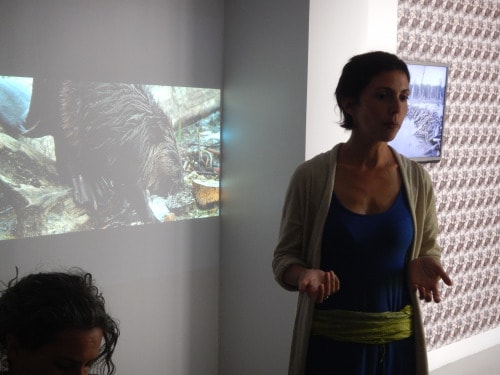
Beyond the End, Kadist Art Foundation, 2014. Images study by Alfredo Prieto, documents section

Paris, the city that showed nine “specimens” of Selk’nam – the indigenous people of Tierra del Fuego – in a “human zoo” at the 1889 World’s Fair, establishing the image of uncivilised indigenous cultures versus the European concept of modernity(actually coined by a Nicaraguan poet in 1890, as Timothy Mitchell writes [1]), is today experimenting with a concept of the future based on an emotional relationship between species and on social reorganisation in natural space, starting with the discovery of an old link that cannot be predetermined by the Rationalist vocation of the cartographic grid: as Benoit Hické explains during the performative lecture Inside the Beaver’s Skin,the Musée d’Histoire Naturelle was built on La Bièvre, covered over in the 19th century, a name that originates etymologically from beaver.

1 Timothy Mitchell, Questions of Modernity, Minnesota, University of Minnesota Press, 2000, p. 1-7.

© all rights reserved

until 27 July 2014
Beyond the End
Kadist Art Foundation
19bis/21 rue des Trois Frères
Paris

Paris Work Week, Amanda Piña

/

Work-week: Amanda Piña’s performances

Kadist Art Foundation, Paris, June 11, 2014

Inspired by the performative practices of “Fake Healing” and “Les Soins esthétiques” developed by choreographers Jennifer Lacey and Keith Hennessy, the performer and choreographer Amanda Piña led two explorations on Tuesday and on Thursday, conceived as “new ways to mobilize our bodies towards well being, aesthetic experience and transformation of the self”. After giving minimum instructions to the participants who formed groups of three, each group chose the place they preferred in the space. The first exercise dealt with mobilizing perception towards the development of different human sensitivities and was intended to give each other an aesthetical ‘treatment’, something pleasant and immaterial. The second exercise proposed to explore the physical gaze that organizes perception as well as the way it feels, “including the visual perspective of the person being treated as a way to go beyond wellness into more blurry zones of performativity”.

On Tuesday afternoon, Amanda Piña also performed the dance piece Valse Indienne in the darkness of the third room of Kadist’s exhibition space, imbuing this “meeting room” with a very special ambiance. After removing all her clothes, her body painted with white indecipherable inscriptions and part of her face painted red, Piña performed an extremely fast dance, spinning in circles until she stopped from exhaustion, accompanied by rhythms created by three percussionists using pairs of forks as instruments. After the performance Piña explained the (hi)story of the transformation of the waltz after it was introduced to the Yámana people of Tierra del Fuego around 1830, following the native Fuegian Yámana Jemmy Button’s return from his ‘journey’ to the English Court where he was supposedly taught “good manners”.

Paris Work Week, Laura Ogden at Sciences Po

/

Work-week, day 6: Laura A. Ogden, “Speculative Wonder at the World’s End”

Kadist Art Foundation, Paris, June 10, 2014

Friday’s talk at Sciences Po – with a large audience including members of Sciences Po’s SPEAP program and Nanterre University’s “Chantiers de l’écologie politique“ seminar, organised by Emilie Hache and Pierre Charbonnier – was related to the book Laura Ogden is currently writing, which provides “a way of rethinking (her) whole work”, according to the anthropologist. It intends to propose a specific method to no longer think about beavers as an invasive species, instead recasting their “invasion” as a diaspora: thinking in terms of belonging rather than in terms of origins. When attempting to define the two central notions of this method: “speculative” is to be understood as “a productive thought experiment” and “wonder” as “a practice mediated by our own attachments”: a mode of creating attunement to the politics of the issue at stake.
Not forgetting the long-term damages beavers inflict on the Patagonian rainforest, parts of which may already be irreparably destroyed, what logic should/ could we consider when thinking about this ‘other’ world of beavers? Acknowledging the fact that the eradication of non-native species should not be regarded as the top priority (as is it most of the time), Laura Ogden spoke about forms of anti-lobbying activism and Chilean environmental groups collaborating with others in the United States to fight against transnational companies buying up land to increase land management and develop the timber industry.
Considering that Patagonia’s rural landscape and weak economy are dominated by sheep farming and the fact that these millions of “imported” sheep could equally be considered as ‘invasive’, Ogden discussed the problem of capitalistic land management and governmental interests in farming industries. Beavers thereby become enmeshed in wider discourse on animal diaspora, in which the notion of species is “just a point of view, a principle of relation, always just a part of an assemblage”.

Dans la peau du castor, Muséum national d’histoire naturelle, Paris

/

Une étude de cas appuyée par des séquences vidéo (réalisées par Christy Gast) et un débat.

Beyond the End est une exposition consacrée à Ensayos, un programme de recherche et de résidence initié en 2010 en Terre de Feu (Chili) par la commissaire d’exposition Camila Marambio. Présenté en parallèle de l’exposition à la Fondation Kadist, Dans la peau du castor clôture une semaine d’échanges (présentations, performances, projections) réunissant artistes et chercheurs autour de questions liées à la conservation bio culturelle.

Influencé par des échanges transdisciplinaires entre scientifiques, chercheurs en sciences sociales et artistes, cet événement propose de mettre en scène un débat autour de la question des espèces considérées comme invasives, un sujet épineux dans la sphère de la biologie de la conservation.

En 1946, le gouvernement argentin importa vingt couples de castors sur la Grande Île de Terre de Feu (Argentine/Chili), qui s’adaptèrent à ce “nouveau monde”. Les conséquences de ce processus sont visibles aujourd’hui, à travers les dommages que les castors ont causé aux forêts en construisant leur abris, et les effets sur la biodiversité de l’île.

Le format de ce débat est inspiré par le “théâtre forum” développé par le metteur en scène brésilien Augusto Boal. Cette forme favorisera l’émergence de voix méconnues, tout en répondant aux questions suivantes : comment rendre visible une recherche transdisciplinaire ? Quelles formes pour la représenter ?

Invités :

Anne-Caroline Prévot Julliard (chargée de recherches MNHN/CNRS) ;
Christy Gast (artiste), Myriam Lefkowitz (chorégraphe) ;
Carla Macchiavello (historienne de l’art) ;
Camila Marambio (commissaire d’exposition) ;
Maria Luisa Murillo (artiste) ;
Laura Ogden (anthropologue) ;
Amanda Piña (chorégraphe) ;
Alfredo Prieto (archéologue) ;
Bárbara Saavedra (écologiste) ;
Carolina Saquel (artiste) ;
Sofia Ugarte (sociologue) et des spect-acteurs.
Cette présentation se tiendra en anglais et en français. Traductions en simultanée ou sur photocopies.

Le projet Beyond The End (exposition à la Fondation Kadist et évènements associés)

Paris Work Week, Muséum National d’Histoire Naturelle

/

histoire naturelle 3Beyond the End, Kadist Art Foundation, Paris

Session at the Muséum National d’Histoire Naturelle, June 7, 2014

Where:  Benoit Hické, who made this event possible in the beautiful auditorium of the Galeries d’Anatomie comparée et de Paléonthologie, told us that the Museum was built on an ancient river called the Bièvre, which etymologically, derives from the word ‘beaver’ :

http://en.wikipedia.org/wiki/Bi%C3%A8vre_%28river%29

To begin with, the audience was offered a seance of semiology from video images shared by Christy Gast and Laura Ogden, opening in Karunkinka. From this, a series of words, concepts or actors were excerpted and written down on sheets of white paper:

histoire naturelle 4– the hunter, the locals, the beavers, the fallen trees, the philosophy, the useless work, the scientists, the state, the artist, the water, and so on.

After that, we were all invited to participate in a “Family constellation exercise”, a role-playing game of sorts,The replica of a beaver attributed a role to each member of the audience, in turn creating their own representation of constellations.

Each participant was afterwards free to move into another group, to which they though they were closer.

This exercise triggered reflexions, thoughts and discussions on the place of each individual in a global environment. How to think about interconnections or chains of causes and consequences, that make each ecological issue such a complex puzzle?

histoire naturelle 2We heard different views from the participants on how they perceive themselves in the global environment among beavers and forests: some tried to hear, to feel or to experiment with the position of the animal, others emphasized the difference in positions.

We heard for instance that “beavers taste like the wood they eat”.

Other conceptions were more anthropomorphic, perceiving beavers as sculptors, or engineers, whilst envisioning their family, their work, their land.

To conclude this work week session and in an attempt to define the highlights of this collaborative project between artists and scientists, let us (re)consider the following points :

1- Everyone must leave their comfort zone to enhance the exercise of “looking at things differently”.

2- A connection or parallel is discernible between the global ecological situation and the history of colonialism ; these are two entry points from which to understand the current research in post-human geography.

3- And finally, what everyone, no matter from what specific field, can share, is an ability to feel intimately attached to an environment – be it the entire landscape or its components – we can all be touched by a certain wonder, from which can emerge a sense, whether poetic or scientific; we just use different ways to do so.

Paris Work Week, The Ethics and Politics of Living and Dying

//

Talk: Laura Ogden & Émilie Hache, mediated by Florencia Grisanti

Musée de la Chasse, June 4, 2014

Extending Beyond the End’s horizons to yet another corner of the world, anthropologist Laura Ogden took us on an evocative journey through the swamplands of the Florida Everglades, using detailed descriptions of the landscape and local alligator hunting practices as both literal and metaphorical examples of new methods, approaches and questions to be explored within Ensayos.

Ogden opened with a fascinating description of the transformative process whereby alligator hunters almost become their prey- speaking with alligators by emulating their grunts, “thinking like an alligator, smelling like an alligator and covering themselves in alligator”. Though this practice has the ultimate goal of claiming the alligator skin to be fed into a global commodity chain that leads all the way from Florida’s humid swamps to, for example, Paris, it exemplifies the power of trans-species communication and the concomitant loosening of the categories human / non human, which could become central to working with the beavers in Tierra Del Fuego. Such flexible categories and shifting perspectives emulate the mobile and fluid landscape of the swamplands, dominated by red mangroves, orRhizophora mangle. With roots growing rapidly in all directions, interweaving with surrounding plants to form complex networks, the plant acts as a metaphor for the methodological approaches necessary for an extension of the “politics” of political ecology, as a multispecies, generative process, evading clearly defined roots/routes in favor of “networks of reconfiguration and rupture”.

This rhizomatic approach to rethinking the issues in Tierra del Fuego, avoiding an “irresponsible male chauvinistic conception of scientific objectivity” to include the ethics of living and dying, morals and emotions in ecopolitical discourse, was central to the ensuing talk by philosopher Émilie Hache. Is it possible for one species to mourn another species’ disappearance? And if so, thinking beyond the present, who or what may we be mourning in the future within the framework of Ensayos’ work in Tierra Del Fuego? Currently mourning the violence exerted on the island’s ecosystems by an ill-conceived introduction of beavers on the island, yet faced with their eradication as a potential ‘solution’ to the problem, will we soon be mourning further acts of cruelty on a species originally displaced by us?

Describing this notion of ‘eradication’ as a lack of attention or imagination, Hache encourages us to consider alternative models, such as the ‘protected natural spaces’ created in other parts of the world. Echoing Laura Ogden’s emphasis on fluid or rhizomatic thought processes by stressing the importance of approaching situations ‘symmetrically’, Hache spoke of the increasing conflicts between humans and wild coyotes on the outskirts of the sprawling city of Los Angeles, where ‘eradication’ of the species is often stated as the only solution. Hache challenges us to ask who, in this case, is actually the invasive species? Is it in fact humans invading the coyote’s natural habitat by embarking on their “unchecked predatory all-terrain urbanization”? Who has the right to define a species as invasive / native and are there alternative models/ futures to eradication? Is there a space for invention? Can we find proposals for migration or transfer, as a possible apology to the beaver? How can we adapt both our and the beaver’s behavior to allow a peaceful and sustainable cohabitation of humans, ecosystems and the beaver?

Demanding another future and the possibility of a future, which takes into account the beaver’s existence whilst refusing to choose between the preservation of Tierra Del Fuego’s ecosystems and our responsibility to the beaver, Hache suggested Ensayos’ work as both an act of love (to the island and its animals) and a political act (as a public, multispecies endeavor to create a future).

Paris Work Week, Geir Tore Holm and Søssa Jørgensen

/

Demonstration of Warmth by the Cold

Kadist Art Foundation, Paris

Last night (Thursday, June 5) at Kadist we were Geir Tore Holm and Søssa Jørgensen’s guests.
With Karolin Tampere’s help, they welcomed us with a cocktail made of vodka and herbs grown in 24 hours of sunlight, picked in the vicinity of their farm in Norway.

Apparently livening up the mind and increasing its receptivity,
It helped guests to cross the threshold of perception,
A birdsong subtly accompanied our discussions,
Before we were invited to sit around the table.

The performance they gave us yesterday night acted as a diary excerpt, traveling between their spaces and thought throughout time, Geir and Sossa are two artists who take care of their farm, horses, dogs and plants.

For 12 years now, they have also gathered people around a project called Sørfinnset Skole  (The Nothern Land) a project built collectively with artists and locals, giving shape to a community.
This place is the little sister of another residency, The Land Foundation in Thailand, initiated by Rirkrit Tiravanija.

The screening of a short video invited us into their (frame)work,
composed of landscapes and dogs,
guitars and rhythms,
pink stone or garbage ? Beached on the sea shore.
White and remote locations
From deserts of ice to Tierra del Fuego,
a travelogue from Karunkinka to Sørfinnset Skole

Geir took the flow, stating, almost chanting:
“I wish I had a weapon
call it politics, or ethics”
Joined by Søssa,
and other elvish presences in their hands,
they spoke the language of climate change.

Finally we shared homemade pie and warming spirits,
From spaces and landscapes, food and people;
You might learn that home is the place where
you become concerned and get involved.

Fin del Vaje para esta noche

Paris Work Week, Carla Macchiavello and María Luisa Murillo

/

Work-week: day 2

Kadist Art Foundation, June 4, 2014

The second day of the work week was dedicated to delving into the history and subjective experience of living in Tierra del Fuego.

Maria Luisa Murillo’s photographic work addresses issues of territory, immigration and nostalgia from different angles. She returned to the history of her great-great-grandmother’s arrival on the island from Switzerland, who was later to become the founder of the main timber factory in Porto Yartou.

Maria Luisa talked about her series of photos of abandoned interiors of buildings, mixing European and Austral territories. The artist also discussed the Casa-Museo Alberto Baeriswyl where she works, discussing the importance of making the family legacy well known within the framework of a project of patrimonial recovery and of promotion of ecocultural tourism currently developed in Porto Yartou. Conceived as a warm and welcoming house or ‘museo habitable’ rather than a traditional museum, visitors become free explorers of the histories of the place through various digital devices and platforms as there is almost nothing material left to exhibit but oral heritage.

The art historian Carla Macchiavello showed some (arbitrarily chosen) contemporary Chilean works of art produced from the mid-1970s to the mid-1980s (Cristian Silva, Eugenio Dittborn, Ronald Kay, Catalina Parra, Marcela Serrano), with a focus on the period 1971 to 1973 during Allende’s government. Carla reflected on the ways in which this “political” and “social” art was connected with a much more popular one, while the government was leading campaigns promoting a ‘Chileaness’, tracing both imaginary and physical borders of the country. These ‘avant-garde’ artists were extremely conscious of their role in generating increasing awareness of the political situation whilst avoiding ‘folkloric’ and ‘indigenous’ representations of the ‘other’. Even though Tierra del Fuego almost never appeared in their works (and if so as a blank zone) these artists were obsessed with traces of borders of ‘the country’ and started to represent the emergence of socially marginalized bodies which began to appear as ghost figures in their works.

Paris Work Week, Fabienne Lasserre

/

Screening of Paris is Burning and presentation by Fabienne Lasserre

June 3, 2014

Encouraging us to look and think beyond immediate geographical and cultural contexts to reflect on gender relations and the ways in which they may come into being, be maintained and affect a community, the artist Fabienne Lasserre gave a thought provoking talk comparing gender constructs presented in the documentary Paris is Burning, which chronicles the Ball and Drag culture in 1980s New York, and the Hain ceremony, a male initiation rite of the Selk’nam people of Tierra del Fuego.

Fabienne’s detailed analysis revealed that both the Ball Culture and the Hain ceremony ultimately highlight the construction of gender roles and the concomitant power relations as arbitrary and interchangeable, whilst pointing to performativity, ritual and repetition as modes of display and reinforcement, as well as disclosing elements of secrecy/taboo, implicit or explicit violence, control and coercion as mechanisms of their maintenance. Fabienne thereby offered useful insights into the social history of Tierra Del Fuego, adding a further perspective to and deepening our understanding of the island and its inhabitants.

Furthermore, the presentation triggered a discussion on modes and value(s) of documentation, as both the film Paris is Burning and the photographic images of the Selk’nam people used in the presentation, are materials collected and presented by an(-)‘other’ – in the case of the Hain ceremony by missionaries such as the Austrian ethnologist Martin Gusinde, and in the case of Paris is Burning by the (white, female) artist Jenny Livingston. This in turn ignited a self-reflective questioning of Ensayos’ and Beyond the End’s own modes of information and data collection, presentation and dissemination, a crucial and ongoing aspect of the project.

Paris Work Week, Alfredo Prieto and Sofia Ugarte

/

Kadist Art Foundation, Paris, June 2, 2014

Rarely do seminars begin by turning to whoever is sitting next to one to randomly talk about whatever is passing through one’s mind. Especially if one is asked to do in the language one feels most comfortable in, being assured of two minutes of head-on attention, in a room filled with people from different parts of the world. While the objective could be to get out of each participant’s or audience’s system the necessity to interrupt or to speak, to create a small tower of Babel, or maybe just to relax or concentrate people’s minds in what will be presented next, the exercise connected with yesterday’s talk and practical work of Goethean observation. In a way, this exercise was also about paying attention, concentrating on another being, their desire to speak, their forms of communication, and what was being said, even if the language uttered was incomprehensible for the receiver.

Connections and connecting is one recurring theme at “Beyond the End” meeting. Alfredo Prieto, a Chilean archeologist, began to lead us through an imaginary voyage across time and space, a great, long walk that started millennia ago, when humanity developed enough tools to get moving from Africa to what literally, many, many years later, could be considered the end of the world at Tierra del Fuego. The talk (done in Spanish and translated by Camila Marambio into English), concentrated on instruments, objects, material realities that shape our history since the dawn of human existence and which is still taking us to places we do not yet know. Though this virtual excavation of layers and reading of material traces, where history is written through techniques, we moved from points of lances to arrows and the changed ways of life of knowledge, and of relating to others implied by these transformations. Just as the slightest change in the form of pointed weapon changes what kind of animals are hunted, how they are chased, by how many, and thus alter social patterns, so different landscapes within a territorial unity like an island give way to radically different forms of life. The spiraling cord attached to a handle that today might seem “primitive,” or only a remote form of survival, was and still is a sophisticated knowledge in sustaining life under extreme conditions.

A series of further layers were added by Sofía Ugarte, a Chilean sociologist who wove her interview-based research on the island in February 2014 into a performative talk in front of a semi-translucent paper pasted on the wall that seemed like a memory block of traces. Beginning with quotes and the adoption of multiple anonymous, present-day voices from Tierra del Fuego, Ugarte connected what the current inhabitants feel about living in the island, with ways in which this place is, has, and can be though about, centering on three nodes or “modes of uncertainty” as she called them. These included the radical social uncertainty embodied by the Selk’nam people to later immigrants to the island, passing through current feelings of uncertainty regarding or brought about by institutions or their lack in Tierra del Fuego, to the marginal, frontier geographical character of the city of Porvenir in particular. In a place that has been characterized historically by the uncertain (whether it is the insecurity of sustaining life, of changing living conditions, of unexpected visitors, of staying), Sofía Ugarte proposed thinking about alternative forms of institutions, as well as the continuing problems carried by reacting to uncertainty with violence and interpreting life, past and present, in Tierra del Fuego.

Paris Work Week, Maria Prieto and Bárbara Saavedra

/

prieto
Maria Prieto presentation

Kadist Art Foundation, Paris

Work-week: day one, June 2, 2014

What are the politics and power-relations inherent in decision-making?

How may empathy and intuition be included in scientific research?

What place could art have in conservation science?

Does emotion play a role in a research process regarding invasive species?

Yesterday marked the beginning of the one-week work session taking place within the framework of Beyond the End at Kadist Paris.

Ecologist Dr. Barbara Saveedra opened the session by shedding light on the field of conservation science and the loss of biodiversity as the most relevant social problem faced by humanity today. Barbara shared detailed insights into the ecological situation in Tierra Del Fuego- its valuable forests, peatlands and unique wildlife, which are currently endangered by a number of threats. Outlining the work that Karukinka and the Wildlife Conservation Society have been doing for several years, Barbara discussed the importance of remembering the inextricable link between humans and nature in the pursuit of global well-being, as well as her discovery of entirely new forms of research through the integration of art into conservation biology.

In the second presentation of the day, urban and biodynamic farmer Maria Prieto introduced the workgroup to the fascinating world of Biodynamics. Focusing on the castor canadensis beaver, an invasive species posing a major threat to ecosystems in Tierra Del Fuego, Maria took participants through a 4-step process based on Johann Wolfgang von Goethe’s theories on observation, described as a ‘delicate empiricism’. Taking participants on a journey from ‘exact sense perception’ all the way to ‘beholding’, the exercise helped foster a deeper understanding of the species, in an attempt to integrate the beaver into the decision making process regarding its own future on the island. This exercise presented itself as a method or a tool that could allow and legitimate intuition and empathy as a part of the process of meeting in Science, as an option in the way of trying to find solutions and to build connections with it.

Beyond the End at Kadist Art Foundation, Paris

/

Press Release

Beyond the End is an exhibition dedicated to a research and residency program initiated in 2010 in Tierra del Fuego by curator Camila Marambio. Over the years, the Ensayos residencies have given shape to a dialogue between artists, scientists, local inhabitants and Karukinka Natural Park. Based on the premise that only creative collaboration can efface frontiers in the field of biocultural conservation, Ensayos enacts the complex interdependence of humans, non-humans and matter with the urgency of maturing aesthetic sensibility in the face of scientific discoveries. The work in the exhibition attempts to give form to this multidisciplinary, multispecies research-based project.

With: Derek Córcoran (ecologist)Christy Gast (artist)Giorgia Graells (biologist)Émilie Hache (philosopher)Geir Tore Holm & Søssa Jørgensen (artists)Fabienne Lasserre (artist), Myriam Lefkowitz (performer), Carla Macchiavello (art historian), Camila Marambio (curator), Maria Luisa Murillo (artist), Laura Ogden (anthropologist), Amanda Piña (choreographer & artist), Alfredo Prieto (archeologist), Maria Prieto (urban and biodynamic farmer), Bárbara Saavedra (ecologist), Carolina Saquel (artist) and Sofia Ugarte (sociologist).

From Tierra del Fuego…

After observing and interacting with the methods used by a group of conservation biologists working in Karukinka Natural Park in Tierra del Fuego (Chilean Patagonia), Camila Marambio, an independent curator, was stirred to question the uselesness of art. That is why, in 2010, she convinced Dr. Bárbara Saavedra, the ecologist who directs the park, to include artists as researchers. Together they organized a meeting that took place in February 2011, during which eighteen people (artists, scientists, local islanders and park rangers) met in Tierra del Fuego to speculate on some of the pressing conservation issues with the intention of unveiling the potential of transdisciplinary research.

This first inquiry residency trip to Karukinka was called ‘‘Ensayo #1’’, and later gave the whole initiative its name, ENSAYOS (Essays if we translate into English), due to the pragmatic trial-and-error approach which offers the possibility of rehearsing other ethics and worldings in search of novel ways to steward the environment.

With this desire in mind, ‘‘Essayo #1’’ drafted some issues to be addressed by three different groups of researchers. These are: the handling of the castor canadensis (the beaver is considered an invasive species by the scientific community in Tierra del Fuego), the governance of the archipelago’s coastal areas, and the Island’s social history.

…To the exhibition at Kadist (Paris)

Given that the “beaver problem” is considered to be the biggest threat to the conservation of biodiversity in Tierra del Fuego, Ensayo #2 picked up on this issue. From a dialogue between artist Christy Gast, Bárbara Saavedra, Camila Marambio, anthropologists Laura Ogden and Melissa Memory, and biologists Derek Córcoran and Giorgia Graells, an initial inquiry arose: how could they, as a research group, include the beaver in the decision making process about its own future on the island? This led them to rehearse various ways of listening to the beavers on the island, and to hear the call of other non-humans that demand fair attention. The beaver issue, represented in the first part of the exhibition Beyond the End at the Kadist Foundation in Paris, has broadened the scope of aesthetic viewpoints: in this dialogue between species and between disciplines there is an unexplored potential for action and reflection leading towards a practice of rhizomatic imagination that dissolves even the notion of species.
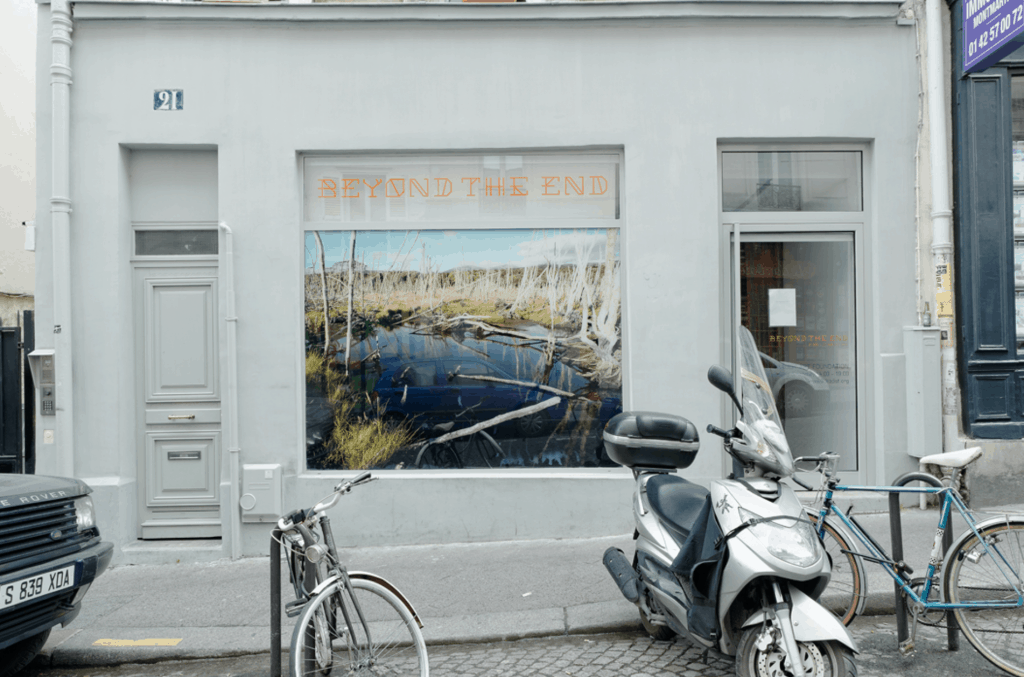
Tierra del Fuego in the city of enlightenment

Beyond the End, at Kadist Paris, gives researchers and artists the opportunity to gather for a one-week work session to discuss the matters that will concern ‘‘Ensayo #3’’. Articulated as a series of attempts to reach beyond questions about the subject and its identity, ways of knowing and how we know, humanity as the only form of culture, the work-week will aim at new types of questions: What is beyond us? What is non-human (within and around us)? or What is human from the perspective of the other? To inaugurate an inquiry into a post-human geography of Tierra del Fuego.
This work-week will take place after the opening (from June 1st to Saturday 7th), and include a series of presentations, screenings, performances and public actions, presented at Kadist, Musée de la Chasse et la Nature, Ciné 13 and Museum National d’Histoire Naturelle.

Más Alla del Fin, the inaugural edition of Ensayos’ newspaper, will be released on the occasion of the exhibition. Editor, Art Historian Carla Macchiavello, invited Chilean researchers to contribute hyper-local, first person accounts of their encounters and impressions of Tierra del Fuego.

Download the program: https://kadist.org/program/programme-beyond-the-end/

Read more about the Ensayos’ newspaper: https://ensayostierradelfuego.net/periodical/kiosko-timaukel/

Read the article published in DOMUS:http://www.domusweb.it/en/art/2014/06/30/beyond_the_end.html

Notes

1- Karukinka means Tierra del Fuego (Land of Fire) in the Selk’nam language.

2- In 1889, to celebrate one hundred years of “Freedom, equality, brotherhood”, Paris hosted a Universal Exhibition that had amongst its “attractions” a gleaming Eiffel Tower and a “Human Zoo”, where nine Selk’nam from the Tierra del Fuego Island were on show amongst four hundred other indigenous people.

http://kadist.tumblr.com/

With the support of Ensayos Council of Advisors, Tigertail Artist Access Grant, WCS Chile Karukinka, Musée de la Chasse et de la Nature, SciencesPo/SPEAP, OCA (Office of Contemporary Art Norway), Galeria Patricia Ready, Sophiapol, Muséum National d’Histoire Naturelle, Antenna Corporación Cultural, Dan and Kathryn Myksell and MAVI (Museo Artes Visuales).

Press Release

Beyond the end es una exposición dedicada a un programa de investigación y una residencia que se inició en 2010 en Tierra del Fuego por la curadora Camila Marambio. Con los años, las residencias de Ensayos han dado forma a un diálogo entre artistas, científicos, habitantes locales y el Parque Natural Karukinka. Basado en la premisa de que sólo la colaboración creativa se puede borrar las fronteras en el campo de la conservación biocultural, Ensayos promulga la compleja interdependencia de los seres humanos, no-humanos y materia con la urgencia de maduración sensibilidad estética en la cara de los descubrimientos científicos. El trabajo en la exposición trata de dar forma a este proyecto basado en la investigación multidisciplinaria, de múltiples especies.

Con: Derek Corcoran (ecologista), Giorgia Graells (biólogo), Émilie Hache (filósofo), Geir Tore Holm y Sossa Jorgensen (artistas), Fabienne Lasserre (artista), Myriam Lefkowitz (coreógrafo), Carla Macchiavello (historiador del arte), Camila Marambio (curadora), María Luisa Murillo (artista), Laura Ogden (antropólogo), Amanda Piña (coreógrafo), Alfredo Prieto (arqueólogo), María Prieto (agricultor urbano y biodinámica), Bárbara Saavedra (ecologista), Carolina Saquel (artista) y Sofía Ugarte (sociólogo). Y Christy Gast (artista en residencia)

Desde Tierra del Fuego …
Después de observar e interactuar con los métodos utilizados por un grupo de biólogos de la conservación trabajando en el Parque Natural in Karukinka en Tierra del Fuego (Patagonia chilena), Camila Marambio, curadora independiente, se puso a cuestionar la utilidad del arte. Por eso, en 2010, ella convenció Dr. Bárbara Saavedra, ecologista que dirige el parque, para incluir a artistas como investigadores. Juntos organizaron una reunión que tuvo lugar en febrero de 2011, durante los cuales dieciocho personas (artistas, científicos, isleños locales y guardaparques) se reunieron en Tierra del Fuego para especular sobre algunos de los temas de conservación urgentes con la intención de desvelar el potencial transdisciplinario  de la investigación.

Este primer viaje de residencia a Karukinka se llamaba” Ensayo # 1”, y más tarde dio a toda iniciativa de su nombre, ENSAYOS, debido al enfoque de ensayo y error pragmático que ofrece la posibilidad de ensayar otras éticas y los mundanos en busca de nuevas formas de mayordomo del medio ambiente. Con este deseo en mente,” Essayo # 1” redactó algunos temas que serán abordados por tres grupos diferentes de investigadores. Estos son: el manejo del castor canadensis (el castor es considerado una especie invasora por la comunidad científica en Tierra del Fuego), la gobernanza de las áreas costeras del archipiélago, y la historia social de la isla.

… Hasta la exposición en Kadist (Paris)
Teniendo en cuenta que el “problema del castor” es considerado como la mayor amenaza para la conservación de la biodiversidad en la Tierra del Fuego, Ensayo # 2 recogido en este tema. De un diálogo entre los artistas Christy Gast, Bárbara Saavedra, Camila Marambio, antropólogos Laura Ogden y Melissa Memory, y los biólogos Derek Corcoran y Giorgia Graells, una investigación inicial surgió: ¿cómo podrían, como grupo de investigación, incluyir el castor en la toma de decisiones procesar acerca de su propio futuro en la isla? Esto los llevó a ensayar diversas formas de reproducir los castores en la isla, y para escuchar la llamada de otros no-humanos que requieren atención justa. La cuestión de castor, representada en la primera parte de la exposición Beyond the end de la Fundación Kadist en París, ha ampliado el alcance de los puntos de vista estético: en este diálogo entre las especies y entre las disciplinas existe un potencial inexplorado para la acción y la reflexión líder hacia una práctica de la imaginación rizomática que disuelve incluso la noción de especie.

Tierra del Fuego en la ciudad de la iluminación

Beyond the end, en Kadist París, ofrece a los investigadores y artistas la oportunidad de reunirse para una sesión de trabajo de una semana para discutir los asuntos que se referirán a” Ensayo # 3”. Articulado como una serie de intentos de llegar más allá de preguntas sobre el tema y su identidad, formas de conocimiento y como sabemos, la humanidad como la única forma de cultura, la semana de trabajo tendrá como objetivo los nuevos tipos de preguntas: ¿Qué es más allá de nosotros? ¿Qué es la no-humano (dentro y alrededor de nosotros)? o ¿Qué es el ser humano desde la perspectiva de la otra? Para inaugurar una investigación sobre una geografía post-humano de la Tierra del Fuego.
Esta semana de trabajo se llevará a cabo después de la apertura (del 1 de junio al sábado 7), e incluirá una serie de presentaciones, proyecciones, performances y acciones públicas, presentado en Kadist, Musée de la Chasse et de la Nature, Ciné 13 y el Museo Nacional de Historia Natural.

Puede descargar el programa aquí:
http://www.kadist.org/en/programs/all/1867
Más allá del Fin, la primera edición del periódico Ensayos ‘, se dará a conocer con motivo de la exposición. Editor, Historiador del Arte Carla Macchiavello, invitó a los investigadores chilenos para contribuir hiper-locales, cuentas en primera persona de sus encuentros e impresiones de Tierra del Fuego.


Más allá del fin, Issue #1

Like Ensayos, the periodical Más allá del fin is an attempt at communicating the experiences that the program has nurtured, explored and continues to seek. The periodical has a shifting shape that responds to the different occasions and matters of concern that summon its presence. The first issue accompanied the exhibition that took place in Paris at Kadist Art Foundation in June 2014 and took the form of a newspaper that brought news of the end of the world (Tierra del Fuego) to Paris, and its metropolitan, “Old World” audiences. Beyond the End is edited by the art historian Carla Macchiavello and the curator Camila Marambio.

En un futuro próximo Ensayos dará luz a una serie de ediciones que incluirá: libros de referencia (de autores internacionales que serán traducidos al español), un compilado de ensayos críticos y/o creativos de autoría de integrantes de los ensayos #2 y #3, y un periódico cuya impresión y distribución será determinada por su necesidad.

Periodical_masalladelfin

Asunto Castor

/

Performance + Artes visuales realizadas el miércoles 22 de Febrero 2014 en la ciudad de Puerto Williams por Camila Marambio y Christy Gast.

Festival Cielos del Infinito, Museo Martín Gusinde

Bruno Latour Interview

/

By weaving anthropology, sociology, and philosophy, the French thinker Bruno Latour has positioned himself at the frontier of Science Studies, a flexible and searching response to the Anthropocene. This September, he spoke to Miami Rail contributor Camila Marambio about dance, the climate, and the importance of working across disciplines. The conversation occurred on a bench at the Museo do Indio in Rio de Janeiro. The two were taking a break from the colloquium “The Thousand Names of Gaia: from the Anthropocene to the Age of the Earth” organized by Eduardo Viveiros de Castro and Latour himself.

CAMILA MARAMBIO (RAIL): For the past couple years you have been thinking and writing about Gaia, and recently defined Gaia as “the name that can be given to the highly controversial figure of Nature equated with politics.” Can you speak more about this?

BRUNO LATOUR: Gaia is basically the alternative to modernization. For two centuries we have tried to modernize ourselves and now we have to try and come to terms with Gaia; it’s a different space, it’s a different future, it’s a different definition of what and who we are. It’s very much like modernity. It’s an all-encompassing set of values of space and time, expect it’s not the same space and it’s not the same time as what we had in mind when we tried to be modern, which we have never been.

RAIL: How did you come to terms with Gaia? Could you give me a genealogy of sorts?

LATOUR: I arrived from many different threads. One was the way I started: sociology and the history of science. Then I got very interested in ecological disputes, which were not yet understood as massively as they are now. In the ‘70s and ‘80s I directed lots of theses by students investigating problems with water, agriculture, etc. In all of these studies, the history of the sciences that we [Michel Callon, John Law and myself] had done were very important. The work I had done on Pasteur [The Pasteurization of France, 1988, Harvard University Press, Cambridge, Mass], for example. Then we began to see the extension. It was when instead of talking about ecological controversy we started to talk about ecological mutation that the climate really hit me.

Then I got really interested in the arts. Through dance and theater I got interested in the question of what it actually means to be in this new space and time I mentioned earlier.

So, it started as a subset of science studies, which is my field, then it was extended to ecological controversies and then it ended up being a sort of problem of civilization. This is when I did the exhibition at ZKM in Karlsruhe, Germany, not the first one, Iconoclash, but the second oneMaking Things Public [with Valerie Pihet in 2005], which was really a sort of preparation for all of the things we do with Gaia now.

RAIL: The climate hit you? I really enjoy this image, can you say more?

LATOUR: The climate hit me first while reading Lovelock [James Lovelock’s Gaia: A New Look at Life on Earth 1979, Oxford] many years ago. I have been studying controversies for a long time and through reading the newspapers I continued to think ecological controversies were just another set of controversies to be studied. I thought ecology was just another case of dispute. I did not realize there was a shift until I myself did a big study on the politics of water. I had already written on the politics of nature, which had brought me to the idea of a “Parliament of Things,” all this around the same time that all these big meetings were taking place, Kyoto and so on. So, it began to hit me that it was an essential turn. Michel Serres’ book The Natural Contract was also important, but again it really hit me when I did the exhibition Making Things Public.

RAIL: What was it about that exhibition process that made this “essential turn” so evident to you?

LATOUR: The exhibition was an assemblage of ways of assembling different entities. It was a dress rehearsal for welcoming Gaia, because we were addressing law, economics, science, technology, and composition. So in fact, the notion of composition came before Gaia, and Gaia came on the scene through a work I did in theater and dance. It was a dance idea. But, Gaia should not be considered an applied theory. Instead, it is a matter that vibrates in all sorts of different mediums.

RAIL: We’ll get to that, but first what is this dance work that you are referring to?

LATOUR: It is just a 30-second movement that I asked a dancer to perform. Some years ago, I was attending a performance and the dancer was fabulous. She was beautiful, not beautiful in any sort of canonical way, just beautifully moving. She was playing the Martyr of Saint Barthélémy. At the exit I approached her and said: “You are the only one who could actually move in the way I want.” [Laughs.] She said yes and two years later—it took a lot of time to do it—she did [The Angel of Geostory by Stefany Ganachaud, 2013].

The movement itself is that of fleeing things backwards, [he lifts his elbow and slides his hand out and backwards] like the angel of history. But by fleeing backwards you create lots of things, and then when you turn around you see these things, and you are horrified, you don’t know what to do.

RAIL: Would you say this is where we are now? Stumped and horrified?

LATOUR: It is an artistic way of describing a situation, but what amuses me because I am not an artist is that the movement came first.

RAIL: You took Gaia seriously only while looking at dance, the climate hit you while making an exhibition, and you recently premiered a theater piece titled Gaia Global Circus. You seem to need other mediums to grapple with theory.

LATOUR: I am unable to have another medium other than writing social science—anthropology, with philosophy a bit, and a lot field work. That is my medium, but I know how to assemble people who are interested in the same sort of matters. So it is not that I leave my field with my own little tools, but I am interested in bringing people together, I’m pretty good at that. I think it is useful because people are very specialized and of the tradition that theory is what people should be interested in and this is complicated. Theory is a medium, a medium like all the others, and as such it has the possibility of connecting with all the others. So the movement of the dancer is not a theory enacted. It’s when I saw her doing what I wanted her to do, that she instantiated a movement that cannot then be transcribed in another medium, which is say a theory.

Actually, last year in Toulouse—and I am doing it again this year—I asked seven or eight different artists and scientists to answer the same question: Why is it so difficult to speak about Gaia? Afterwards, we compared the difficulties we had in articulating Gaia, each from our own medium. That is what I am really interested in. I think that because it is a civilizational element, Gaia is the name of the shift in the way we understand space and time anew. So, if it is not a theory applied, then it has to vibrate in all sorts of different mediums. I learned that from exhibitions, because if an exhibition is a theory it fails. So it has to resonate in the way you paint walls, the way you choose materials for holding objects, the way you do the catalogue, the way people circulate and in that sense the exhibition is of course ars total. [Laughs.] I learned a lot from doing exhibitions. I hope to do another one.

RAIL: I have heard you say that SPEAP [Science Po École des Arts Politiques, the Master’s Program in Experimentation in Arts & Politics that Latour founded and directs at Science Po, Paris] itself developed out of an exhibition. How so?

LATOUR: When we were preparing the exhibition Making Things Public, which was a three-year fulltime project for many people, we decided it was silly to assemble all of these tools and not make it a little institution, a more durable version of the exhibition. Finally, we thought: let’s create an intellectual school where the intellectualizing would be one medium among the others, not the only medium, not the one you have to learn. So that as a student you could actually do things with dance, or video, or cinema, or painting that would re-articulate the enigma that we were dealing with in the exhibition, which was the notion of the “Public.” With some difficulties this is what we continue to try to do at SPEAP: bring people together from different mediums, not to do art—it’s not an art school—but to vibrate with other media, including theory and the social sciences.

For example, we had a group of dancers some years ago, and it was very interesting to see what we sociologists could do as fieldwork when it was mediated by the dancers, because they detected dozens of little things that we had of course not detected. In my view, the only way to renovate politics is through this variety of ways of articulating issues. Because politics is just a highly simplified format with a very limited set of reactions and attitudes. It is largely the same for science, not the real science but, the way we imagine science. So every time you try to reopen the science-politics connection you are stuck because the repertoire is so narrow, just left-right. When you hear political conversations the format is so poor. In the social sciences and in the arts, and in philosophy, there is such a rich multiplicity of formats. My definition for SPEAP is that we should use this enormous wealth of formats to redefine and reformat politics, because if politics is the art of the possible, you need to multiply the possible, and the only way to do this is to reconnect with the formats. The natural sciences are great at this; they know how to multiply the formats.

RAIL: But once the formats have been multiplied, which has been going on at SPEAP every year since it was started in 2010, where do they resonate?

LATOUR: So far, they don’t resonate very much because it’s very experimental. The only place it has durable impact and where it has been very influential is on the actual students of SPEAP. What we do there is so difficult to explain. It’s not art, it’s not politics, it’s not social sciences, it’s precisely an experiment in which we renew the formats with which we think about the science-politics connection, and that just doesn’t interest the masses.

This is also because of the general exhaustion with what we call Politics, and it’s even worse with “politically engaged art,” When you consider that art itself has been largely separated from the rest of intellectuals it’s completely reciprocal. It is very difficult to get anyone in the social sciences even thinking that they could learn something about their work by being in connection with dancers, with visual artists. They are completely ignorant of the arts. This is why we have more artists than we have social scientists at SPEAP, but we are working on repairing that, and after that we have to remake the link with the natural sciences. In that case, we mostly need to change the idea that artists are working only in a world of subjectivity. So, we are fighting on several fronts.

RAIL: If what is emerging from this experimental practice-based program are new forms of politics, does it not worry you that these forms seem only to be creating personal wealth, not communal or mass-transformation? Could that not perhaps be a symptom of these new forms?

LATOUR: That does not worry me in the least, because the problem is precisely that politics is much too fast in its composition. When you begin to say O.K., politics is issue-based and each issue needs its own format, you can no longer transport the format developed for another site. Every one, every thing, every time, has to be re-interpreted and that’s what composition means, and this takes time. We don’t know what the world is made of, we don’t know what the agents are made of, and we don’t know what the exercises are, because we lost all that knowledge with politics. We are in such deep ignorance of what the world is made of and what is possible because we broke down the link between social sciences and natural sciences, between art and science, and we don’t understand what a public is because we imagined a greater public interest. So all of that has to be recomposed!

To use Donna Haraway’s term, it must be composted. SPEAP is a small compost heap, so to speak. It is small, and looks not for a world effect, because that’s not the idea. The idea is to go as far as possible in this redefinition of what the public is, of what the issues are, and of what it is to re-format or study a situation. If it takes time, it is because it is just rare. When you see the state of what is called research, at least in France, in say an art school, you understand why it takes time.

We have to slow down, re-localize, re-think, compose!

RAIL: But as it goes with organic compost, everyone has different recipes for composting. What is yours?

LATOUR: [Laughs,] Yes! The special feature of our compost heap at SPEAP is that it is packed with science studies, pragmatism, and most recently with the addition of digital techniques.

RAIL: As a former student of SPEAP I would say it like this: SPEAP is engaged in the task of dismantling the figure of the public, because by deflating the public, we can also deflate the supposed competencies one needs to deal with a public issue. By making mundane the issues, we were able to practice articulating new capacities for every new matter of concern.

LATOUR: Yes, deflating is something we are very interested in at SPEAP because, in France at least, the state is in complete disarray. The problem is not a “tragedy of the commons,” but a tragedy of the state. At SPEAP we take very small problems and treat them with high-intellectual intensity. What we have discovered in each case is that the state has completely failed. Every time we have reached this point—which is my absolute nightmare because it is what I call the disappearance of politics—we were left not knowing what to do. This was when we could begin to practice proliferating the possible.

However, this year one of my hidden goals is to possibly find a way to extend the view of political science. If politics is already formatted, political science is now even more formatted so you need other ways to get at it. This year I am trying to invest my program more within the school, to create more spillage. To show that we are training supposedly executives and officials of state and that the idea of public good is completely absurd and nothing of the state exists anymore.
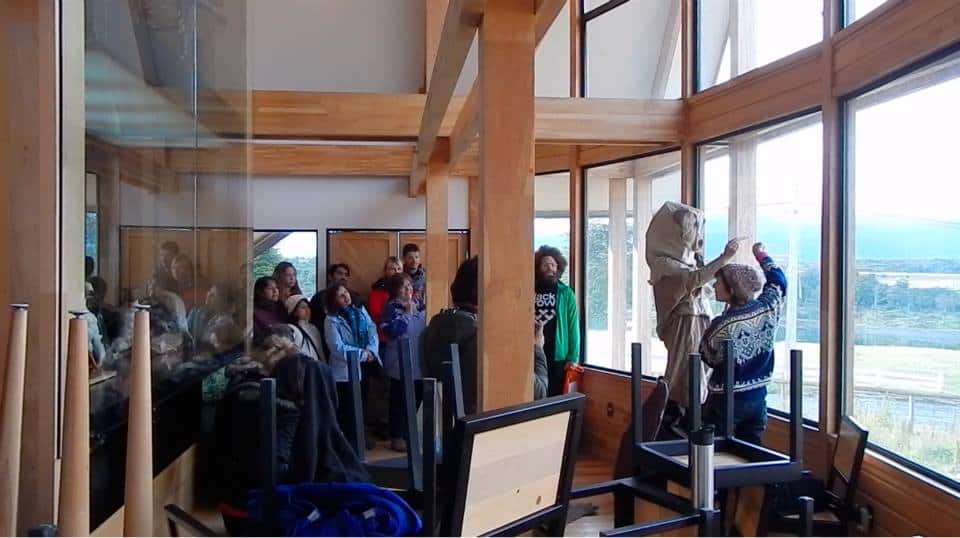
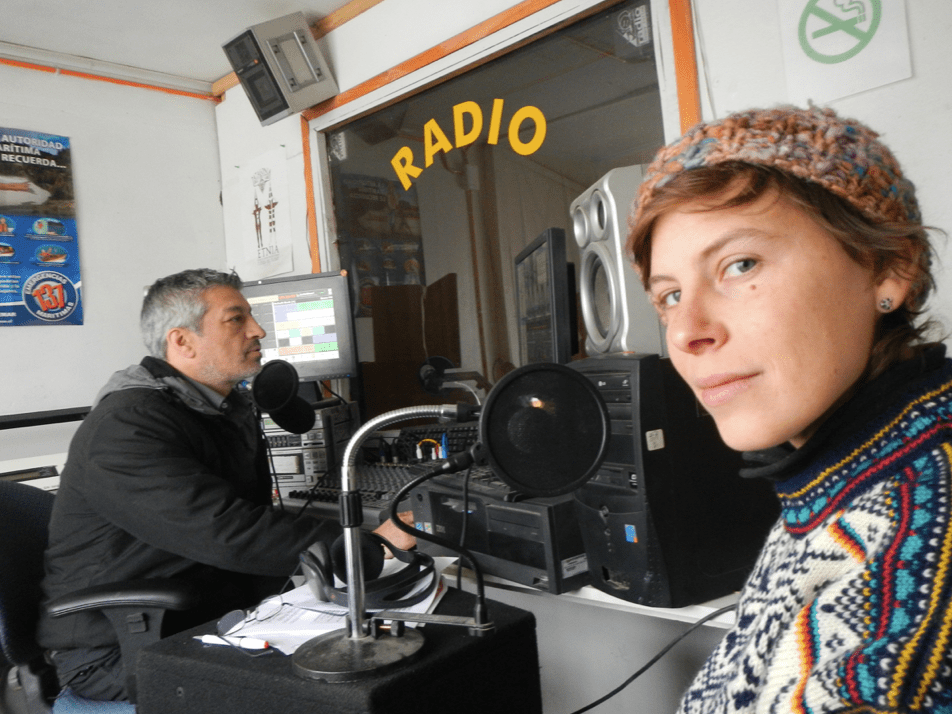
RAIL: This takes back to the beginning of the conversation and the notion of Gaia as the State of nature. Is adding digital techniques to your SPEAP compost heap related to furthering this re-cognition of Gaia?
LATOUR: I think that once we have sort of worked out all these things about the Anthropocene and read all the masses of things you can read on the Anthropocene and Gaia, then what it will boil down to is questions of representations of where you are located, of what the issues are, and of where you stand vis-à-vis those issues?

So right now, we are having all these ideological discussion on modernism, capital, colonialism, etc. surrounding Gaia, but the question arises of how do we represent these new territories? Because people will not take a stake in an issue if you don’t know where or how they represent themselves within it. So, in that sense the digital is very important because it brings in tools. Tools that because of the very way they are framed, with all the difficulties and limits, allow lots of experts, other scientists and activists to come in and collaborate. In the case of climate—or the whole climate-popularization so to speak—you have a majority of the activists who feed on the issues by using lots of techniques, and most are digitally implemented. It’s not enough, but it’s a clearinghouse for collaborations with many, many different activities and skill sets. So, in that sense it is extremely important.

In SPEAP’s case, we are preparing a counter-climate conference to take place in May in Paris, and it will be a sort of fair of alternative tools to try to re-invent the issue of how we can represent Gaia. I mean you can’t have a representative government without representation—if you don’t have tools to represent it, it stays in the mind but then people forget. And since Gaia is a redefinition of space and time, it’s as important as the invention of a map. You really have to reinvent what it means to be on-soil, and soil of course is not a department, it’s not a county limit. So, what shape does it have? How do you connect to it?

We have to shift from cartographic projections, in the traditional sense of the word, to connections and then find how to imagine those and other connections. This is a key issue here, which is why I think all of the work in representation done by the arts, the sciences (not only the digital), computers, graphic visualizations are very important and this year is going to be very crucial in that respect. Because what seems to be happening is that people are starting to saying “O.K., it’s finished, we cannot do anything about it [climate change].” This dreadful shift from negationism to abandonment needs to be counteracted by new forms of representation.

Camila Marambio is an independent curator and a private investigator. She spends half her year in Chile, where she directs the research and residency program Ensayos, and the other half on the road looking for adventure.

By Camila Marambio for the Miami Rail

Isla Navarino, Becoming Beavers – Ensayo #2

/

asunto castor flyer

Christy Gast travels from Miami, where she lives and works, to meet Camila Marambio in Santiago. Both travel to Punta Arenas to board a plane to Puerto Williams the morning of January 14, 2014. They stay in Isla Navarino, spending their time between the forests and field station of Omora Ethnobotanical Park on the Rio Robalo, and Martin Gusinde Museum in Puerto Williams. With the idea of ​​using forest as a studio, the artist and curator devote the residency period to performative experimentation with the textile sculptures that Gast created in Miami for the occasion. On January 22, after a week of creative exercises in the forest, Gast and Marambio presented their findings from a performance at the Martin Gusinde Museum as part of the Festival Cielos del Infinito. Back in Punta Arenas, Gast and Marambio met with biologists Derek Corcoran and Giorgia Graells, scientific collaborators of Ensayo #2 from 2012, to share the recorded material from Isla Navarino and invite them to embody the beavers using Christy Gast’s sculptures. This trial was filmed, and with material captured on Isla Navarion will become exhibition material.

WHY

The idea of ​​situating a residency on Isla Navarino, and specifically in the Omora Ethnobotanical Park, arose from the need to witness the beaver situation on another island, an interest in understanding how the science team at Omora addresses the issue, and the insistent desire to continue speculating about the post-humanist “how to become beaver” notion.

WHO

Christy Gast / Camila Marambio

WHERE

Santiago / Punta Arenas / Isla Navarino

HOW

Thanks to Consejo asesor de Ensayos; the Omora Ethnobotanical Park who shared accommodation and knowledge; Julio Contreras Gaston who supported as a friend in Punta Arenas; Galería Patricia Ready to who contributed to the production of works of sculpture; the Festival Cielos del Infinito who supported with logistics in Puerto Williams; and to Dan and Kathryn Mikesell of Fountainhead residency in Miami who sponsored Gast’s travel to Santiago.

Castorera (A Love Story) by Christy Gast 2014


Camila Marambio – Diálogo entre castores, científicos y artistas en Tierra del Fuego – Puerto de Ideas 2013

/

Ensayos es un programa de investigación -en colaboración con el Parque Karukinka- donde artistas, científicos y habitantes de la región contemplan y practican movimientos relacionados a la ecología. Como el manejo de los castores, uno de los objetos de conservación más apremiantes para la región. Ensayos partió hace dos años cuestionando ¿Cómo incluir a los castores en la toma de decisiones sobre su propio futuro? La pregunta condujo a experimentos que ampliaron las perspectivas de este conflicto, en última instancia, relativizando los fines preguntando ¿Cuál es el objetivo de un programa ecológico que quiere proteger Tierra del Fuego? ¿Acaso no hay un diálogo posible entre los distintos actores y sus fines antagonistas? Inspirándose en las experiencias arrojadas por Ensayos 1 y 2, esta presentación se ocupará de insistir en un lenguaje que permita aflorar la agencia de lo no-humano. Implicará un público activo y un devenir incierto, que promete ser científico, político, feminista, saludable e imaginario.

Map of an Abandoned Beaver Dam

/

Archeological survey of an abandoned beaver dam, led by Melissa Memory during the Ensayo #2 residency at Estancia Vicuña, Karukinka Natural Park, Tierra del Fuego in January, 2013.

Three Miami Thinkers Take On Beavers At The End Of The World

/

baeaver dam mapping
‘I think these North American beavers often create this kind of ambivalent unease,’ says participant Melissa Memory. ‘While they are cute and clever, they are also undeniably destructive.’ Photo Christy Gast

By Nathaniel Sandler for WLRN

In 1946, a bizarre cargo shipment stopped over at the Pan American Airlines headquarters in Miami. En route to Tierra del Fuego, the southern most tip of South America, fifty North American Beavers were temporarily housed in a walk-in refrigerator maintained by the airline. The door of the fridge, however, was made of wood.

This is oversight at its worst; Beavers in a prison made of wood.

As Miami-based artist Christy Gast tells this story, she knows it rings with hilarity. The beavers, of course, chewed their way out of the cooler but not to freedom. They ran amok in Pan Am’s offices, causing secretaries to jump on their desktops shrieking in fear. It is a goofy image, and slightly bittersweet, because unbeknownst to anyone at the time, the beavers were not done causing havoc. And still aren’t.

ensayos dam
They were there to were there to interact with the landscape according to their professional specialties, and also understand the impact of the North American Beaver on the wilderness. Photo Christy Gast

Tierra del Fuego is an otherworldly place, with sometimes up to 20 hours of daylight, UFO-shaped lenticular clouds, and miles of inhospitable subantarctic forest. Jules Verne called it “The End of the World,” and the trip Gast just returned from was her second to the ethereal environment.  She went to places only 4×4 trucks with experienced guides could navigate on an artist’s residency called Ensayos, a multi-disciplinary research project curated by Camila Marambio.

The group also included two biologists, an anthropologist, and an archeologist. Two others from the group are representatives from South Florida as well: the anthropologist, Laura Ogden is an Associate Professor from Florida International University, and the archeologist, Melissa Memory, is the Chief of Cultural Resources for Everglades National Park. They too were there to interact with the landscape according to their professional specialties, and also understand the impact of the North American Beaver on the wilderness.

Sixty-seven years ago, the Argentinean government was shipping the elusive beavers to Tierra del Fuego as a business experiment. After World War Two, fur prices were highly inflated. And hoping to take advantage of the rising pelt market, the government installed the beavers into the largely unpopulated forest.

What they did not predict was the destruction the beavers would cause to the ecosystem.

Due to the harsh climate, it takes a significant amount of time for the trees to re-grow, and the voracious beavers are chewing them up faster than the trees can regenerate.

When asked about the trip, Memory told a story of the conflict the locals face. In her words, “a woman and her small child walked around the gray remains of a former riparian forest.  She looked at me and just shook her head.”

“I think these North American beavers often create this kind of ambivalent unease,”  says Memory. “While they are cute and clever, they are also undeniably destructive.”

For her part, Ogden, author of the influential Swamplife about the human factor in the Everglades, states she was grateful for the “rich opportunity for me to think more about beaver worlds and world making,” an approach that may help the team delve deeper into the problems the area faces. She goes on to suggest that, “the tensions that arise out of interdisciplinary practice, such as ours, help generate new perspectives on complex problems, such as environmental change in Tierra del Fuego.”

The Ensayos collective explored the landscape and most of their time was spent at beaver dams, in contemplative discussion. Under the direction of Memory, the group created an archeological record of the inside of an abandoned beaver dam and lodge. The group is working on a short film together about the beavers, and Gast herself is creating a series of sculptures inspired by the landscape and the unintentional assemblage of a beaver dam. The project is ongoing and there are plans to return over the next three years.

“I am interested in contested sites,” says Gast, “where people are imposing their needs or desires on a landscape.”

The artist once did a project entitled Herbert Hoover Dyke (2010), where she tap danced around the Herbert Hoover Dike, a dam built during the Great Depression that completely encircles Lake Okeechobee and controls water flow through the Everglades. The beavers, and by extension the government who put them there, have forced their will on the landscape. It is the job of the biologists on the team to figure out what to do with a contested animal, and the job of the artist to look deeper.

“This splash made it all the way to me,” Gast remarks as she reviews a video of a beaver smacking its tail on the frigid subantarctic waters. And the beavers made it all the way to Tierra del Fuego. And through their own practice, each of these three Miami-based thinkers hope to help solve a pressing ecological and ethical problem at the end of the world.

Ushuaia to Vicuña – Ensayo #2

/

beaver dam caleta maria

WHEN

10-21 January, 2013

WHAT

Camila Marambio, Christy Gast, Melissa Memory and Laura Ogden meet in Buenos Aires, then travel together to Ushuaia, Argentina, where they spend a period of 10 days staying at the Argentine Center of Scientific Research (CADIC). From there they travel overland to Karukinka Natural Park in the south of Chilean Isla Grande, where they spend a week with Derek Corcoran and Giorgia Graells observing beavers and their adaptations throughout the forest and pampas. They continue to Caleta Maria on the Admirality Sound where they are hosted by Ivette Martinez, who shares her perspective on local conservation issues.

WHY

To study, compare and contrast the way the beaver issue is treated in Argentina.

WHO

Christy Gast / Camila Marambio / Melissa Memory / Laura Ogden / Giorgia Graells/ Derek Córcoran

HOW

Thanks to the Argentine Center of Scientific Research (CADIC) offered accommodation and knowledge in Ushuaia; Cristopher Anderson organized a talk and stay in CADIC; Patricio Labra; the National Science Foundation which funds research of Laura Ogden; Artist Access Grant Tigertail who financed Christy Gast’s trip; Ivette Martinez our host at Caleta Maria; and Karukinka, Ensayos’ partner since its inception.

Conjuring (Christy Gast, 2014)

Mauricio Chacón, Parque Karukinka

/

mauricio chacon

Antes de trabajar en WCS, era un soldador calificado que trabajaba en una constructora de nombre Salfa Corp. El día 4 de enero del año 2005 asistí a una entrevista de trabajo con el Sr. Jesús Maza y el día 5 de enero me contrataron. Mi primera subida a k3 (Karukinka) fue el día 6 de enero del 2005 y el primer lugar al que fui a cumplir rol fue a Vicuña. Al principio solo realizaba trabajos de reparación y cosas así, hasta que empezamos a capacitarnos en diferentes trabajos relacionados con la conservación. Mi primera capacitación fue un curso de trampeo de castores y fue lo primero que empecé a realizar casi a tiempo completo, ya que como el castor en Tierra del Fuego no tiene depredadores naturales, nosotros hemos tenido que convertirnos en el depredador de este individuo. Debo reconocer que era un trabajo que me fascinaba, ya que el castor va aprendiendo: primero siempre cazas bastante, hasta que los demás individuos dentro de la castorera aprenden de las trampas y empiezan a cerrarlas con palos o las entierran con barro, palos, todo lo que tienen a su alcance.

Después de eso, mi capacitación en conservación continuó y me enseñaron de turberas. He tenido la posibilidad de trabajar en captura de guanacos y de zorros cumpeo, los cuales están en peligro de extinción. También me ha tocado salir de viaje para capacitarme, como un viaje a Usuahia para conocer el Parque Tierra del Fuego. En estos últimos meses estuve en un curso de montaña impartido por la Escuela de Montaña de Chile, todo esto para poder especializarme, ya que ahora con la apertura de la Paciencia necesitaremos de estos conocimientos.

Pero creo que por lo que me he hecho conocido en Tierra del Fuego es por la pesca con mosca, ya que es uno de mis más grandes placeres. Si antes debía pagar por estar en lugares como Lago Escondido, hoy en día sólo debo caminar un par de metros y puedo realizarlo sin mayores problemas.

Bueno, y por último, desde el 01 de febrero del año 2010 soy jefe de guarda parques. Al principio me costo un poco porque es bastante complicado, pero hoy en día disfruto de mi trabajo y no me veo haciendo otra cosa. Estoy convencido de que el trabajo me encontró a mi, y ahora más que un trabajo es una forma de vida. Veo la conservación en todo lo que hago y realmente no me veo haciendo algo diferente a lo que realizo ahora. Creo que en el parque Karukinka me jubilaré y haré todo cuanto pueda para ayudar en la conservación. Además se que estamos embarcados en un gran proyecto que ya es un hito para la conservación, y claro esta que quiero ser parte de este gran proyecto.

mauricio chacon

Before working at WCS, I was a certified welder working at a construction company called Salfa Corp. On January 4th, 2005, I attended a work interview with Mr. Jesus Maza, and was hired on January 5th. My first ascent to k3 (Karukinka) was on January 6th of 2005, and the first place I was assigned to was Vicuña. At first, I only carried out maintenance and repair tasks and things of the sort, until we began training for different chores related to conservation. My first training was a beaver trap course, and it was the first task I began to carry out practically full time; since the beaver has no natural predators in Tierra del Fuego, we have had to become this specimen’s predator. I must admit that it was a task that fascinated me, for the beaver is always learning: at first, you could hunt quite a lot, until the rest of the members of the beaver colony learn about the traps and begin to close them off with sticks or bury them with mud, branches, or anything within their reach.

After that, my training in conservation continued and I was taught about peat bogs. I have had the chance of working in the capture of guanacos and cumpeo foxes, both of which are endangered species. I have also had the change of traveling for training, as I did in a trip to Ushuaia in order to visit the Parque Tierra del Fuego. During these last few months, I have been attending a mountaineering course at the Escuela de Montaña de Chile, all of this in order to acquire specialized knowledge that shall be required due to the opening of La Paciencia.

But I think that what I’ve become known for the most in Tierra del Fuego is for fly-fishing since it is one of my greatest pleasures. If before I had to pay to be in places such as Lago Escondido, today, all I have to do is walk a few steps and I can do this without any major obstacles.

Lastly, since February 1st of 2010, I am the Chief Park Ranger. At first, it was a little difficult because it is quite a complicated position, but today I enjoy my work and I can’t see myself doing anything else. I am convinced that the job found me, and now, more than a job, it is a way of life. I see conservation in everything that I do and I really can’t see myself doing anything other than what I am doing right now. I think that I shall retire from Karukinka Park, and I will do as much as I can to work for conservation. Besides, I know that we have embarked on a great project that is already a milestone for conservation, and it is clear to me that I want to be a part of this great project.

Ivette Martinez, Caleta María

/

ivette martínezIvette Martinez of Caleta María

My name is Ivette Martinez and I was born in Valparaiso on July 28th, 1960, the youngest of four siblings. My childhood took place in the neighborhoods of a hill in the port city, playing, running, and competing together with my brother, who was four years older than me, and other girls and boys of the neighborhood. From a young age, my father, a railway worker, implanted in us a passion for traveling and the adventure of getting to know faraway places. He traveled through the whole country, from north to south, at various stages of his life. During school, I was a good student, very sociable, interested in sports and student government, up until the military coup. I was 13 years old at the time, going through 8th grade. Until I graduated from school, those were sad years, in which my adolescence went from fear to social life between curfew hours.

A particularly special event that struck deep into my memory occurred days after the strike, in which a friend of my eldest brother, a former priest from an English background named Miguel Woodward, took refuge from military persecution in our house one night. Days later, we were told that he was dead, but his remains were never released.

This fact, and the context of living under a dictatorship, led me to be politically active since the age of 18, and to focus my life on a commitment towards the recovery of democracy. This was how I worked zealously in popular education and the defense of human rights in the V region for over 10 years. At the end of the 80s, I married my revolutionary adventures comrade, a doctor from Magallanes, with whom we had a beautiful son at the end of ’89, as a gift for the triumph of democracy. I studied at different universities for thirteen years, science and humanities majors, until I finally graduated as a Spanish teacher from the Universidad Católica de Valparaíso in 1990.

To start a new life, we came to live to Magallanes, with our one-year-old son. In a new historical context, we began to raise Julio. Our life was marked by the presence of nature in this zone. We began to travel through the whole peninsula, until we arrived at Tierra del Fuego. In the midst of the intense national and international campaign for the defense of forests in Tierra del Fuego and against the Trillium Corporation project, we went to see the forests and fell in love with this landscape from then on. Finally, through diverse expeditions, in the year 1996 we arrived at the Caleta Maria ranch, which because of life’s special circumstances, we acquired the following year. I’ve arrived to Tierra del Fuego by sea, land and air for 15 years, through diverse expeditions, trekking, and horseback, exploring different places, getting to know the fauna, flora, climate, history, people, historical milestones, etc. After I separated, I met Kiko Anderson in his city in the state of Washington, Bellingham, and together we have traveled through a large portion of the island without maps, solely guided by his great experience as an explorer.

My wish is for Caleta Maria to be a place that receives visitors who wish to experience the nature of Tierra del Fuego.

ivette martínezIvette Martinez de Caleta María

Mi nombre es Ivette Martínez, nací en Valparaíso el 28 de julio de 1960, soy la menor de cuatro hermanos. Mi infancia transcurrió en la vida de barrios en un cerro del puerto, jugando, corriendo, compitiendo junto a mi hermano cuatro años mayor que yo y los demás niños y niñas del barrio. Mi padre, un porteño ferroviario, nos inculcó desde pequeños la pasión por los viajes, la aventura de conocer lugares lejanos, él recorrió el país desde norte a sur en varias etapas de su vida. Durante la época del colegio, fui una buena alumna, muy sociable, interesada en los deportes y la organización estudiantil, hasta el golpe de estado en que tenía 13 años y cursaba el 8 básico.

Hasta salir del colegio, fueron años tristes, en que mi adolescencia transitó entre el miedo y la vida social de toque a toque. Un hecho especialmente particular caló hondo en mi memoria días después del golpe, en que el amigo de mi hermano mayor , un ex sacerdote de origen británico Miguel Woodward, se refugió en nuestra casa una noche porque era perseguido y días después avisaron que estaba muerto pero nunca entregaron los restos. Ese hecho y el contexto de vivir en dictadura, me llevaron a militar políticamente desde los 18 años y focalizar mi vida en un compromiso por la recuperación de la democracia, fue así que trabajé afanosamente durante más de 10 años en la educación popular y la defensa de los derechos humanos en la V región.

A fines de la década de los 80 me casé con mi compañero de andanzas revolucionarias, un médico magallánico, con el que tuvimos un precioso hijo a fines del 89 como regalo por la conquista de la democracia. Estudié trece años en diferentes universidades, carreras de ciencias y humanistas, finalmente me titulé de profesora de Castellano de la Universidad Católica de Valparaíso el año 1990.

Para empezar una nueva vida, nos vinimos a vivir a Magallanes, con nuestro hijo de un año. En un nuevo contexto histórico, comenzamos a criar a Julio y nuestra vida estuvo marcada por la presencia de la naturaleza de esta zona. Comenzamos a recorrer toda la península, hasta que llegamos a Tierra del Fuego. En medio de la intensa campaña nacional e internacional por la defensa de los bosques de Tierra del Fuego y en contra del proyecto de Trillium Corporation, nos fuimos a conocer los bosques y nos quedamos para siempre enamorados de ese paisaje. Finalmente, por diversas expediciones que hicimos llegamos a la estancia Caleta María el año 1996, la que por especiales circunstancias de la vida, la adquirimos al año siguiente.

He llegado a Tierra del Fuego, por mar, tierra y aire durante 16 años, en diversas expediciones, a trekking, a caballo, explorando distintos lugares, conociendo la fauna, la flora, el clima, la historia, la gente, los hitos históricos, etc. Después que me separe, conocí a Kiko Anderson en su ciudad del estado de Washington, Bellingham y con él hemos recorrido gran parte de la isla sin mapas, solamente guiados por su gran experiencia de explorador.

Mi deseo es que Caleta María sea un lugar para recibir visitantes que quieran experimentar la naturaleza de Tierra del Fuego.


Tierra del Fuego, Juan Pablo Langlois

/

Bitacora de un VIAJE A KARUKINKA Febrero 2011

Camila Marambio me invitó a participar en una curatoría de su dirección, a un encuentro- expedición al territorio de KARUKINKA, ubicado al sur de la Isla Grande de Tierra Del Fuego, en la región de Magallanes. Iniciamos el viaje desde Punta Arenas, un grupo de 15 invitados, en una caravana de 4 camionetas con todo el equipaje y víveres para una jornada de una semana. El territorio de Karukinka se extiende por el sur a lo largo de la ribera norte del seno de Almirantazgo, hasta el estrecho de Magallanes por el Poniente, por el Este llega hasta el límite con Argentina y, por el Norte se adentra en Pampa Guanaco. Atravesamos el Estrecho de Magallanes por el extremo noreste, en Punta Delgada, para evitar el fuerte viento que suele dificultar la travesía del estrecho y que ha abundado de naufragios la historia de su navegación.

Lunes 14, febrero, 2011 Territorio de KARUKINKA

Posta de Vicuña Despues de un viaje en caravana, de 6 horas, llegamos al atardecer a la posta de Vicuña, que fue nuestra base de operaciones por tres noches y lugar de varias charlas y presentaciones de los participantes del grupo.

LISTA DE PARTICIPANTES .- Camila Marambio (ch.) curadora y organizadora de la expedición. Bárbara Saavedra (ch.) bióloga y directora de Wild Life Conservation Society Chile .- Daniela Droguett (ch.) bióloga marina, investigadora de la vida de las ballenas (staff W.C.S ) .- Geir Tore Holm (nor.) artista visual .- Sossa Sorgensen (nor.) artista Visual .- Karoline Tampere (estonia. ) curadora .- Steffan Mitterer (austria) músico y artista visual .- Pierre Lasserre (canada ) economista Univ. Montreal .- Fabienne Lasserre (canada) artista visual (New York) .- Melissa Memory (USA) arqueóloga .-Christy Cast (USA) artista visual .- Paola Bezani (ch. ) artista visual (Consejo Regional de la Cultura de Punta Arenas) .- Julio Contreras (ch.) médico y budista (Punta Arenas). .- Ivette Martínez (ch.) pedagoga (Caleta María) .- Kiko ………. ( USA) activista político ecológico .- J. Pablo Langlois (ch.) arquitecto y artista visual .- Mauricio Chacón (ch.) guardaparque ( W.C.S.) .- María Luisa Murillo (ch.) fotógrafa y directora del Museo Alberto Beareswyl Pittet, Puerto Yartou

Las presentaciones se hacían normalmente por la mañana después de desayunar y por las tardes antes o después de comida según como se había desarrollado el día y el tiempo de comentarios que se suscitaban.

Todos los participantes hicimos presentaciones sobre la actividad que desarrollamos en nuestra cotidianeidad de vida.

La luz eléctrica era provista por un motor generador a parafina JP4 (combustible de aviación) entre las 6.30 am. y las 11.00 pm. Para el resto de las horas había que recurrir a las linternas personales.

LAS CAMINATAS Todos los días había un programa de caminatas y constituían la base más importante del programa, por lo variado de los recorridos, lo sorprendente del paisaje , las dificultades que surgían al paso y la información y conocimiento que adquiríamos de la naturaleza del lugar que atravesamos. Las camionetas de apoyo nos trasladaban en las grandes distancias donde había caminos.

(Martes 15 de febrero) Caminata de subida al cerro Pietro. Tomamos tres horas hasta la cumbre de 200 m. de altura desde la base.

Desde la cumbre de rocas se domina parte importante del valle del río Grande y de los bosques de lenga, que abarcan enormes extensiones de lomajes, como nubes de follaje verde, enmarcando el valle.

La subida por tramos en medio del bosque en pendiente presenta dificultades de recorrido a pesar de las marcas (flechas pintadas) cada cierto trecho. Estas guías son indispensables para el ascenso porque la densidad de bosque hace perder el sentido de ubicación. Yo llegué extenuado y pensé mas de una vez abandonar la caravana (era el último de la cola) pero Daniela se sacrificó y me acompañó dándome aliento y descansando a trechos mas seguidos, pero finalmente llegué y valió la pena la observación desde la cima. El descenso fue por una ruta más directa pero más peligrosa por lo resbaladiza y empinada, como huella de paso de cabras, además, me tocó una granizada muy fuerte y ventosa que dificultaba el caminar y el riesgo de desbarrancarse.

(Miércoles 15 de febrero) Emprendimos al día siguiente, temprano, una segunda caminata a Caleta María, a las orillas del Seno Almirantazgo, atravesando el bosque de lenga, con un tiempo de caminata de 4 horas para los más rapidos y hasta 6 horas para los mas lentos como yo, con descansos de 10 minutos cada hora .

Se inició el trayecto en caravana de 5 camionetas hasta orillas del lago Fagnano, donde hicimos pic-nic junto al embarcadero del Cuerpo Militar del Trabajo, que construía el camino que llevaría hasta Caleta María (hoy ya terminado). Ahí nos dejaron las camionetas, atravesamos en barcaza el lago e iniciamos nuestra caminata por el tupido bosque de lengas, canelos y otros árboles. Me llamó la atención encontrar tanto renuevo de canelos, pues pensaba que eran más propios de la zona de la Araucanía (árbol sagrado de los mapuches).

Entre el bosque crece una variedad de plantas silvestres: arándanos, frutillas cuyo fruto crece pegado al suelo como protección natural contra los fuertes vientos, la nieve y los guanacos, aunque vimos solo huellas de éstos en esta caminata.

Hay variedad de hongos que requerirían de la información de un experto para distinguir los comestibles de otros; alucinógenos, venenosos, etc.

Otra curiosidad para mí, fueron los pozos de “turba”, un material orgánico de color naranjo y aspecto de tallarines gruesos y porosos que absorben agua como una esponja gigante (puede alcanzar 1.00m a 1.50 m de profundidad). Cuando se pisa una turba, el pié se hunde fácilmente unos 50 cm. Lo que hace perder estabilidad y caer (ojalá no dentro del pozo de turba).

En realidad esta travesía requiere de equipaje adecuado para la eventualidad de sorpresivas lluvias, el saco de dormir a cuestas, las provisiones de alimentación fáciles y energéticas como galletas, chocolates, y botellas de agua, que pudimos rellenar en los esteros de agua cristalina que atravesamos para refrescarnos.

Recuerdo esto porque en las jornada de caminata de 6 horas diarias de ida y retorno al día siguiente, tuvimos dos días de bastante calor (solo llovió en la noche que estuvimos bajo techo en caleta María). Aquí aprovechamos en hacer una gran fogata para secar la ropa y los zapatos mojados en los cruces de esteros y la lluvia de la noche, además de la parrillada con salchichas y chorizos.

A la mañana siguiente, a las 9.00 am. iniciamos el retorno repartidos en tres grupos: primero los mas lentos (donde iba yo) y luego con intervalos de una hora, los otros dos grupos, lo que permitió que todos llegáramos al mismo tiempo al embarcadero.

Me tocó ver también una diminuta planta carnívora, (de un cm. de diámetro) de color rosado y carnoso como el interior de nuestra boca, que crece pegada al suelo y que se alimenta de insectos de tierra.

Volví a ver los canelos que crecen entre las lengas y pensé que serían en gran parte arrancados con el paso de la maquinaria pesada que usaban para construir el camino que alcanzaría hasta la orilla del Seno de Almirantazgo.

Pensé si ¿realmente será necesario construir un camino de 12 m. de ancho y estabilizado, a un costo altísimo de construcción y mantención, para llevar un utópico turismo al borde del Seno, atravesando un lugar donde irán no mas de 5 personas promedio diario en temporada de verano, cuándo el verdadero valor de este recorrido está en la caminata y la aventura? ¿No bastaría una huella que facilite las caminatas y el eventual paso de un vehículo de apoyo, y mantener la proximidad de la selva al paso de caminante?

Reflexión que a mi juicio vale la pena para repensar y revisar el daño ambiental que se va a producir con la dudosa ventaja de la civilización.

(Viernes 18 de febrero) Traslado a residencia en lago Escondido. A las 10 am. la caravana de camionetas retomó rumbo a Lago Escondido, otra residencia de Karukinka, donde llegamos a las 3.00 pm. Hermosísimo lugar en el borde de un bosque de lenga y con una vista sobre el valle del rio Grande que se pierde serpenteando en la distancia.

Cada quién uno tuvo una tarde contemplativa…..

Sentarse en el borde del corte en el cerro para mirar el valle del río serpenteante hasta perderse en la bruma luminosa del horizonte, como en una perspectiva renacentista, y contemplar sin pretender agregar nada al momento y solo mirar lo que ese valle y ese río entregaban es terapia para el espíritu.

(Sabado 19 de febrero) Para el día 19 se había programado otro recorrido, a Lago Escondido, pero yo preferí quedarme en la posada, para repetirme en otro horario (y con otra luz) el paisaje de la tarde anterior. Aproveché de visitar un antiguo galpón de esquila hoy abandonado pero bien conservado, ver los canales y desvíos del agua que producen los castores (nefastos ingenieros como los llaman por allí) y aprender a pescar en un remanso del río, con mosca.

Despues de las 4.00 pm., acompañé a los guardabosques a preparar el fuego para el asado de despedida de la excursión.

Se mató una oveja entera partida en dos mitades; dos largas tiras de costillar colocadas verticalmente ensartadas en fierros, por ambos costados de la fogata.

A las 5.00 pm, hora en que llegaron los caminantes, todos fuimos a disfrutar del asado en el comedor, donde se hicieron las últimas presentaciones y todos tuvimos que proponer ideas para cómo seguir trabajando juntos en torno a los asutnos de conservación del Parque. El domingo se inició el retorno a Punta Arenas y el grupo se redistribuyó en las camionetas ya que algunos se deviaron para conocer Puerto Yartou ( en frente de Isla Dawson) y otros retornamos a la ciudad.

Agradezco a Camila por la oportunidad que dió de conocer un lugar único de una manera inusual (no como turistas)…ya me tocará volver. Juan Pablo Langlois Vicuña

I studied architecture at the Universidad Católica of Valparaíso from 1957 to 1962. I worked as an architect for about 10 years, but I was really more into visual art, so my interests drifted towards art making. I have been working in what I really felt like doing for 40 years now, without making too many concessions, living simply but without giving up on what I want to do, without worrying if I am in contact with “art” or not. That is why my artistic career has been independent of the social milieu of Chilean art. Solitary works have marked my trajectory, as well as the use of disposable materials that are easy and economic to get and work with, and works that are immersed as acts of my everyday life. I give more importance to the ideas than the product itself, and sometimes the products are no more than ideas. That is the way I have wandered through the arts, with varying intensity during these 40 years. With persistence and faith (and moments of loss of faith), I have positioned myself in the Chilean art scene.

Traveling to the southern city of Punta Arenas is a four-hour plane ride from Santiago and it leaves you with the sensation of having traveled to the southernmost part of world, yet in order to actually get to the last southernmost city in Chile, Puerto Williams, an additional journey descending 2° south is still necessary. Caleta María is approximately at 54º 30’ south.

We began our trip to Tierra del Fuego from Punta Arenas on the morning of Monday the 14th of February 2011. We were a group of 17 people in a four-truck convoy, traveling with our bags, gear and the food for one week strapped to the back of the pickups. We were headed to the vast territories of Karukinka, which extend alongside the northern front of Admiralty Sound, and reach Argentina in the east. The day we left the locality of Vicuña towards Lago Escondido, both camps inside Karukinka Natural Park, a fifth truck joined us with three people from the Punta Arenas Regional Council of Culture. Between Chileans and foreigners, we formed a group of 20.

But on that first day, after a 6-hour car ride, we arrived to Vicuña at dusk. This place would be our base-camp for 3 nights; many talks and presentations from members of the group took place here. These presentations were held normally in the morning after breakfast but also took place in the evening in the evening, either before or after dinner. Electricity was made possible thanks to a motor generator, charged with airplane fuel, which was turned on between the hours of 6:30 am and 11 pm. During the remaining time, flashlights and candles had to be used.

Adventurous treks and hikes became a crucial part of the program. Though we took many hikes, they all turned out to be different from one another due to the new things we learned from nature, the beauty of the landscape, and the difficulties and surprises of the routes and paths.

On Tuesday the 15th of February we climbed 200 meters to the peak of Cerro Pietro. From this rocky mountaintop, we could see an important part of the Río Grande valley. The wooded hills covered with lengas (nothofagus pumilio) looked like clouds of green vegetation in immense dimensions. The trail to the top was marked by wooden arrows, painted in a style reminiscent of the Selk’nam, hung on nearby trees. They were indispensable guides that kept us from losing our way, for the density of the woods left us disoriented, weakening the sense of where we stood.

Personally, the physical effort during this hike made me think many times about abandoning the quest. I was always the last one of the group, and if I didn’t give up, it was thanks to the moral support provided to me by Daniela Droguett. She waited and accompanied me, walking at my pace. Finally, I got to the top and… it was worth it.

The way down was via a short cut. It was a much more dangerous path during the first parts because of the steepness and slipperiness of the trail, like the treads of sheep. While walking down this part a strong and windy rainfall of hail caught us.

On Wednesday, February 16th, we started our excursion to Caleta María early in the morning. The distance varied according to the rhythm and pace of each one. The fastest ones walked for 6 hours, while I did it in 8 hours, resting for 10 minutes every hour. The journey started with a drive to the shore of the Lago Fagnano, where the trucks were left. After a frugal lunch, we crossed the lake on a military boat and started the hike crossing a very dense lenga forest.

What caught my attention was that in the middle of this forest other species such as the Canelo (the sacred tree of Mapuche culture) were growing. If these species were conserved, they would renew the trees of that part of the old forest.

During this journey, a great variety of plants presented themselves to us, such as a variety of wild berry that grew low in the ground. We also recognized a lot of mushrooms, but a lot of knowledge was needed to recognize the edible ones, differentiating them from the poisonous or hallucinogen.

Another curiosity for me were the balls of peat, covered with mushrooms, that had the shape of fettuccini. Like thick sponges full of water, your foot sunk around 50cm each time you inevitably stepped on them.

This journey required special equipment for the rain and wind. It required the intake of energetic food like chocolate, cookies, but especially water, which we could luckily take from the rivers we crossed, and that gave us also de pleasure of taking refreshing rests from the walk. I say this because during the 8-hour journey of the first day, and the 6-hour walk back the next day, we had spectacular sunny and warm days. It only rained the night we stayed at Caleta María. That night we made a bonfire and a barbecue, where we heated our food and also dried our clothes and shoes wet from the rivers and swamps.

The way back was organized in 3 groups with different schedules. Because I was the slowest of the group, I left with the first group at 9am in the morning. Everybody arrived at our destination at the same time.

On the way back I had the chance to see a very tiny carnivorous plant that feeds itself with insects. Its colors were of a strange dark pink, redder around the edges, like the interior of a human mouth. I was able to see again the canelo trees growing from the lengas. I thought about how they would soon be cut away due to the construction of a new road leading to Caleta María. This road will connect the territory of Tierra del Fuego with Admiralty Sound so that transportation will be easier for connectivity and tourism since nowadays that route can only be made by sea. Nevertheless, I asked myself whether the wide roads like the one being built by the military, which was at least 20 meters wide, are truly necessary, or if a solid and stable trail that wouldn’t interfere with the landscape and nature would be enough. This last thought is, in my opinion, worth revisiting collectively.

We returned to Vicuña on Thursday afternoon, to abandon the place the next morning and travel to Lago Escondido.

On Friday, February 18th at 10 in the morning, the convoy of 5 trucks started the journey to Lago Escondido, another of Karukinka’s camps, where we arrived at 3 in the afternoon of that same day. We walked around the place and enjoyed the amazing landscape it offered us. Some presentations were held that afternoon, We also organized the next day’s walk to Lago Escondido.

I didn’t participate in that hike because the place where we were staying was the closest I had ever been to paradise: the landscape, how far one can see, the sound of silence interrupted by the birds, the sound of the winding Río Grande, like a Renaissance painting. I wanted to enjoy that stillness, enjoy doing nothing.

When everybody left to Lago Escondido I started my contemplative and restful day. Camila lent me a book written by Lukas Bridges, about the days when he lived among the Yámanas. I read some chapters and imagined the rough yet beautiful life of the region during the 19th century and the beginnings of the 20th, the life he led traveling with his wife, who accompanied him through all these territories.

Then I sat down at a vista point and observed the plains that extend through the valley, the winding Río Grande, which with all of its meanders, looked like it was traveled from one side of the plain to the other. The pastures of the valley were flanked by hills covered with lengas and guanacos, resting or running followed by their babies. I also saw a lot of birds on the river shore, and a condor fly over the hills. The place I am describing had been -up to 1950- a wool and sheep farm, and the wooden structure of it was still in very good condition. The barns had taken on a grayish tone: everything was tinted with the silver-gray of the dead trees.

During the afternoon, 4 hours before the hikers arrived, a fire was prepared to roast a Magellanic lamb. In the middle of the pit, the fire was constantly lit and permanently fed with logs to keep it burning. At 9 in the evening, the lamb was ready to eat, and we started dinner with big bottles of wine. It was the celebration of the end of our days at Karukinka, and the beginning of our journey back from Tierra del Fuego.

Ensayo #1 Reflections

/


Having participated in Ensayo #1, what is your vision of an appropriate model for an artistic research residency at Karukinka Natural Park?

Bárbara Saavedra: As any other conservation activity, an artistic residency at Karukinka should be effective, adaptive, and integrated to real problems. Having these in consideration, the residency should have a clear goal, stated in advance. It should include a plan that identifies activities, conservation targets and products, which should address one of the key conservation challenges of Karukinka and Tierra del Fuego.

Christy Gast: It is very challenging to conceive of one model that would be the most appropriate for an artist in residence program at Karukinka. The overwhelming diversity and remoteness of the landscape in Tierra del Fuego, the very factors that make it an outstanding site for research and contemplation, complicate the typical mode of artistic residency program. The key issue is time: taking time to know the place, residing there if possible and for as long as possible, getting to know the institutions that make the park possible, becoming engrossed in the human and conservation issues on the island. In such an unfathomable landscape, the residency situation is also unfathomable, untested, unimagined, and therefore is a project worth pursuing.

Daniela Drougett: Without really knowing what an artistic residency is, but based on my experience with the artists who participated in Ensayo #1 at Karukinka, I am certain that the communication between the scientists working at Karukinka and the artists who will work with them will thrive. During Ensayo #1 we all quickly bonded and had much to learn from each other. That said, I would suggest that in addition to working alongside another researcher, it would be beneficial if the artist in residence considers interacting with an artist from the Magallanes region or with someone related to its traditions (for example a puestero or a baqueano). I also think that the residents could work closely with the educational matters that Karukinka is developing. The residency could be an opportunity to find content, means and support for our activities, bringing together the artist’s interest with the needs of the children and youngsters in the region so as to promote a more sensitive and contemplative way to be in nature.

Fabienne Lasserre: To me, Tierra del Fuego is strange and beautiful –not pretty at all- and you can sense a history that is a combination of grit, toughness, and eccentricity. The place is steeped with stories and quests (Darwin, Bridges, Chatwick, to name a few)- fact and fiction intertwined. It is also mute in many ways, and the wooden sculpture of a Selk’nam family standing by the road -depicted erroneously in a canoe-, seems both timeless and an afterthought.

A residency for artist in Tierra del Fuego should accommodate artistic approaches that respond to either of these various layers and conflicting elements. The artist in residence might have a practice based on research, which could be pursued in collaboration with the university in Punta Arenas (for example the departments of anthropology, biology, geology, etc.) Or, his/her process might respond poetically to questions of memory and myth, to questions of movement and passage (exploration, commerce, conquest) and more. In other words, the residency should be flexible and its format dictated in large part by the artist’s project. The projects themselves should be rooted in a specific knowledge and experience of the region.

Ivette Martínez: Tierra del Fuego is a fascinating island, especially because of its wild nature, forests, lakes, mountain, rivers, and glaciers. It is a place surrounded by sea, where the wind is one of its leading characters. The singularity that I bring out from Tierra del Fuego is that it is an extreme territory, with unique ecosystems, where very diverse elements converge and make it into a very exclusive place. The presence of native forests, water in the form of ponds, rivers, streams, and lakes, ground, turf, hills and mountains, glaciers, valleys, beaches. Wind, cold, solitude and silence can be truly experienced there. This intense and moving nature attracts a certain kind of people, particularly the adventuring, nature-loving type; people who can move away from cities, from civilization, from moderate climate, from everyday life routines, in order to experience something absolutely different.

I think that Tierra del Fuego’s remoteness and difficult accessibility give it a certain degree of protection. Its vast unexplored territories, such as the Darwin mountain range, make it attractive for adventure. As large quantities of people travel more and more in order to experience nature, the territory shall be increasingly in demand by the tourism industry. The important thing is to develop a dynamic of sustainable activities in order to offer Tierra del Fuego to the world from a new perspective, with a new vision, without reproducing the stale models that have been used for decades, which end up degrading the landscape by just using it instead of taking care of it.

I think that we must offer alternatives for living in the territory, for getting involved in it, for getting to know its history, previous human population, and culture that was created in past times. To get to know the forests, the flora, the fauna.

I think that Tierra del Fuego can be a space in which artists find inspiration in order to produce their art, and at the same time, discover the art that is designed by nature itself, and through this task, demonstrate the territory’s calling.

I think that Tierra del Fuego can be a space that takes in people who are looking for a change of consciousness, a new form of life from silence. It’s natural aesthetic can be conducive to both personal and collective awareness.

I think that Tierra del Fuego can be a space that takes in scientists from all over the world who are searching for the planet’s last endemic resources and learning more about the continent’s life.

I think that Tierra del Fuego can be a space that serves as a bridge that unites different world perspectives between religions.

I think all this, and a lot more; however, the important thing is for all this to take place on-site. So we invite you to come to Tierra del Fuego, but with time enough to stay.

María Luisa Murillo: In general, I would suggest setting up a versatile and multidisciplinary model, where a two-month (approx.) invitation is made to artists and scientists of different nationalities, to work and reflect upon topics that relate art and ecology.

Ideally there could be between 4 and 10 guests at a time, invited by the curator in charge. It would be interesting to leave 2 spots open for general applications, giving the opportunity for the interested national and international community to participate in Ensayos via an application.

As for the working methodology, I think it would be appropriate to propose a specific topic to develop and work on. That way, there would be a previous instance of study and reflexive thinking before the residency actually takes place. There is no doubt, due to the uniqueness and diversity of the place where the residency is to be held, that an initial 10-day journey around Tierra del Fuego is necessary. These days would be useful to get to know the place physically and tune with the magic of its landscapes and peoples.

Melissa Memory: I think an appropriate model for a residency at Karukinka would be to challenge artists and social scientists to imagine a new paradigm to engage a 21st century global community in the importance of wild places. While the conservation and wilderness movements in the 20th Century United States championed by artists fueled a political movement which protected millions of acres of wilderness, these paradigms do not address the environmental and political challenges of today’s global community. While natural scientists can ask and answer the technical details of ecology, it is humans that must decide to protect wild places, and humans must value them to do so. I think the residency should focus on how to make Karukinka and all wild places valuable not just in a pragmatic sense, such as clean air and drinking water, but necessary for the human spirit, and thereby relevant.

Paola Vezzani: I imagine a flexible model that allows for multiple layers of interaction, at different moments.

I think of stages: the first stage consists in the trip and the relationship and exchange between the travelers and their surroundings, with themselves, with people from other disciplines, scientists, environmentalists, children.

Second stage: reflection and production in their places of origin.

Third stage: to meet once more in order to share the results that each participant created. The model can be an exhibition, either virtual or physical, together with the production or texts.

During the first or last stage, I think that interaction between the artists or intellectuals with local people, especially children, is fundamental. For example, to call forth a gathering with a group of students and to develop an activity together, without any great ambitions; simple things are better and the experience of listening for the children and interacting by retelling their own experience in the park may be quite enjoyable for all.

One must remember that in order to value and defend the environment that we inhabit, we must first get to know and experience it.

Pierre Lasserre: As an environmental economist I am constantly reminded of the importance of multidisciplinarity when nature is concerned. This of course includes art. A residency at Karukinka would be particularly well positioned to focus on multidisciplinarity. In practice it would do so by being open to a wide range of ‘artists’, perhaps including people from the social sciences and from literature. The terms of the residency would signal to candidates that they could, and would be expected to, take part in some park activities, terrain work, education, development or whatever, that would be organized on a case by case basis according to the resident tastes and capabilities, as well as Karukinka’s opportunities and constraints.


Después de haber participado en Ensayo #1, cual es tu visión para un modelo apropiado de residencia para investigación artística en el Parque Natural Karukinka?

Bárbara Saavedra: Como cualquier otra actividad de conservación, una Residencia de Arte en Karukinka debe ser efectiva, adaptativa e integrada a problemas reales. Teniendo esto en consideración, la Residencia debe fijar una meta clara, que indique con anticipación. Debe incluir un Plan que identifique actividades, blancos de conservación y productos, y debe abordar uno de los desafíos de conservación clave en Karukinka y Tierra del Fuego.

Christy Gast: Concebir un modelo que sería el mas apropiado de todos para un artista en un programa de residencia en Karukinka es un gran desafió. La abrumadora diversidad y lejanía del paisaje en Tierra del Fuego, los mismos factores que la convierten un sitio notable para investigación y contemplación, a su vez complican los modelos típicos para programas de residencias artísticas. El tema central es el tiempo: tomarse el tiempo de conocer el lugar, viviendo allí si es que es posible, y por el mayor tiempo posible, llegando a conocer las instituciones que dieron lugar al parque, dejándose absorber por los temas humanos y de conservación que tiene la isla. En este paisaje tan abismal, la situación de residencia también es abismal, no comprobada, sin imaginar, y por lo tanto, un proyecto que vale la pena seguir.

Daniela Drougett: Sin saber realmente lo que es una residencia artística, pero basándome en mi experiencia con los artistas que participaron en Ensayo #0 en Karukinka, estoy segura que la comunicación entre los científicos que trabajan en Karukinka y los artistas que trabajaran con ellos será fructífera. Durante Ensayo #0, pudimos vincularnos rápidamente, y tuvimos mucho que aprender unos de los otros. Habiendo dicho eso, sugeriría que además de trabajar junto a otro investigador, seria provechoso si el artista en la residencia considerara interactuar con un artista de la Región de Magallanes o con alguien relacionado a sus tradiciones (por ejemplo, un puestero o un baqueano). También creo que los residentes podrían trabajar muy de cerca con los asuntos educacionales que Karukinka esta desarrollando. La residencia podría ser una oportunidad para encontrar contenido, medios, y apoyo para nuestras actividades, juntando los intereses del artista con las necesidades de los niños y jóvenes de la región para promover una forma mas sensible y contemplativa de estar en la naturaleza.

Fabienne Lasserre: Para mi, Tierra del Fuego es extraña y hermosa –bajo ninguna circunstancia linda— y puedes percibir de ella una historia que es una combinación de agallas, dureza, y excentricidad. El lugar esta impregnado de historias y cruzadas (Darwin, Bridges, Chatwick, para nombrar algunos) donde los hechos y la ficción de entrelazan. También esta silenciado en muchos sentidos, y la escultura de madera de una familia Selk’nam parada al lado de la carretera –erróneamente representada dentro de una canoa— parece ser tanto atemporal como una ocurrencia tardía.

Una residencia para artistas en Tierra del Fuego debería acomodar enfoques artísticos que respondan a cualquiera de esta variedad de capas y elementos contrapuestos. El artista en residencia podría tener una practica basada en la investigación, que podría ser trabajada en colaboración con la universidad de Punta Arenas (por ejemplo, en los departamentos de antropología, biología, geología, etc.) O bien, su proceso podría responder poéticamente a preguntas de memoria y mito, preguntas de movimiento y pasaje (exploración, comercio, conquista), y mas. En otras palabras, la residencia debería ser flexible, y su formado debería ser dictado mayoritariamente por el proyecto del artista. Los proyectos en si deberían estar basados en un conocimiento y experiencia especifica de la región.

Ivette Martínez: Tierra del Fuego es una isla fascinante especialmente por su naturaleza salvaje, los bosques, lagos, ríos montañas, glaciares, rodeada de mar, donde el viento es uno de los principales protagonistas.La singularidad que destaco de Tierra del Fuego es que es un territorio extremo, con ecosistemas únicos donde confluyen elementos de la naturaleza tan diversos que constituyen un lugar muy exclusivo. La presencia de bosque nativo, las aguas conformada en lagunas, ríos, riachuelos, lagos, el suelo, la turba, los montes y montañas, los glaciares, los valles, las playas. El viento, el frío, la soledad, el silencio se experimentan realmente allá. Esa naturaleza tan intensa y conmovedora atrae a cierto tipo de personas, en especial las aventureras, amantes de la naturaleza, a las personas que pueden alejarse de las ciudades, de la civilización, del buen clima, de la rutina de la vida cotidiana, para experimentar algo totalmente diferente.

Creo que por la lejanía, de Tierra del Fuego y la dificultad del acceso le otorga un cierto grado de protección. Sus vastos territorios inexplorados, como la cordillera Darwin la hacen atractiva para la aventura. En la medida que grandes cantidades de personan viajan para experimentar la naturaleza, el territorio será cada vez demandado por la industria del turismo. Lo importante es poder desarrollar una dinámica de actividades sustentables para ofrecer al mundo Tierra del Fuego, desde una nueva perspectiva, con una nueva visión, de no reproducir modelos añejos, utilizados por décadas que finalmente degradan el paisaje, no lo cuidan, solo lo utilizan.

Creo que nosotros debemos ofrecer alternativas de vivir el territorio, de involucrase en él, de conocer su historia, la población humana anterior, la cultura que se creó en tiempos pasados. Conocer los bosques, la flora, la fauna.

Creo que Tierra del Fuego puede ser un espacio en que los artistas se inspiren para producir su arte y al mismo tiempo descubrir el arte que está diseñado por la propia naturaleza y con esa labor demostrar la vocación del territorio.

Creo que Tierra del Fuego puede ser un espacio que acoja a personas que buscan un cambio de conciencia, una nueva forma de vida, desde el silencio y la estética natural propiciar una toma de conciencia personal, y colectiva.

Creo que Tierra del Fuego puede ser un espacio para acoger a científicos de todo el mundo que busquen los últimos recursos endémicos del planeta y aprender más de la vida del continente.

Creo que Tierra del Fuego puede ser un espacio que sirva de puente para unir miradas diferentes del mundo entre las religiones.

Creo eso y mucho más, sin embargo, lo importante es hacerlo in situ, entonces los invitamos a ir a Tierra del Fuego, pero con tiempo para quedarse.

María Luisa Murillo: En general, sugeriría instalar un modelo versátil y multidisciplinario, en donde se ofrecería una invitación de dos meses (aproximados) a artistas y científicos de distintas nacionalidades, para que trabajen y reflejen sobre temas relacionados al arte y la ecología.

Idealmente, podrían haber entre 4 y 10 artistas al mismo tiempo, invitados por el curador encargado. Podría ser interesante dejar 2 puestos abiertos para postulaciones generales, dándole una oportunidad a la comunidad nacional e internacional que estén interesados en participar en Ensayos a través de una postulación.

En cuanto a la metodología de trabajo, creo que seria apropiado proponer un tema especifico para desarrollar y trabajar. De esa manera, habría una instancia previa de estudio y reflexión antes de que la residencia tome lugar. No hay duda, debido a la singularidad y diversidad del lugar donde la residencia ha de tomar lugar, que un viaje inicial de 10 días alrededor de Tierra del Fuego es una necesidad. Estos días serian útiles para conocer el lugar físicamente y sintonizar con la magia de sus paisajes y personas.

Melissa Memory: Creo que un modelo apropiado para una residencia en Karukinka sería desafiar a los artistas y científicos sociales a imaginarse un nuevo paradigma para involucrar a la comunidad global del siglo XXI en la importancia de los lugares silvestres. Mientras que los movimientos de Conservación y Áreas Silvestres liderados por artistas en Estados Unidos durante el siglo XX dieron alimento a un movimiento político que logró proteger a millones de hectáreas de áreas silvestres, estos paradigmas no están enfocados hacia los desafíos políticos y medioambientales de la comunidad global de hoy en día. Mientras que los científicos naturales preguntan y responden a los detalles técnicos de la ecología, son los humanos que deben decidirse a proteger los lugares silvestres, y los humanos deben valorarlos para hacer tal cosa. Creo que la residencia debería enfocarse en como hacer de Karukinka y de todos los lugares silvestres sitios preciados, no solo en el sentido pragmático, considerándolos como fuentes de aire limpio y agua potable, sino que también estimándolos como necesarios para el espíritu humano, y por lo tanto, de alta relevancia.

Paola Vezzani: Imagino un modelo flexible que permita múltiples capas de interacción y en momentos diferentes.

Pienso en etapas: la primera es la del viaje y la relación e intercambio entre las personas que viajan con el entorno, consigo mismas, con personas de otras disciplinas, científicos, ecologistas, niños.

Segunda etapa: reflexión y producción en sus lugares de origen.

Tercera etapa: volverse a reunir para compartir resultados que cada cual gestó. El modelo puede ser una exposición, virtual o física junto a la producción de textos.

Durante la primera etapa o la última, me parece fundamental la interacción de los artistas o intelectuales con las personas locales, especialmente con niños. Por ejemplo, provocar un encuentro con un grupo de estudiantes y que se logre desarrollar una actividad en conjunto. Sin grandes ambiciones, las cosas simples son mejores y la experiencia de escuchar para los niños e interactuar contando su propia experiencia en el Parque puede ser muy rico para todos.

Recordar que para valorar y defender el medio en que habitamos hay que conocerlo y experimentarlo primero.

Pierre Lasserre: Como economista medioambiental, estoy constantemente recordando la importancia de lo multidisciplinario cuando se trata de la naturaleza. Esto incluye, por supuesto, al arte. Una residencia en Karukinka estaría particularmente bien posicionada para enfocarse en lo multidisciplinario. En la practica, haría tal cosa al estar abierto a una gran gama de ‘artistas’, quizás incluyendo a participantes desde las ciencias sociales y la literatura. Los términos de la residencia serian una señal para los candidatos de que ellos podrían, y se esperaría de ellos, tomar parte en algunas actividades del parque, trabajos en terreno, educación, desarrollo, etc., que estaría organizado caso a caso de acuerdo a los gustos y capacidades del residente, además de las oportunidades y limitaciones de Karukinka.

Ensayo #1 – Why Are You Here?

//

At Lago Blanco, during the first Ensayos residency, participants answer the question: Why are you here?

Daniela Drouget, WCS Chile marine biologist

Christy Gast, artist from USA

Geir Tore Holm, Norwegian artist

Juan Pablo Langlois, Chilean artist

Søssa Jørgensen, Norwegian artist

Kiko, eco-activist from USA

Fabienne Lasserre, Canadian artist

Pierre Lasserre, French-Canadian natural resource economist

Camila Marmabio, Chilean curator and Ensayos founder

Ivette Martínez, Chilean activist and educator

Stefan Mitterer, Norwegian artist

Karolin Tampere, Estonian curator (video begins at 1:51)

Paola Vezzani, Regional director of Magallanes Cultural Council

A Poem, a Presentation

/

Melissa Memory’s presentation during the first Ensayo:

For much of the history of humans,

People have used the landscapes around them to achieve their own ends.

As people began to build cities, the wild places disappeared within

and along the edges. Until all of the big trees, all of the buffalo, and the stars and the quiet was gone.

Pinchot and others thought that some trees and wildlife should be spared,

so that there would be some left for future humans. An American Idea.

Conservation.

As these ideas evolved, a land ethic

By Leopold and others

Perhaps these wild places had an intrinsic value

Even if humans did not consume them now or in the future.

Wilderness.

Championed in art and literature,

Bierstadt, Emerson, Thoreau,

Wilderness was a human necessity.

A creation of culture

to escape the trappings of the civilized.

The creative turned political,

Zahniser

The Wilderness Act of 1964,

Poetic legislation with almost absolute

consensus.

Now a network of millions of acres,

of American wild places. For themselves,

managed with human restraint and humility.

But also denied the human story,

of the human millennia before.

Another way to obscure

The creativity and complexity

of the Non-European new world.

An ambivalent now.

What is natural? What is Wild?

Where do humans belong?

m. memory

http://www.wilderness.net/


The First Residency – Ensayo #1

/

WHAT

Invited by the curator Camila Marambio, 18 artists and scientists from Chile, Norway, US and Canada met in Tierra del Fuego for 10 days to discuss the “use” of bringing artists and social scientists into the research program at Karukinka Natural Park, a Wildlife Conservation Society (WCS) unit. Participants included Norwegian artists working in the Arctic circle, a natural resource economist, Chilean and US eco activists, WCS ecologists and park rangers, local land owners, artists and anthropologists. Guided by WCS Karukinka ecologists, we toured sites across the Isla Grande and shared knowledge, research, and ideas about how a collaborative research residency could work.

WHY

The objective of Ensayo #1 was to bring together a group of international professionals from the fields of art, social studies and science to work through a series of questions that would set the framework for a long-term artist in residency program at the park. The vision for the development of an artist in residency program for Parque Karukinka – via the weeklong workshop- arose in February 2010, during an informal visit to the park by the curator Camila Marambio. In her words, “I was inspired by the particular model for the conservation of biodiversity that Karukinka supports, the unique history of Tierra del Fuego and the strong sentiment that Tierra del Fuego is both a geographic and cultural “center” with the potential to provide a space for reflecting on the direction of art and its articulation in regards to conservation. Given this conjunction of interest fields, an expert meeting to define the model of the artist in residency program seemed like the next logical step.”

WHERE

Ensayo #1 took place during the course of one very intense week from February 14 to 21, 2011. The meeting point was the WCS Karukinka Natural Park Offices in Punta Arenas, CL. The destination Refugio Vicuña, Karukinka’s primary camp on the island of Tierra del Fuego. From there, the group took excursions to Karukinka’s pampas, forests, rivers, mountains, peat bogs, glacial lakes, and neighboring settlements, including Cerro Pietro, Rio Grande, Lago Escondido, Lago Fagnano, Cameron, Cerro Sombrero, Useless Bay, and Caleta Maria on the Admiralty Sound, and finally to Puerto Yartou where the closing discussion was held at the Museo de Sitio Alberto Baeriswyl Pittet.

MAP

HOW

Thanks to the support of a number of illuminated individuals at the institutions and organizations mentioned below, but most significantly thanks to the will and desire of each of the individuals that took part in this first Ensayo, all of whom not only ventured to come down to Tierra del Fuego, but also self-financed a large part of their trip.

National Council of Culture and Arts of Chile, Office of Contemporary Art Norway, Norwegian Embassy in Chile, Swedish Embassy in Chile, Wildlife Conservation Society Chile, Casa Museo Alberto Baeriswyl and Tigertail Artist Access Grant Miami.

WHO

Camila Marambio, Curator / Bárbara Saavedra, Ecologist / Christy Gast, Artist / Daniela Droguett, Biologist / Fabienne Lasserre, Artist / Juan Pablo Langlois, Artist / Ivette Martínez, Educator / Geir Tore Holm, Artist / Kiko Anderson, hiker / Karolin Tampere, Curator / Julio Gastón Contreras, Doctor / María Luisa Murillo, Artist / Paola Vezzani, Regional Director of the Cultural Council Magallanes / Melissa Memory, Archeologist / Søssa Jørgensen, Artist / Pierre Lasserre, Economist / Mauricio Chacón, Park Ranger / Stefan Mitterer, Artist

OUTCOMES

  1. Recognized the need to deal with 3 urgent matters of concern, each requiring long-term participant commitment (3 years).
  2. Established focus on two WCS Karukinka research areas (invasive species & coastal management) and added the issue of post-human geography.
  3. Defined open-ended, collaborative, multidisciplinary, creative research methodologies.
  4. Karukinka is point of origin and nests Ensayos, but as a program Ensayos is a nomadic residency.